A U.S. Navy replenishment ship sustained damage while operating in the Middle East, officials confirmed Tuesday.
The vessel, named the USNS Big Horn, supplies fuel and provisions to the USS Abraham Lincoln aircraft carrier strike group.
It remains operational in the region amid heightened tensions stemming from the Israel-Palestinian conflict and Israel’s strikes on Hezbollah in Lebanon.
The incident is under investigation, with limited details released so far.
An anonymous Navy official confirmed that the Big Horn‘s crew was safe, and there were no signs of an oil leak from the boat.
The official declined to specify the exact location of the incident but confirmed it occurred within the broader Middle East.
Additional military assets have been deployed to the region to ensure maritime security and prevent further escalation involving groups like Hezbollah.

This handout photo from the U.S. Navy shows the Henry J. Kaiser-class fleet replenishment oiler USNS Big Horn sailing alongside the aircraft carrier USS Abraham Lincoln on September 11, 2024, at an undisclosed location at sea in the Middle East. The Big Horn sustained damage in an incident which is under investigation, officials said September 24, 2024.
U.S. Navy via AP
Oilers like the Big Horn typically have around 80 civilians and five military personnel on board.
Another unnamed source mentioned that private tugboats are assisting the ship, and a damage assessment is ongoing.
Unconfirmed reports from the maritime tracking site gCaptain showed flooding on board. The website suggested that the vessel “ran aground […] and partially flooded off the coast of Oman.”
These details remain speculative, though they’ve sparked concerns about the ship’s condition and the potential impact on U.S. naval operations in the region.
The USNS Big Horn, a Henry J. Kaiser-class fleet replenishment oiler, plays a crucial role in supporting long-term naval operations, particularly in regions like the Arabian Sea.
Its primary mission is to resupply fuel and goods to naval vessels, allowing carrier groups like the USS Abraham Lincoln to remain operational for extended periods.
While the USS Abraham Lincoln is nuclear-powered, other vessels in its strike group rely on fossil fuels and require resupply at sea.
Additionally, the Lincoln’s aircraft need regular refueling with jet fuel.
Photos released earlier this month showed the Big Horn supplying the Lincoln, which is patrolling the Arabian Sea amid ongoing regional instability.
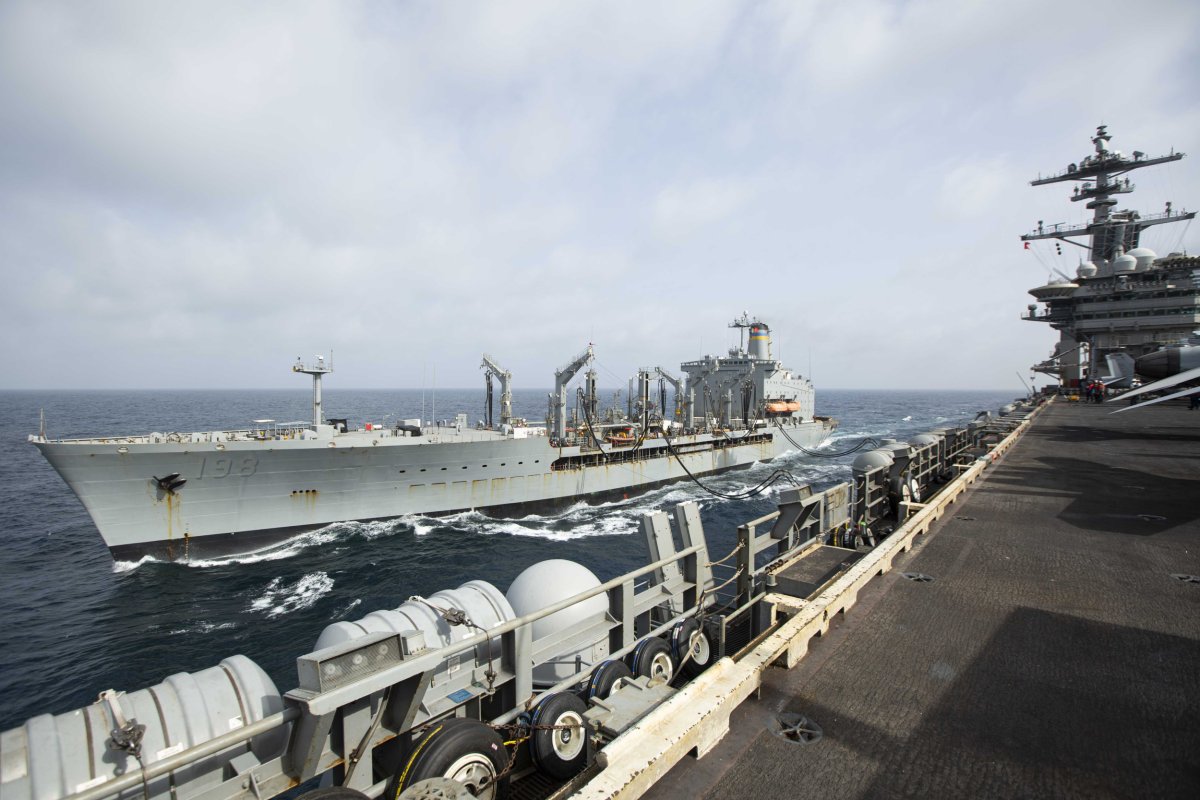
The Henry J. Kaiser-class fleet replenishment oiler ‘USNS Big Horn’ sailing alongside the aircraft carrier ‘USS Abraham Lincoln’ on September 11, 2024, at an undisclosed location at sea in the Middle East. The Big Horn sustained damage in an incident which is under investigation, officials said September 24, 2024.
U.S. Navy via AP
The USS Abraham Lincoln strike group is a key element of the U.S. Navy’s presence in the Middle East, especially as tensions rise among Israel, Hamas, and Hezbollah.
Historically, replenishment oilers like the Big Horn are essential for maintaining the Navy’s global reach, providing the necessary logistics for extended operations.
The U.S. Navy’s Military Sealift Command, which operates these ships with civilian crews, has been instrumental in ensuring that aircraft carriers and other warships can remain at sea without returning to port for resupply.
The Navy has not commented on whether other replenishment vessels are available to replace the Big Horn in the event it requires significant repairs.
An absence of other oilers in the region will likely cause logistical challenges if the ship is unable to continue its mission.
This article includes reporting from The Associated Press.