The U.N. is pushing for a plan to split Western Sahara as a possible solution to the long-standing conflict in the region.
Staffan de Mistura, U.N. envoy to Western Sahara, revealed his idea of carving up the territory between Morocco and the pro-independence Polisario Front during a closed briefing for the U.N. Security Council.
De Mistura said that partitioning the territory could lead to the establishment of an independent state in the southern region while integrating the northern part into Morocco, which would gain international recognition of its sovereignty over the area.
While De Mistura deemed the partition worthy of exploration, he noted that both Morocco and Polisario have shown little interest in pursuing it further.
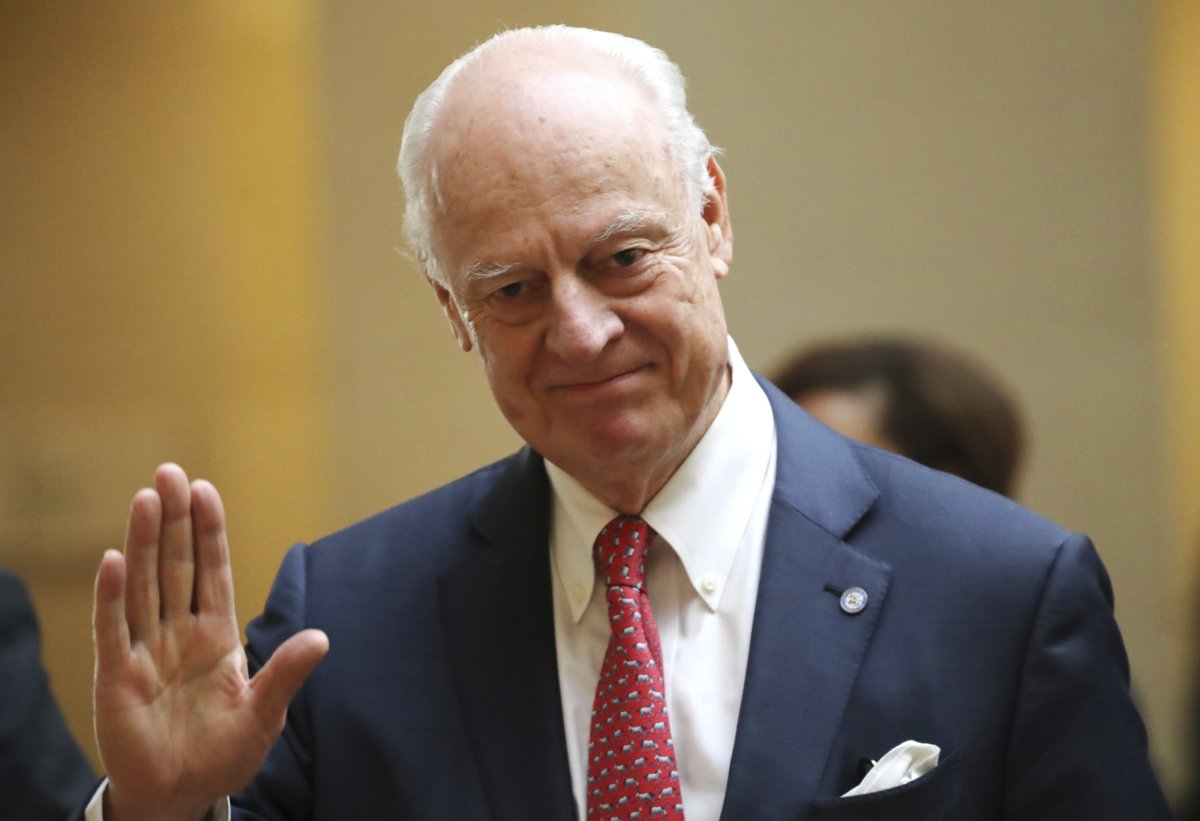
United Nations Special Envoy Staffan de Mistura attends a meeting at the European headquarters of the United Nations in Geneva, Switzerland, Dec. 18, 2018. He has suggested dividing Western Sahara between Morocco and the pro-independence Polisario Front as a way to settle the decades-long conflict.
Denis Balibouse/Pool via AP, File
He said neither side is willing to compromise on its core demands: Morocco refuses to negotiate on sovereignty, while Polisario insists on a referendum for self-determination.
Partitioning along historical lines would place Laayoune, the largest city in the territory, in the north, with Dakhla in the south.
While the plan might offer some autonomy to Morocco and independence for the Sahrawi people, it fails to meet the long-standing demands of either party.
In a statement released on Thursday, Polisario reiterated its stance to De Mistura during an Oct. 3 meeting, asserting that any compromise that ignores international law or contradicts the U.N. mandate for a referendum is unacceptable.
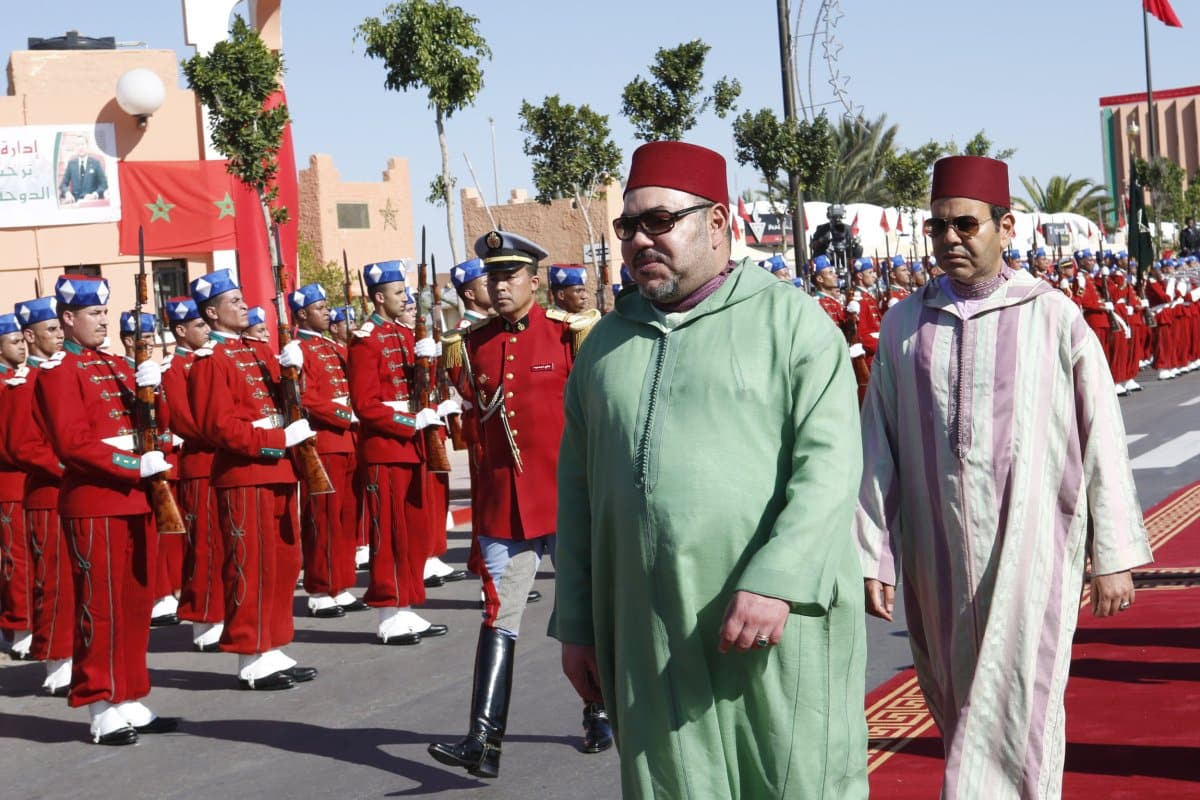
Morocco’s King Mohammed VI, 2nd right, flanked by his brother prince Moulay Rachid, inspects the royal guard in Laayoune, the capital of disputed territories of the Western Sahara, Nov. 7, 2015. Morocco’s official position is to not negotiate on the territory’s sovereignty.
Abdeljalil Bounhar/AP
Morocco’s foreign ministry has yet to comment on the proposal.
The idea of dividing Western Sahara is not unprecedented.
A past agreement saw Mauritania relinquish its claims to the southern portion of the territory when it withdrew in 1979.
Former U.N. envoy James Baker proposed a partition similar to that proposed by De Mistura more than two decades ago.
The U.N. has sought to resolve the territorial dispute since the 1970s, overseeing a ceasefire and the establishment of a peacekeeping mission following a 1991 agreement aimed to facilitate a vote on the future status of the former Spanish colony.
But despite efforts from multiple U.N. envoys, progress has remained elusive.
In his recent briefing, De Mistura expressed a desire to investigate Morocco’s concrete proposals for autonomy within the next six months, seeking clarity without undermining the potential resolution of the Western Sahara issue.
De Mistura cautioned that the lack of progress might prompt questions regarding the U.N.’s role in facilitating the political process and may lead him to recommend that the Security Council reassess the potential for effective mediation.
Western Sahara, located in northwest Africa, has been classified by the U.N. as a “non-self-governing” territory since 1963.
Following Spain’s withdrawal, Morocco has maintained control over much of the resource-rich region, which it terms its “southern provinces,” while Polisario claims to represent the Sahrawi people from its base in refugee camps in southwestern Algeria.
Polisario announced a return to armed conflict in 2020, leading to ongoing hostilities.
As the U.N. process stalls, Morocco’s allies, including the United States, France, and Spain, have increasingly backed Morocco’s 2006 autonomy plan, which stops short of granting independence for the disputed territory.
This article contains additional reporting from The Associated Press