A former bunker used to shield residents from Allied air raids during World War II has been transformed into a sprawling community space with restaurants, concert halls and a park with an 1800-foot-long mountain path in Hamburg, Germany.
Originally referred to as Flakturm IV, the St. Pauli Bunker was built in 1942 by forced labor. It provided refuge for up to 25,000 Hamburg residents at a time during the bombings and was used by Nazis as a “propaganda tool” to show their strength to their enemies, according to its website.
After the war ended, the Allies initially planned to demolish the bunker as part of their efforts to showcase the end of Nazism in Germany, but its thick concrete walls often more than 12.5 feet wide and its central location made this too risky, so the structure remained intact.
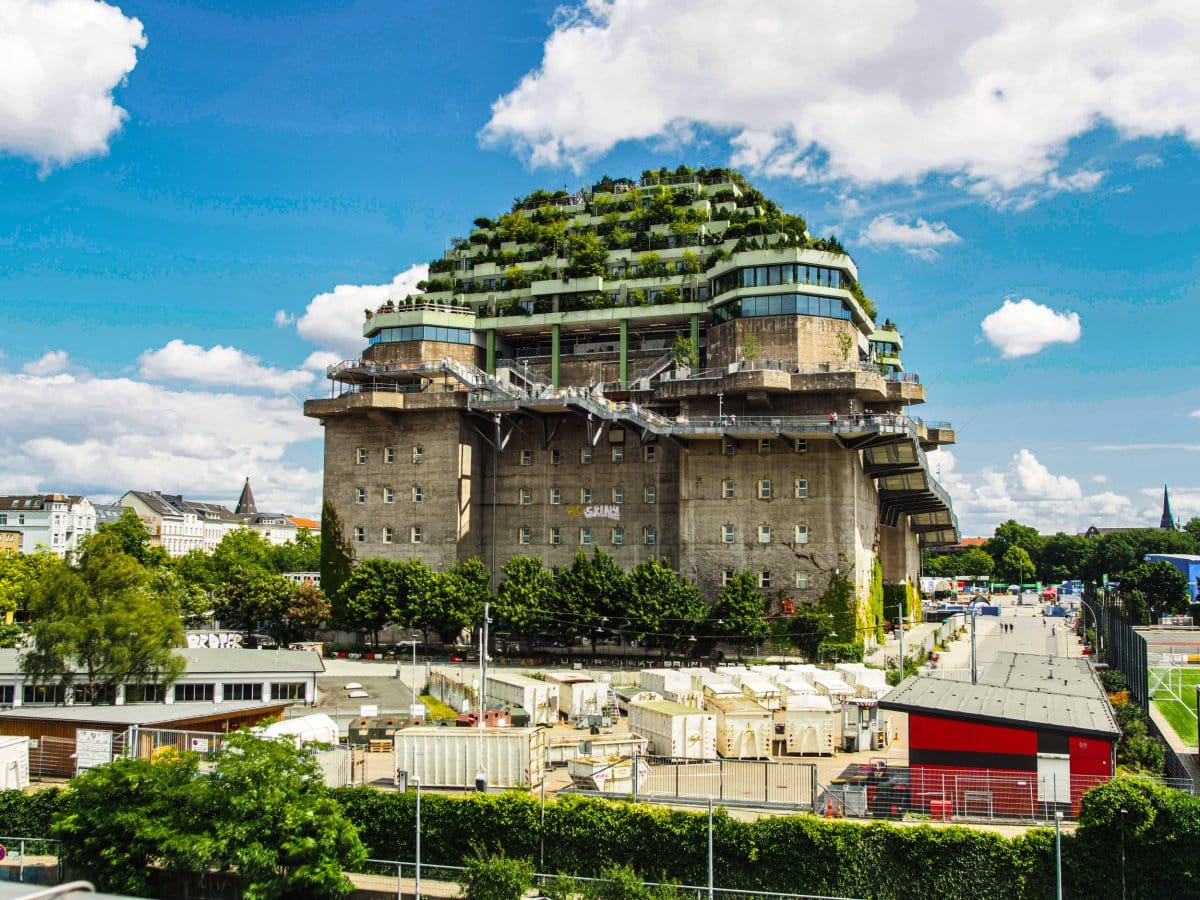
Bunker St. Pauli gets additional 5 floors filled with greenery. Built in 1942 to shield residents from bombing of Hamburg, the fortress was too massive to be torn down after the war. The new building now serves as a recreational center with multiple floors of trees and plants, hotel, exhibition area and restaurant complex.
Frank Schulze Kommunikation
Hamburg locals began repurposing the pace in the postwar years, turning it into a hub for art, culture, and music events. These activities continue today, but developers added another five floors supported by 16 steel columns raising the height of the bunker from 114 feet to 190 feet, Frank Schulze from the St. Pauli Bunker communication office told Newsweek.
The newly renovated bunker now features spaces for local culture, exhibition halls, urban farming plots, accommodations for artists and scholarship recipients, a contemporary three-court hall for school sports and cultural gatherings, and a hotel, according to the press release.
The history of the space, however, is not lost.
“The historic site has for the first time a memorial and information center: in the former control center and at other locations in the existing building, an initiative commemorates the victims of the Nazi regime and World War II,” Schulze said.
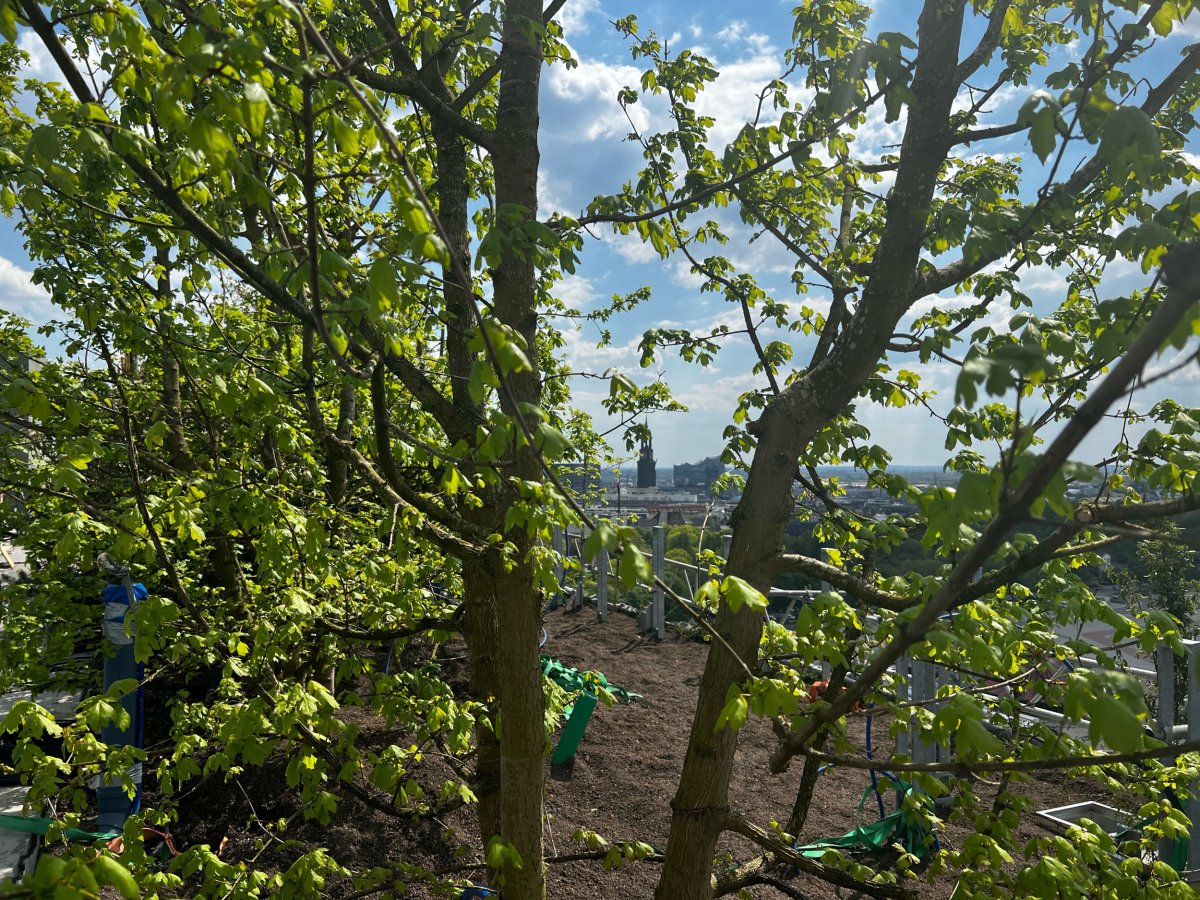
Bunker St. Pauli gets additional 5 floors filled with greenery. Built in 1942 to shield residents from bombing of Hamburg, the fortress was too massive to be torn down after the war. The new building now serves as a recreational center with multiple floors of trees and plants, hotel, exhibition area and restaurant complex.
Frank Schulze Kommunikation
Most of the 4,700 plants, which were planted in 2022, are native to northern and alpine Europe. According to Schulze, the green fortress will also be used as part of research on how to stop cities from overheating amid climate change. If results prove a success, similar “green buildings” could be designed in the future.
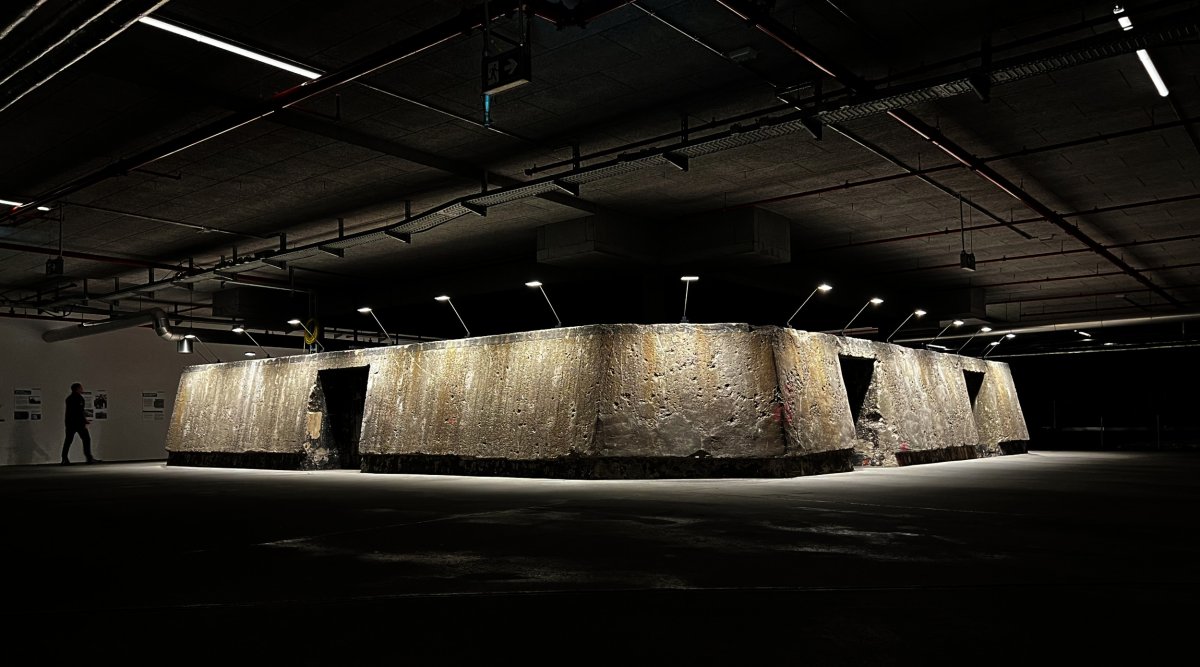
The memorial and information center located in the former control center. Bunker St. Pauli gets additional 5 floors filled with greenery. Built in 1942 to shield residents from bombing of Hamburg, the fortress was too massive to be torn down after the war. The new building now serves as a recreational center with multiple floors of trees and plants, hotel, exhibition area and restaurant complex.
Frank Schulze Kommunikation
The St. Pauli Bunker is one of many historic monuments in Germany and Europe that are part of so-called “Dark Tourism.”
The Colossus of Prora on the Baltic Sea coast was built on the orders of Adolf Hitler in the 1930s and was meant to be a giant hotel resort for the Germans. The outer blocks were also supposed to be used as an affordable holiday resort for German workers, according to The Guardian.
The resort wasn’t completed until the beginning of the 21st century. After the war, Germany resold the complex to developers, and some parts of it are now recognized as the Prora resort. Tourists can still visit the remaining original blocks, according to Deutsche Welle.
Do you have a story we should be covering? Do you have any questions about this article? Contact LiveNews@newsweek.com.