Hurricanes Helene and Milton have raised a number of new concerns this fall: record-breaking storm surges in Florida, unprecedented flooding in North Carolina, hundreds of deaths across six states. But for many Americans in the Southeast, the hurricanes have also exacerbated existing health problems.
In North Carolina, 27 counties have been placed under major disaster declarations in the wake of Hurricane Helene. Approximately 577,000 of the counties’ residents—more than one-fifth of their combined population—have “high social vulnerability” to natural disasters, according to an October 11 report from the U.S. Census Bureau.
The Census Bureau measures social vulnerability across 10 factors, including poverty, disability, advanced age and lack of health insurance coverage. An analysis of North Carolina’s counties under disaster warnings (excluding the populous Mecklenburg County) found that nearly 16 percent of residents have a disability, and nearly 22 percent are aged 65 or older.
Plus, more than one-third of these counties are predominately rural, complicating relief efforts. Nearly a month after Helene made landfall, approximately 5,000 customers in western North Carolina remain without power, according to a Monday news release from Governor Roy Cooper. Some roads are still closed due to damage, while others are reserved for “essential traffic” only: utility, construction and supply vehicles.
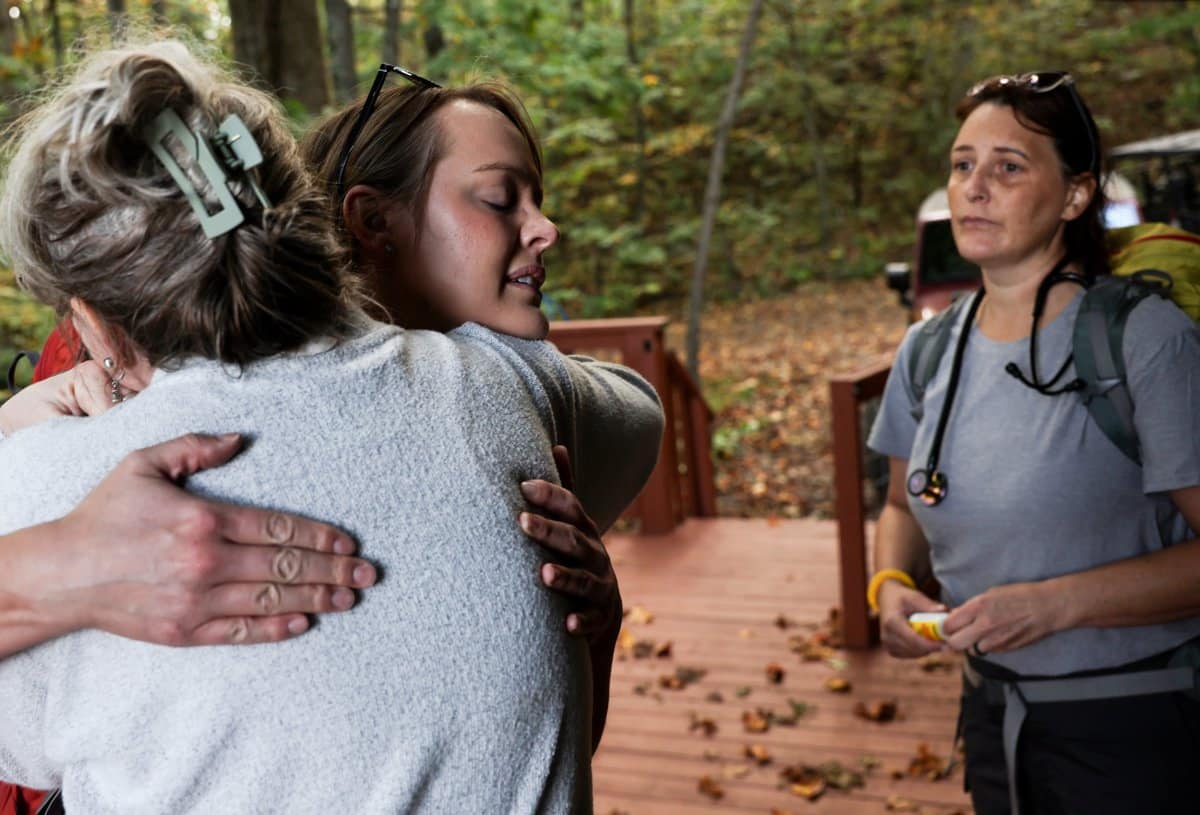
Dr. Khristina Meissner (second from left) embraces a patient during a prescription medication delivery on October 7 in Swannanoa, North Carolina. Dr. Meissner and nurse practitioner Jen Felter (right) volunteered to deliver medications by all-terrain vehicle amidst floods caused by Hurricane Helene.
Mario Tama, Getty Images
These factors have already led to adverse health outcomes for some populations, Dr. Marquita Lyons-Smith told Newsweek. As director of the nursing program at North Carolina Central University, Lyons-Smith is in contact with frontline workers at hospitals throughout the western part of the state.
Rural populations have always had a harder time accessing health care but have become further isolated since the storm, Lyons-Smith said. Community health centers could no longer provide regular services like dialysis. Supplies dwindled at gas stations and pharmacies. Roads that were once unpaved might no longer exist, foiling plans to seek help at more resourced hospitals.
“Access to internet, water and electricity is now improving, but in the meantime, patients have come in running out of medications or with injuries that were not treated properly,” Lyons-Smith said.
North Carolina’s chief medical examiner has confirmed 95 storm-related deaths as of Monday. Many of the deaths were direct results of extreme elements, such as drownings, landslides and blunt-force injuries, according to a report from the state’s Department of Health and Human Services obtained by the Asheville Watchdog.
Lyons-Smith is concerned that untreated chronic conditions could add to that toll. It’s still unclear how many rural, elderly and disabled patients have been unable to access proper care.
“Some patients are on oxygen at home and don’t have electricity,” Lyons-Smith said. “Did some of these people run out of their oxygen supply before being able to get to the hospital? Maybe you were on your last few pills of neurogenic hypertension medication, and you run out because they didn’t have anything in the pharmacy.”
In addition to supply-and-demand issues, some patients became vulnerable to infection after losing access to clean running water. Flood waters are contaminated with sewage and trash, and “unfortunately, with dead bodies on the roadways and near the water supply, there’s an increased risk of waterborne illness,” according to Lyons-Smith.
The issues are likely to linger. Complications from hurricanes—including emotional stress—can worsen pre-existing health disparities, according to the CDC. Approximately 138,000 mobile homes in North Carolina were under major disaster declarations. These types of storms are unprecedented in landlocked Appalachian towns, so many homes were not covered by flood insurance.
The same is true for rural and critical access hospitals, many of which were already struggling to survive. Access could diminish alongside health outcomes.
“Some of these critical, acute issues are going to become more chronic,” Lyons-Smith said.
For some patients, virtual care has served as a lifeline. Telemedicine platform Teladoc Health has conducted more than 25,000 virtual visits across its hospital and health system network in states affected by hurricanes Helene and Milton, including North Carolina. Since September 30, over 11,000 telehealth visits have been completed in Florida alone, according to Andy Puterbaugh, Teladoc’s president of hospitals and health systems.
Even in nonemergent situations, Teladoc reaches communities that struggle with connection bandwidth constraints—so the platform is braced for technical difficulties, Puterbaugh told Newsweek. In areas where power and Wi-Fi are limited, patients can opt for audio-only visits or use a cellularly connected device. The platform also self-regulates its connectivity levels to prevent calls from dropping, even in low-bandwidth situations.
As the safety net hospital for Tampa, Florida, and the only Level I Trauma Center in the region, Tampa General Hospital has been utilizing its Teladoc-powered virtual care app to reach patients—and even help triage them, according to Gaesenee Kongsubto, the hospital’s manager of telehealth services.
Immediately following the storm, Tampa General saw heavier patient volumes in its emergency department. Many were high acuity cases: injuries from falling off ladders or roofs in attempts to clean up, burns related to fuel and generator use (or misuse). The virtual-option care allowed the hospital to manage nonemergent cases—medication refills, pink eye, urinary tract infections—from afar, saving inpatient beds for the most pressing conditions. On the flip side, patients who call in with troubling symptoms like chest pain can be immediately directed to the hospital.
Residents at homeless shelters have especially benefitted from the telehealth service, according to Kongsubto. Many are located in “urgent care deserts” with limited access to providers. When public transportation services shut down for the storms, socially vulnerable patients were still able to receive care (thanks in part to cellularly connected iPads distributed by Teladoc).
Telehealth support has also taken a load off Tampa General’s health care professionals, who aren’t immune to flooding, power outages and other pressures from the hurricanes. From 8 a.m. to 8 p.m., seven days a week, Tampa General’s urgent care providers man the telehealth app. But after hours, Teladoc providers take over, allowing patients to access care 24/7.
“When we close and we lock down for the safety of our team members…[patients] automatically go to the Teladoc physicians,” Kongsubto said. “That’s a peace of mind, to be able to do that.”
Telemedicine isn’t a fix-all; it can’t rebuild homes, hospitals or local health centers. But it can help some people maintain stable health as they begin to reassemble their communities.
Teladoc’s free, 24/7 disaster hotline is open to individuals who have been displaced or who cannot access medical care due to the storms—regardless of insurance or health care coverage. Anyone impacted by hurricanes Helene and Milton in Florida, Georgia, North Carolina, South Carolina, Alabama and Tennessee can call the hotline at 855-225-5032.
The CDC also provides health information for people managing specific situations after a disaster, a spokesperson for the organization told Newsweek. Click these links to view guides for people with chronic conditions or disabilities; people experiencing homelessness; expectant and new parents; and children and caregivers.