Austria’s far-right Freedom Party (FPO) may be on the brink of a historic victory in elections this Sunday as it bids to become leader of the nation’s government for the first time.
The surge in its popularity reflects a broader trend of hard-right gains across Europe, driven by rising concerns over immigration, inflation, and the ongoing war in Ukraine.
Herbert Kickl, the party’s leader since 2021 and a former interior minister, is vying for the chancellorship with a campaign that resonates with a significant segment of the electorate.
He has adopted the term “Volkskanzler,” or “chancellor of the people,” a phrase historically linked to Adolf Hitler. However, he has vehemently defended against comparisons with Hitler.
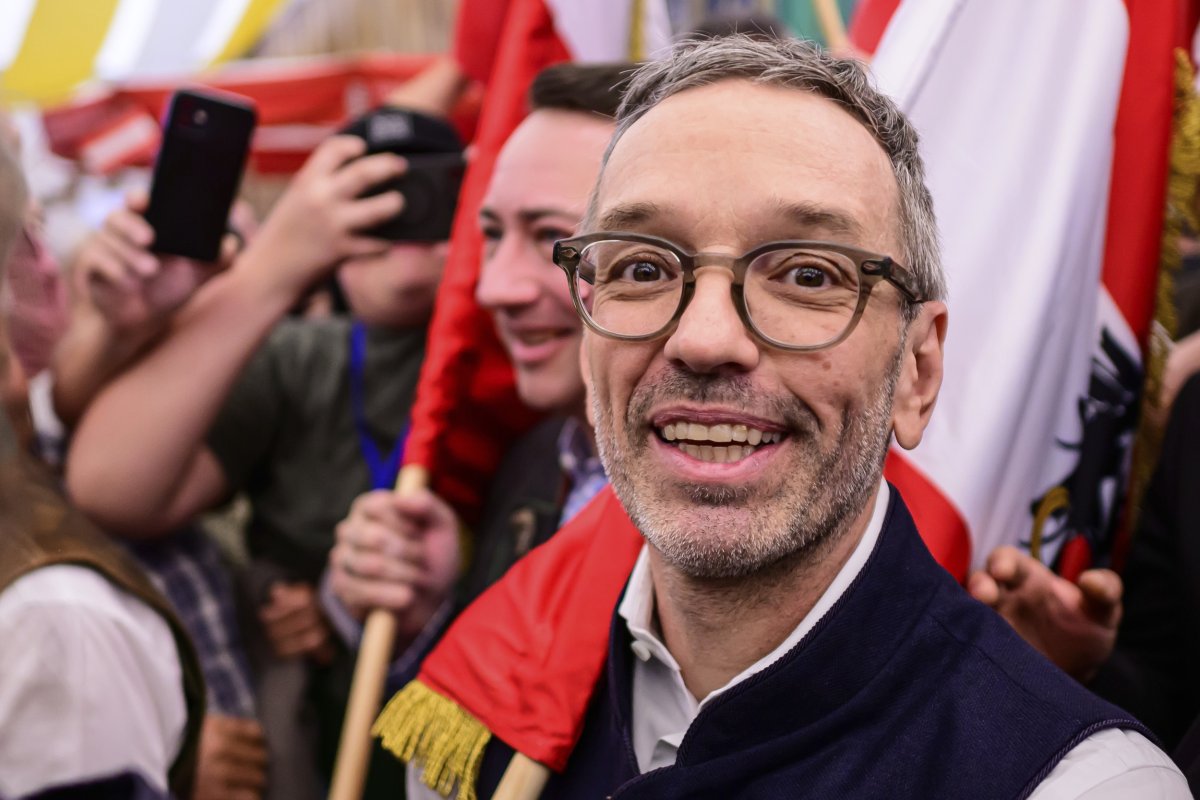
Herbert Kickl, leader of Austrian Freedom Party (FPO), arrives for the traditional FPO May Day event at the Urfahraner fair in Linz, Austria, May 1, 2024.
Christian Bruna/AP, file
But Kickl’s path to leadership hinges on forming a coalition to secure a majority in the National Council.
Recent polls indicate a tight race, with the Freedom Party at 27 percent, closely trailed by the conservative Austrian People’s Party (OVP) at 25 percent, and the center-left Social Democrats (SP)) at 21 percent.
The FPO bounced back from a disappointing performance in the 2019 elections, where it garnered only 16.2 percent following a scandal involving then-Vice Chancellor Heinz-Christian Strache, who resigned amid allegations of corruption.
In June, the party gained momentum, narrowly winning a nationwide vote in the European Parliament elections, reflecting a resurgence of right-wing sentiment across the continent.
Many voters in Austria cite feelings of insecurity amid high inflation and ongoing geopolitical strife.
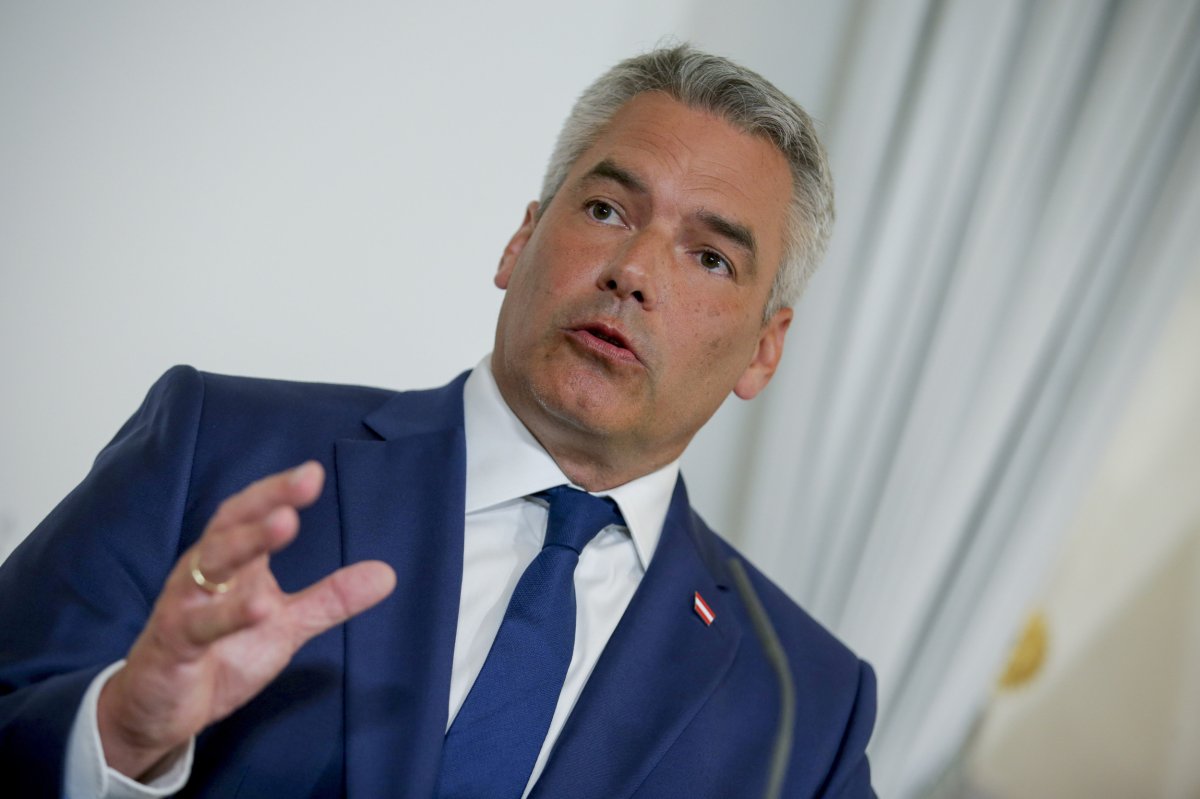
Austrian Chancellor Karl Nehammer attends a press conference in Vienna, Aug. 8, 2024. The country’s far-right Freedom Party could win a national election for the first time in Sunday’s elections.
Heinz-Peter Bader/AP, file
“You don’t really feel safe in your own country anymore,” said Margot Sterner, 54, at a recent campaign rally. “But thinking about the safety of your own people shouldn’t make you a right-wing extremist.”
The Freedom Party’s platform openly calls for what it describes as the “remigration of uninvited foreigners” and aims to create a more ‘homogeneous’ society by tightening border controls and temporarily suspending the right to asylum.
Kickl’s leadership has seen the party move further to the right, with critics noting a refusal to distance itself from extremist factions, including the Identitarian Movement.
The Freedom Party also wants the lifting of sanctions against Russia, opposes Western military aid to Ukraine, and seeks to withdraw from initiatives such as Germany’s European Sky Shield missile defense project.
In contrast, Social Democrats’ leader Andreas Babler has positioned himself as a staunch opponent to Kickl, labeling him a “threat to democracy” and ruling out any coalition with the far-right.
The current ruling coalition, led by the OVP under Chancellor Karl Nehammer, faces declining popularity, exacerbated by crises stemming from the COVID-19 pandemic, energy price surges due to the war in Ukraine, and a contentious vaccine mandate that was later rescinded.
Inflation in Austria has averaged 4.2 percent over the past year, outpacing the EU average.
Should the OVP secure a leading position, a coalition with the FPO becomes a possibility, although analysts say a more likely scenario would involve a three-way alliance with the SPO and the liberal Neos party.
The outcome of this election could redefine Austria’s political landscape and influence the broader trajectory of right-wing politics in Europe.
This report includes additional reporting from The Associated Press