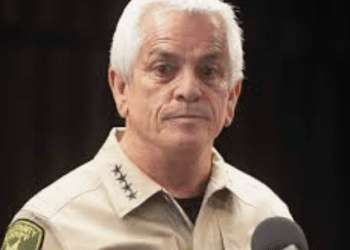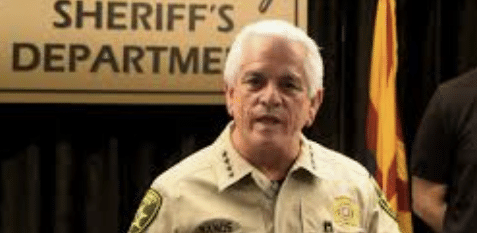
6:00 PM 2/7/26 David Ravo, Senior Editor, is struck by the audacity of Sheriff Chris Nanos—already responsible for multiple investigative blunders at the microphone—finding the time and headspace to stroll into a Saturday night basketball game. The choice offers an unfiltered glimpse into his mindset: a sheriff who believes he’s earned a break in the middle of a rare, high‑stakes kidnapping investigation.
The public doesn’t expect perfection from elected officials, but it does expect seriousness—especially when a rare, high‑risk kidnapping is unfolding in their own jurisdiction. When Sheriff Chris Nanos told the community he was fully engaged in the investigation into the disappearance of Nancy Guthrie, he wasn’t making a casual remark. He was making a commitment. A promise. A reassurance to a frightened public that the top law‑enforcement officer in Pima County was locked in, focused, and leading from the front.
So when he appeared courtside at a basketball game on Saturday night, smiling, relaxed, and visibly off‑duty, the disconnect wasn’t subtle. It was jarring. It was dissonant. And it was misleading.
This isn’t about whether a sheriff is allowed to attend a basketball game. It’s about whether an elected official—one who has publicly stated he is deeply involved in a rare, complex, and time‑sensitive kidnapping case—can credibly claim to be “fully focused” while simultaneously projecting the image of someone with time to spare. Optics matter. Leadership matters. And in moments of crisis, the public watches closely not because they’re nosy, but because they’re scared.
The Guthrie kidnapping is not a routine case. Kidnappings in the United States are statistically rare, and kidnappings involving cryptocurrency ransom demands are rarer still. These cases require rapid coordination, federal involvement, digital‑forensics expertise, and a command presence that signals urgency. Every hour matters. Every decision matters. Every misstep matters. And missteps have already occurred.
The Investigation’s Early Errors
The public record shows that the investigation has not been seamless. A vehicle belonging to the victim was left in the garage and was not immediately towed to the police station for processing. That is not a minor oversight. In a kidnapping case, a vehicle is a crime scene. It is a container of evidence—fibers, fingerprints, digital devices, GPS data, trace materials, and environmental clues. Leaving it behind delays forensic analysis and risks contamination. It also signals a lack of procedural rigor at a moment when the investigation needed to be airtight.

Then came the decision to open the victim’s home to the press—only to close it again. That kind of inconsistency doesn’t just confuse the public; it undermines confidence in the investigative strategy. Crime scenes are controlled environments. They are not media backdrops. Allowing cameras inside, even briefly, raises questions about chain of custody, evidence preservation, and the seriousness with which the scene was being managed.
These are not abstract concerns. They are foundational elements of investigative integrity. When the sheriff’s office makes errors that would be unacceptable in a routine burglary case, the public is right to ask how such errors could occur during a kidnapping.
And when the sheriff then appears at a basketball game, the public is right to ask something else: Is he really as focused as he claims?
The Optics of Leadership
Leadership is not just about what an official does behind closed doors. It’s about what the public sees, hears, and understands. When a sheriff says he is “focused,” the public imagines late‑night briefings, coordination with federal partners, and a command center humming with activity. They imagine urgency. They imagine seriousness. They imagine a leader who has cleared his schedule, canceled his plans, and committed himself fully to the crisis at hand.

What they do not imagine is courtside seats.
Even if the sheriff had spent the entire day in meetings, even if he had been briefed by detectives, even if he had spoken with the FBI earlier that afternoon, the moment he stepped into that arena he created a contradiction between his words and his actions. Public trust is fragile. It is built slowly and lost quickly. And nothing erodes trust faster than the perception that an official is not taking a crisis seriously.
This is not about policing his personal time. It is about the message his choices send.
When a sheriff attends a basketball game during an active kidnapping investigation, the message is not “I’m working hard.” The message is “I have time for this.” And that message is misleading.
The Stakes of a Cryptocurrency Ransom
The Guthrie case is not just rare—it is technically complex. Cryptocurrency ransom demands introduce layers of difficulty that traditional kidnapping cases do not. Tracking digital wallets, analyzing blockchain movements, coordinating with federal cyber units, and navigating the legal and jurisdictional complexities of digital extortion require specialized expertise. Local law enforcement cannot handle this alone. They need federal partners. They need the FBI. And the sheriff should be meeting with them.

Kidnapping cases involving cryptocurrency are time‑sensitive. The longer the delay in coordinating with federal cyber teams, the harder it becomes to trace transactions, identify wallet owners, or intercept funds. Digital trails cool quickly. Criminals move assets rapidly. Every hour lost is an opportunity lost.
So when the sheriff is photographed courtside, the public is not wrong to wonder: Why isn’t he in a briefing room? Why isn’t he coordinating with federal agents? Why isn’t he doing everything possible to bring Nancy Guthrie home?
These are not unfair questions. They are the questions any reasonable person would ask.
The Responsibility of an Elected Official
Sheriffs are not just law‑enforcement officers. They are elected leaders. They are accountable to the public. They are expected to model seriousness, discipline, and transparency—especially during crises. When they make mistakes, those mistakes are not private. They are public failures with public consequences.

The early errors in the Guthrie investigation were not small. They were not technicalities. They were fundamental lapses in investigative procedure. And when those lapses are followed by a public appearance that contradicts the sheriff’s stated level of focus, the public is left with a troubling picture: a leader who says one thing and does another.
This is not about partisanship. It is not about political ideology. It is about accountability.
When an elected official misleads the public—intentionally or not—it damages the credibility of the office. It damages the morale of the department. It damages the trust of the community. And in a kidnapping case, trust is not a luxury. It is a necessity.
Families need to believe that law enforcement is doing everything possible. Communities need to believe that their leaders are fully engaged. And the sheriff’s office needs to project competence, urgency, and unity—not confusion, inconsistency, and mixed signals.
The Human Cost of Misleading Leadership
Behind every kidnapping case is a family living through the worst days of their lives. They are not thinking about optics. They are not thinking about press conferences. They are not thinking about public perception. They are thinking about their loved one. They are thinking about the clock. They are thinking about the terrifying possibility that time is running out.
When a sheriff says he is focused, that family takes him at his word. They cling to it. They need it. They need to believe that the person in charge is doing everything possible.

So when that same sheriff is photographed courtside, the emotional impact is not abstract. It is personal. It is painful. It is destabilizing.
Leadership is not just about managing an investigation. It is about managing the emotional reality of a community in crisis. And misleading the public—through words, actions, or contradictions—deepens the trauma of those already suffering.
The Need for Transparency and Accountability
The sheriff owes the public an explanation. Not a defensive one. Not a dismissive one. A real one.
Why was the vehicle not immediately processed? Why was the home opened to the press? Why was it closed again? Why was he at a basketball game during an active kidnapping investigation? What steps has he taken to coordinate with federal partners? What is the current status of the investigation? What corrective measures have been implemented to prevent further errors?
These are not hostile questions. They are necessary ones. Transparency is not optional in a crisis. It is the foundation of public trust.
If the sheriff wants the community to believe he is focused, he must demonstrate it—not through statements, but through actions. He must show that he understands the gravity of the situation. He must show that he recognizes the impact of his choices. He must show that he is willing to correct mistakes, not minimize them.
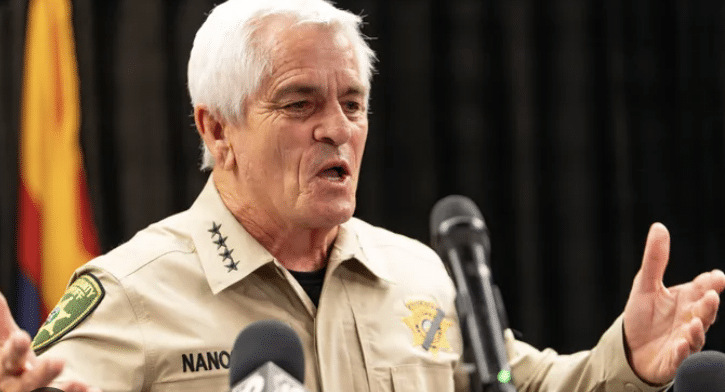
The public does not expect perfection. But it does expect honesty.
The Path Forward
The Guthrie investigation is still ongoing. There is still time to correct course. There is still time to demonstrate seriousness, urgency, and leadership. But that requires a shift in approach.
It requires the sheriff to prioritize transparency over optics. It requires him to acknowledge errors rather than gloss over them. It requires him to align his actions with his words. It requires him to treat this case with the full weight and focus it demands.
The community is watching. The family is waiting. And the sheriff’s credibility is on the line.
This is not a moment for courtside appearances. It is a moment for leadership.
A kidnapping is one of the most serious crimes a community can face. It demands the full attention of every agency involved. It demands coordination, discipline, and urgency. And it demands that the sheriff—the elected leader entrusted with public safety—demonstrate through his actions that he is fully committed.
Anything less is misleading.