The Earth’s mantle might not always move along in lockstep with the overlying tectonic crust—as set out in science textbooks for decades—but may instead behave differently.
This is the conclusion of an international team of geologists who made a mysterious find on Easter Island, the Chilean special territory in the Pacific that is famous for its giant statues.
The idea that the Earth’s crust and mantle might move together like a “conveyor belt” as a result of convection currents in the latter was first proposed in 1919 by the British geologist Sir Arthur Holmes.
His suggestion provided a mechanism by which large continents might drift across the surface of the Earth—a then contentious theory based on evidence including how landmasses like Africa and South America seem to fit together and had matching rocks and fossils despite being an ocean apart.
Now, however, researchers have found crystal “time capsules” on Easter Island that appear to have stayed in the same place in the mantle for some 162.5 million years. This is incompatible with the conveyor belt theory, suggesting the mantle’s behavior may be far more complex than we previously thought.
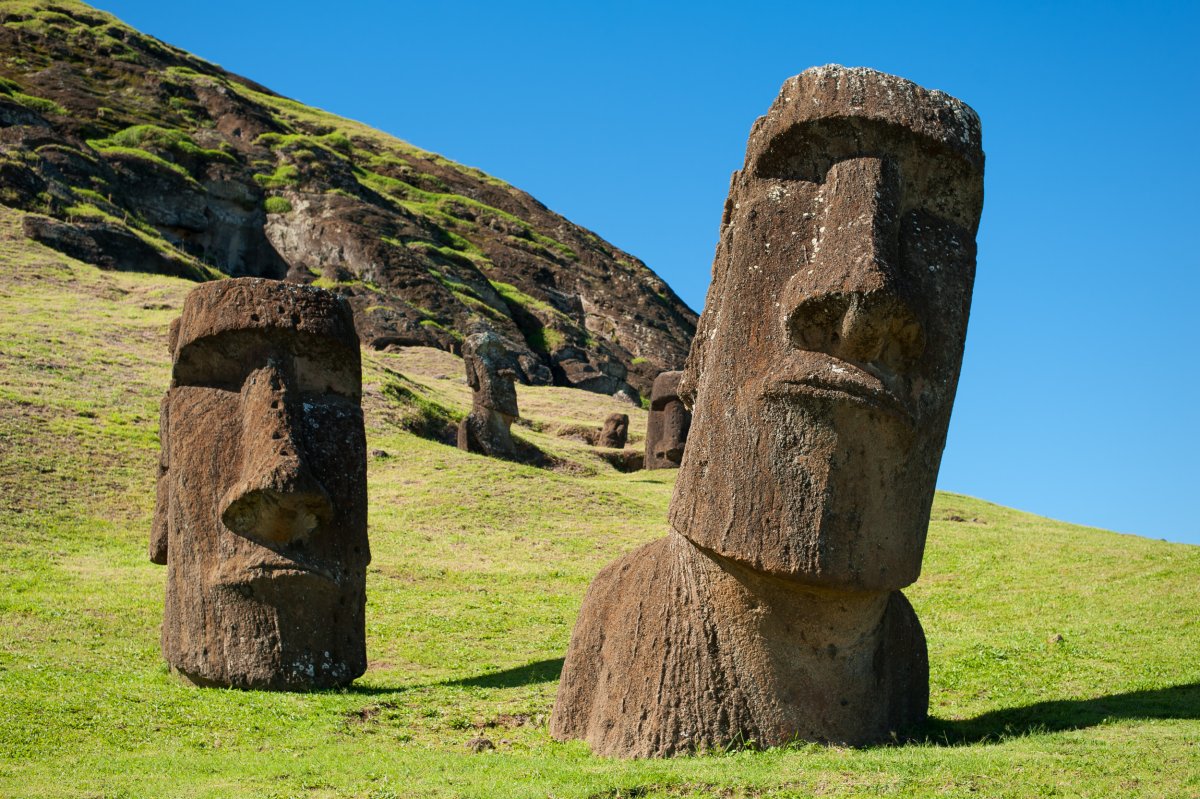
Easter Island has revealed new evidence that may challenge our understanding of how the Earth’s mantle behaves.
Carlos Aranguiz / iStock / Getty Images Plus
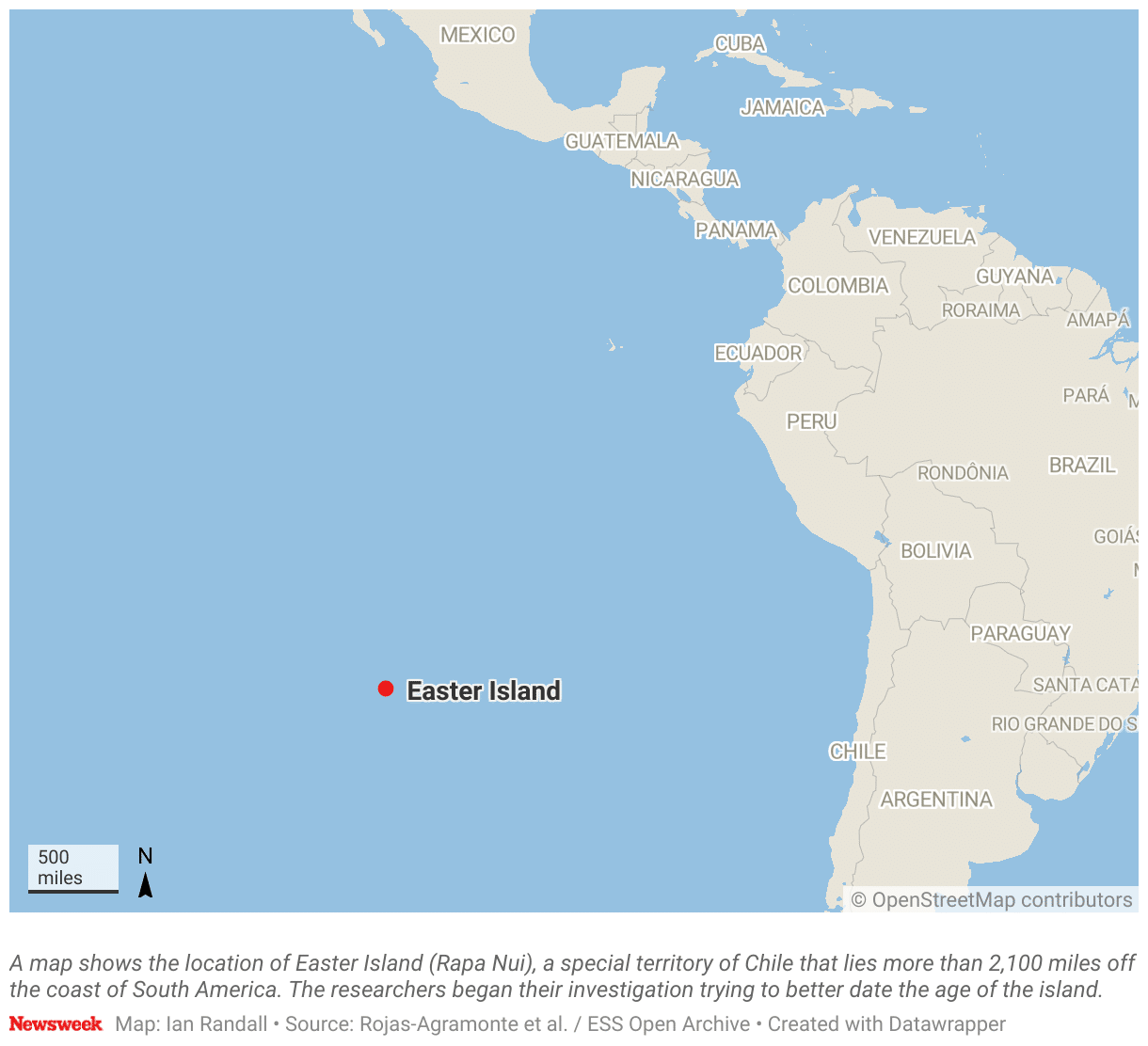
Geologically speaking, Easter Island, which lies some 2,200 miles off the coast of Chile, is something of a spring chicken. The oldest parts of the island were formed by volcanic eruptions that took place 2.5 million years ago, atop an ocean plate not that much older.
In their research, geologist Yamirka Rojas-Agramonte of the University of Kiel, Germany, and her colleagues initially set out to precisely calculate the island’s age. To do this, they turned to tiny, uranium-bearing crystals preserved in lava, called zircons, which are like natural little time capsules.
The more time that passes after the crystals form from cooling magma, the more of the uranium decays into lead. By measuring the ratio of the two, geologists can work out how old the crystals are.
The team found hundreds of zircons from Easter Island’s oldest volcanic material and analyzed them. But something was off. Some formed roughly 2.5 million years, as expected—yet others appeared to be far, far older, from as long as 165 million years ago, before the island even formed.
This presented something of a puzzle for the researchers. Further chemical analysis of the zircon crystals revealed that all had broadly the same composition, meaning they must have come from magma with the same composition as the “young” volcanoes.
At the same time, however, these volcanoes could not have been active for 165 million years—not even the ocean plate they burst from is that old.
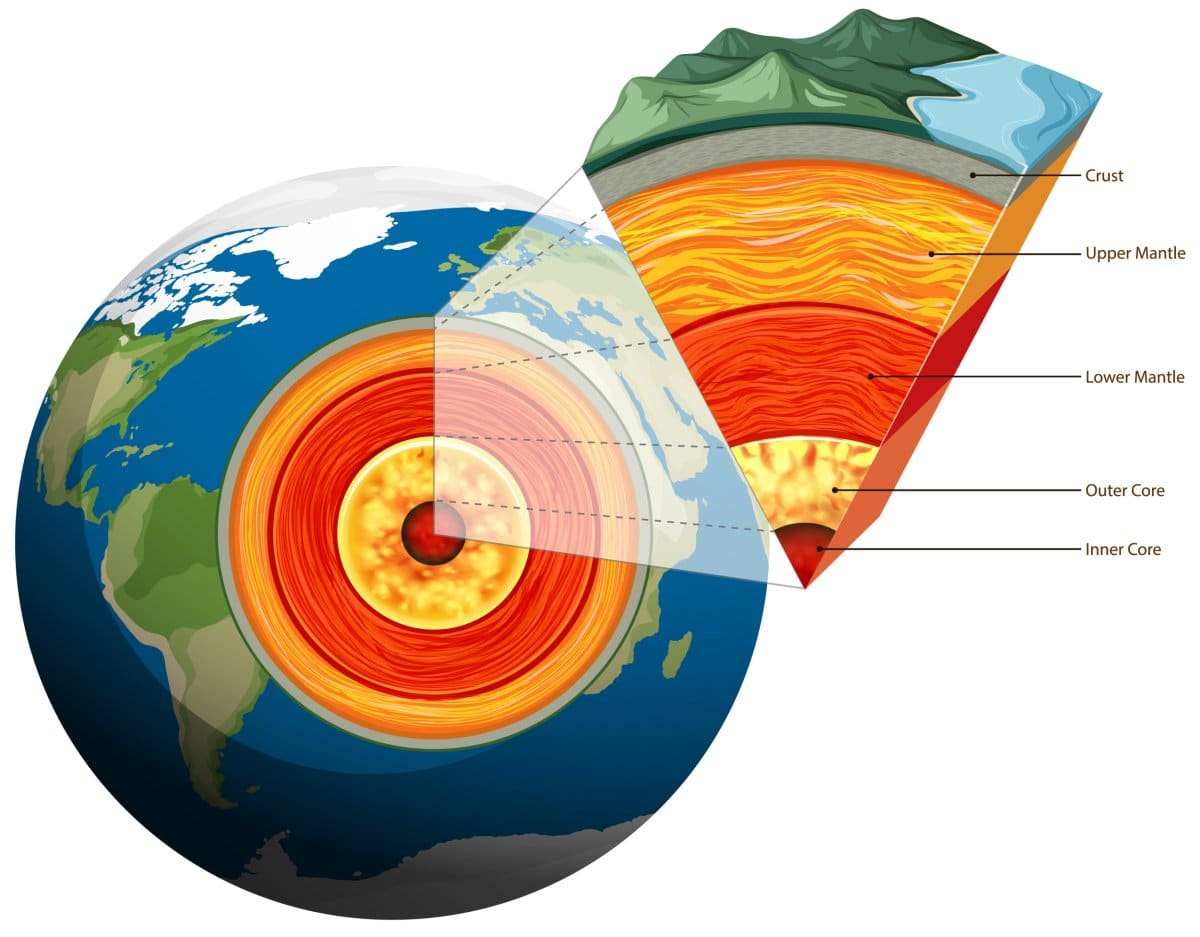
A cutaway section shows the Earth’s interior. The mantle and crust have long been thought to move together, much like a conveyor belt, but new evidence suggests the mantle’s behavior may be far more complex.
blueringmedia / iStock / Getty Images Plus
The only solution to the team’s conundrum is that the ancient zircons must have originated at the deep source of the volcanism: far beneath the Earth’s crust, in the mantle.
Like the volcanoes found on Hawaii and Iceland, those on Easter Island are driven by an underlying “hot spot,” a plume where molten material rises through the mantle like paraffin wax floating up a lava lamp.
Because the plumes start at the base of the mantle (at the boundary with the Earth’s core, which is 1,000 degrees Celsius hotter than the overlying layer), they are essentially fixed in place.
By contrast, the Earth’s crust (and, according to the traditional conveyor belt theory, the underlying mantle) moves over the hot spots. The result is that hot spots form volcanoes at different places on the Earth’s surface over time—like in the Hawaiian chain, in which the different islands were each formed when they lay over the hot spot.
Perhaps, the researchers reasoned, the oldest zircons that they found on Easter Island were evidence that the hot spot itself had been active for 165 million years.
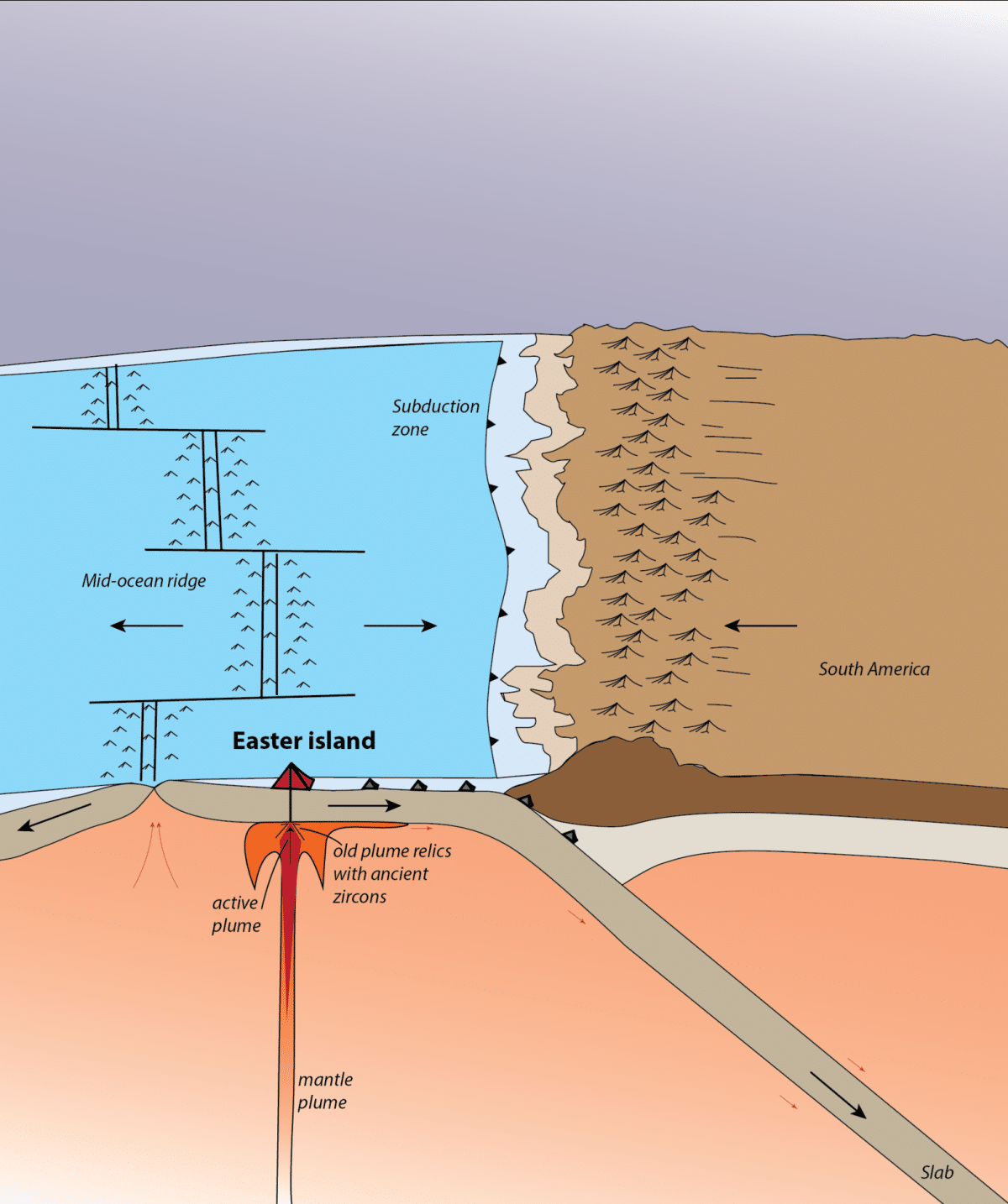
A diagram shows Easter Island’s tectonic context. The researchers believe the volcanoes that created the island included some ancient material from the mantle plume.
Douwe van Hinsbergen et al. / Utrecht University
The problem with exploring this idea, however, is that much of the original evidence for it—in the form of the tectonic plates of 165 million years ago—is now long gone.
As paper co-author and Utrecht University geologist professor Douwe van Hinsbergen explains, the oceanic plates of the Pacific get gradually recycled as their edges sink under more buoyant continental crust. (This process causes volcanic activity under the overlying plate, forming the chain of volcanoes around the Pacific known as “the Ring of Fire.”)
“The difficulty is that the plates from 165 million years ago have long since disappeared in those subduction zones,” said Van Hinsbergen, whose work has involved trying to reconstruct these lost plates, in a statement.
When Van Hinsbergen added a large volcanic plateau 165 million years ago at the site of Easter Island to his simulations, he found that this feature must have subducted under the Antarctic Peninsula some 110 million years ago—suggesting a solution to another little mystery.
“That just so happened to coincide with a poorly understood phase of mountain building and crust deformation in that exact spot,” he explained. “That mountain range, whose traces are clearly visible, could well be the effect of [the] subduction of a volcanic plateau that formed 165 million years ago.”
As is so often the case, solving one problem merely creates another. The past plate reconstructions support the idea that the Easter Island plume may have been active for a whopping 165 million years.
The “recent” volcanic eruptions that started forming the island 2.5 million years ago brought up not only fresh material but also remnants of older magmas from the plume—explaining how the lavas could contain time capsules 162.5 million years older than the island itself.
However, the conveyor belt theory that the crust and mantle move together was already challenging enough to reconcile with observations that mantle plumes stay in one place —and the endurance of these 165 million-year-old zircons makes it worse.
“People explained this by saying that plumes rise so fast that they are not affected by a mantle that was moving with the plates—and that new plume material is constantly being supplied under the plate to form new volcanoes,” said Van Hinsbergen.
The problem with this rationale, however, is that the old bits of the plume should have been carted off with the rest of the mantle conveyor belt, not left to make it to Easter Island later.
“From that, we draw the conclusion that those ancient minerals could have been preserved only if the mantle surrounding the plume is basically as stationary as the plume itself,” Van Hinsbergen said.
This is a possibility that has been hinted before by studies undertaken on the Galapagos Islands and New Guinea, according to the researchers.
If the team is correct, then the mantle deep beneath our feet must behave very differently —and move much slower—that was long assumed.
Do you have a tip on a science story that Newsweek should be covering? Do you have a question about geology? Let us know via science@newsweek.com.
Reference
Rojas-Agramonte, Y., Pardo, N., Hinsbergen, D.J.J. van, Winter, C., Marroquín-Gómez, M.P., Liu, S., Gerdes, A., Albert, R., Wu, S., & Garcia-Casco, A. (2023). Zircon xenocrysts from Easter Island (Rapa Nui) reveal hotspot activity since the middle Jurassic. ESS Open Archive. https://doi.org/10.22541/au.170129661.17646127/v1