Ahead of the polls closing on Tuesday, Perplexity.ai, an AI-powered search engine, has launched an Election Information Hub designed to provide live updates, answer voter queries, and offer AI-generated summaries on candidates and ballot measures.
Here’s a closer look at how Perplexity’s new hub works, what information you can find, and where it sources its data.
Perplexity’s Election Information Hub is an AI-driven platform aiming to assist voters in understanding key issues, finding polling information, and tracking live election results. Perplexity says it serves as “an entry point for understanding key issues, voting intelligently, and tracking election results.”
Newsweek contacted Perplexity via email for comment.
How Does Perplexity’s Election Information Hub Work?
Starting on Election Day, the hub will provide live updates on presidential, Senate, and House races at both state and national levels. Users can track election results by viewing real-time updates on vote counts, percentages, and leading candidates.
As an AI chatbot, it will generate answers for election-related questions including queries about voting requirements, polling locations, and poll times. There are also AI-summarized analyses, with detailed summaries on ballot measures and candidates, including policy stances and endorsements.
All answers contain sources to allow users to click through to verify where the information comes from and read more.
Where Does Perplexity’s Election Data Come From?
The two main organizations Perplexity has partnered with to ensure the accuracy and reliability of its information are The Associated Press (AP) and Democracy Works.
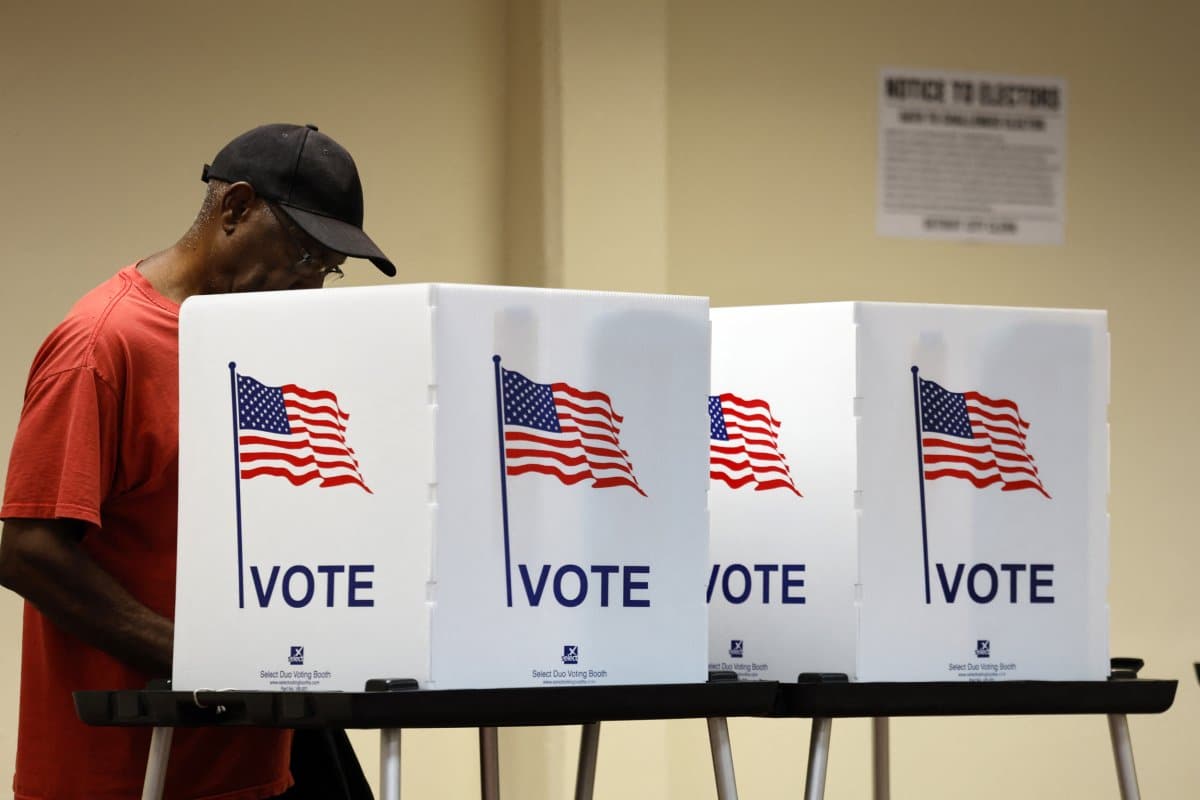
People cast their in-person early ballot for the 2024 general election at the Northwest Activities Center on October 29, 2024 in Detroit, Michigan. Results and other election information can be tracked live on Perplexity’s new Election Information Hub.
JEFF KOWALSKY/AFP via Getty Images
AP will provide live election data for tracking vote counts and results. “Starting Tuesday, we’ll be offering live updates on elections by leveraging data from The Associated Press,” Perplexity stated.
Democracy Works is supplying data on voting requirements, polling locations, and times through its Elections API. “Thank you to Democracy Works for granting us access to your Elections API to help power these experiences,” Perplexity said.
Perplexity spokesperson Sara Plotnick also told The Verge that the AI company is using a curated set of sources for answering election-related queries, including non-partisan organizations and verified news outlets like Ballotpedia.
“We’re actively monitoring our systems to ensure that we continue to prioritize these sources when answering election-related queries,” she said.
How To Use the Election Information Hub
To hub is open to all users in the U.S. and outside of it. Enter an address, city or postal code to get personalized information about what’s on the ballot for that area.
The search returns information on current candidates for the Senate and House as well as the presidency. Click on candidates to view AI-generated summaries of their platforms and backgrounds, and use the tabs dedicated to presidential, Senate, and House races to monitor live results as they come in.
For example, clicking on Brian Kavanagh, who is running for re-election to represent New York State Senate District 27, Perplexity provides an overview including his background, key platform issues, and suggested questions related to his particular issues or initiatives he is involved in.
Addressing Accuracy and Misinformation Concerns
Perplexity’s initiative comes at a time when other AI companies are cautious about entering the election information space due to the high stakes involved. Companies like OpenAI, Meta, and Google have refrained from providing AI-generated election content, opting instead to direct users to official resources.
Hallucinations are still a concern when it comes to election information. In June, the Reuters Institute carried out an analysis on how several popular chatbots including ChatGPT and Perplexity answered questions about the European Parliament elections.
It was found that the chatbots, overall, produced some accurate and well-sourced answers, especially to fairly basic questions with simple factual answers. When ChatGPT 4o and Perplexity were asked a questions about who was on the ballot for a specific constituency in the U.K., both systems provided the correct answer and listed the correct candidates and their respective parties, as well as providing links to reliable sources.
However, “there were also instances of partially correct or false and misleading information,” noted the analysis.
“These inaccuracies highlight the need for caution when relying on chatbots for election-related queries,” said the analysis, co-authored by Dr. Felix Simon, Dr. Richard Fletcher, and Prof. Rasmus Kleis Nielsen.
“In addition to outright ‘hallucinations,’ omission of potentially important information from otherwise accurate output, outdated data, inconsistencies in the replies and illogical explicit or implicit reasoning can lead to misleading or incorrect advice,” they added.