Contributor Cynthia McCallum breaks down why Alex Honnold’s latest climb isn’t just impressive — it’s the real deal. The bravery, strength, and sheer determination on display echo the iconic 1930s ironworkers who ate lunch on I‑beams suspended over New York City. But even they weren’t doing this. Our Evel Knievels and Robbie are gone, yet Honnold is out here redefining what human limits look like. And while AI has people convinced the footage must be fake, that assumption is its own kind of misleading.
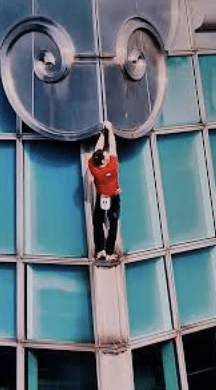
Alex Honnold’s climb of Taipei 101 should have stopped the world. It should have been one of those rare moments when people pause, look up from their screens, and remember what a human being is capable of. Instead, the loudest reaction wasn’t awe or admiration but a wave of people insisting it must be fake, AI‑generated, or digitally manipulated. That reaction says far more about us than it does about Honnold. We’ve entered a strange era where reality has to fight for credibility, where genuine human achievement is met with suspicion, and where the extraordinary is dismissed because our senses have been numbed by synthetic content. The tragedy isn’t that people doubted the climb. The tragedy is that we’ve become a culture that doubts everything real and embraces everything artificial.
Honnold’s climb wasn’t normal. It wasn’t routine. It wasn’t “just another stunt.” This is a man who has already done the impossible once with his free solo of El Capitan, a climb so dangerous and technically demanding that even elite climbers said it shouldn’t be possible. He climbed nearly 3,000 feet of vertical granite with no rope, no protection, and no margin for error. For almost four hours, he had to be perfect. That climb was documented, verified, and analyzed by experts. It won an Oscar. It changed the sport forever. And now, years later, he takes that same mastery and applies it to a skyscraper—one of the tallest buildings on Earth. Taipei 101 is not a rock face. It’s a vertical monolith of glass and steel, unpredictable surfaces, slick textures, and no natural holds. It’s a climb that should have dominated headlines, yet it was drowned out by people who think everything is fake unless it’s boring.
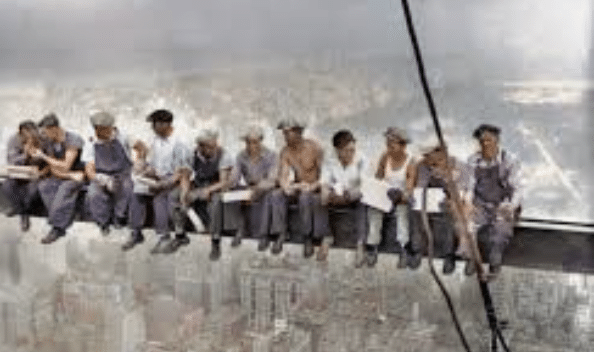
To understand how far we’ve fallen, you have to look back at the 1930s, when the iconic photograph of ironworkers eating lunch on an I‑beam high above Manhattan became a symbol of American grit. Eleven men sat casually in the sky, boots dangling over the void, no harnesses, no safety nets, just raw courage. That image wasn’t questioned. No one said, “Looks fake.” No one accused it of being staged or manipulated. People saw it and said, “My God.” They recognized the danger, the bravery, the reality of it. Now imagine showing that same photo to today’s internet. Half the comments would be accusations of AI slop, CGI shadows, or digital trickery. We’ve become a culture that doubts the real and trusts the artificial, a culture that has lost its ability to recognize genuine human courage.
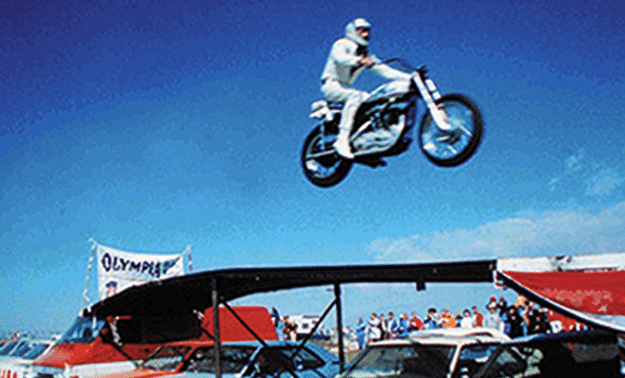
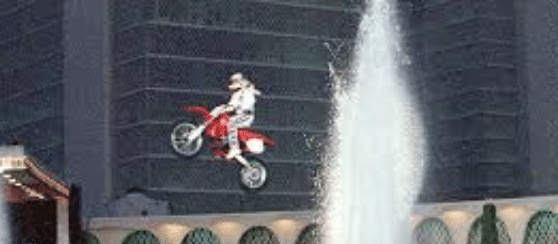
There was a time when daredevils were household names. Evel Knievel didn’t just jump motorcycles—he jumped into the American psyche. Robbie Knievel followed in his father’s footsteps, performing stunts that drew millions of viewers. They weren’t perfect. They crashed. They broke bones. They failed publicly. But they were real, and that’s why people watched. They didn’t have to compete with AI‑generated stunts or deepfake spectacles. Their danger was visible. Their humanity was the point. Now imagine Evel Knievel attempting his Caesar’s Palace jump in 2026. Half the comments would be people claiming the physics look wrong or the footage is CGI. We’ve lost the ability to be impressed because we’ve lost the ability to trust what we see.
The rise of AI slop—low‑effort, mass‑generated content flooding every platform—has created a new kind of cultural numbness. We scroll past a thousand fake images a day: politicians with swapped faces, celebrities doing things they never did, landscapes that don’t exist, people who aren’t real. Our brains are exhausted. So when something truly extraordinary happens, something that should shake us awake, we don’t feel awe. We feel suspicion. AI hasn’t just made fake things look real. It has made real things look fake. And that’s dangerous, because when we stop believing in real human achievement, we lose something essential—our sense of possibility.
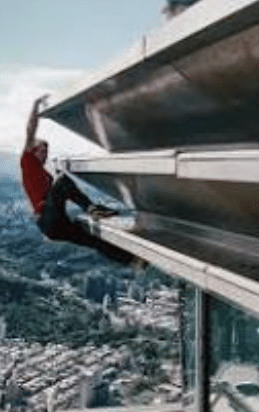
Alex Honnold is one of the last of a certain kind of human. People like him push the boundaries of what the body and mind can do. They train for decades to master a craft that could kill them. They perform acts that cannot be faked, simulated, or generated by a prompt. His free solo of El Capitan remains one of the greatest athletic achievements in history. No AI model can replicate the fear he had to suppress. No deepfake can simulate the stakes. No algorithm can mimic the years of training, the thousands of hours on the wall, the mental discipline required to override the most primal human instinct—the fear of falling. And now, with Taipei 101, he has done something equally astonishing. But instead of celebrating it, we’re arguing about whether it’s real.
When we dismiss real achievements as fake, we do more than insult the person who accomplished them. We erode our own sense of what humans are capable of. We tell ourselves, “No one can do that,” or “That’s impossible,” or “Must be AI.” And in doing so, we shrink our own imagination. We forget that humans built skyscrapers with their hands. We forget that humans jumped canyons on motorcycles. We forget that humans walked on the moon. We forget that humans climbed El Capitan without a rope. We forget that humans—real, flawed, mortal humans—are capable of the extraordinary.
Honnold’s Taipei 101 climb is more than a stunt. It’s a cultural test. A moment that reveals who we’ve become. Do we still recognize greatness when we see it? Do we still value courage? Do we still understand the difference between synthetic spectacle and genuine human achievement? Or have we become so desensitized, so cynical, so algorithm‑poisoned that nothing impresses us anymore? This climb matters because it forces us to confront those questions.
There’s an old saying: “A lie can travel halfway around the world before the truth gets its shoes on.” In the age of AI, the lie doesn’t just travel faster—it multiplies. It replicates. It mutates. It becomes a thousand versions of itself before the truth even wakes up. The truth is slow. The truth is quiet. The truth is human. And that’s why it struggles. But the truth still matters. And the truth is this: Alex Honnold climbed Taipei 101. Alex Honnold climbed El Capitan. Alex Honnold is doing things no AI model will ever do.
If we want to preserve our ability to be inspired, we have to relearn how to recognize the real. We have to rebuild our trust in human achievement. We have to stop letting AI slop dull our senses. Because if we lose that—if we lose the ability to be moved by what humans can do—then we lose something irreplaceable. We lose wonder. We lose ambition. We lose the spark that built skyscrapers, launched rockets, and sent climbers up impossible walls. Alex Honnold is a reminder of what humans are still capable of, a reminder that the extraordinary is still possible, a reminder that reality, when it’s real, is far more impressive than anything AI can fabricate. And if we can’t recognize that, if we can’t appreciate it, then the problem isn’t AI. The problem is us. We want to hear from you!
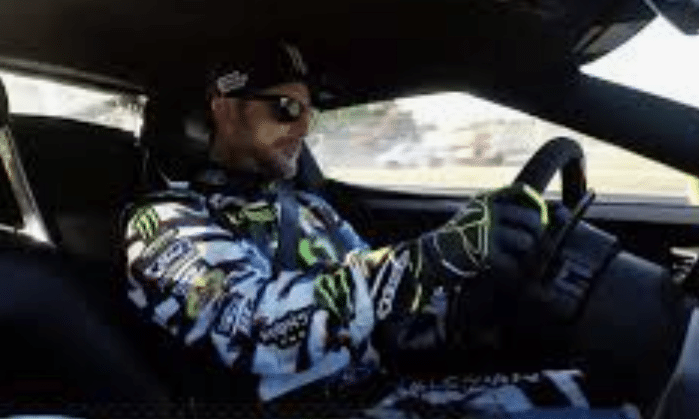
Gone but not forgotten are Evel Knievel, Robbie Knievel, and Ken Block — men who pushed the limits of what the human body, mind, and machine could do. There was a time when daredevils like them commanded prime‑time television, when the public understood what real risk looked like and celebrated those willing to face it. A younger generation that hasn’t seen those moments — or hasn’t bothered to look them up on YouTube — doesn’t always recognize bravery when it’s right in front of them. And here is Alex Honnold, attempting to reintroduce the world to that lost sense of awe, doing the impossible in an era where AI tries its best to convince us nothing real can be extraordinary anymore.