Gas prices are continuing to drop nationwide, and drivers in 11 states are enjoying averages below $3 per gallon, according to AAA.
As of Tuesday, the average national gas price was $2.36 per gallon. AAA said that a week ago the national average was $3.33. On September 10, 2023, the national average was $3.83.
The price at the pump has fallen steadily for months after peaking in the summer of 2022. AAA said the highest average cost of a gallon of gas was $5.02, which was recorded on June 14, 2022. AAA credited “plunging crude oil prices” as well as a “low U.S. demand for gas” as the main reasons why prices have fallen.
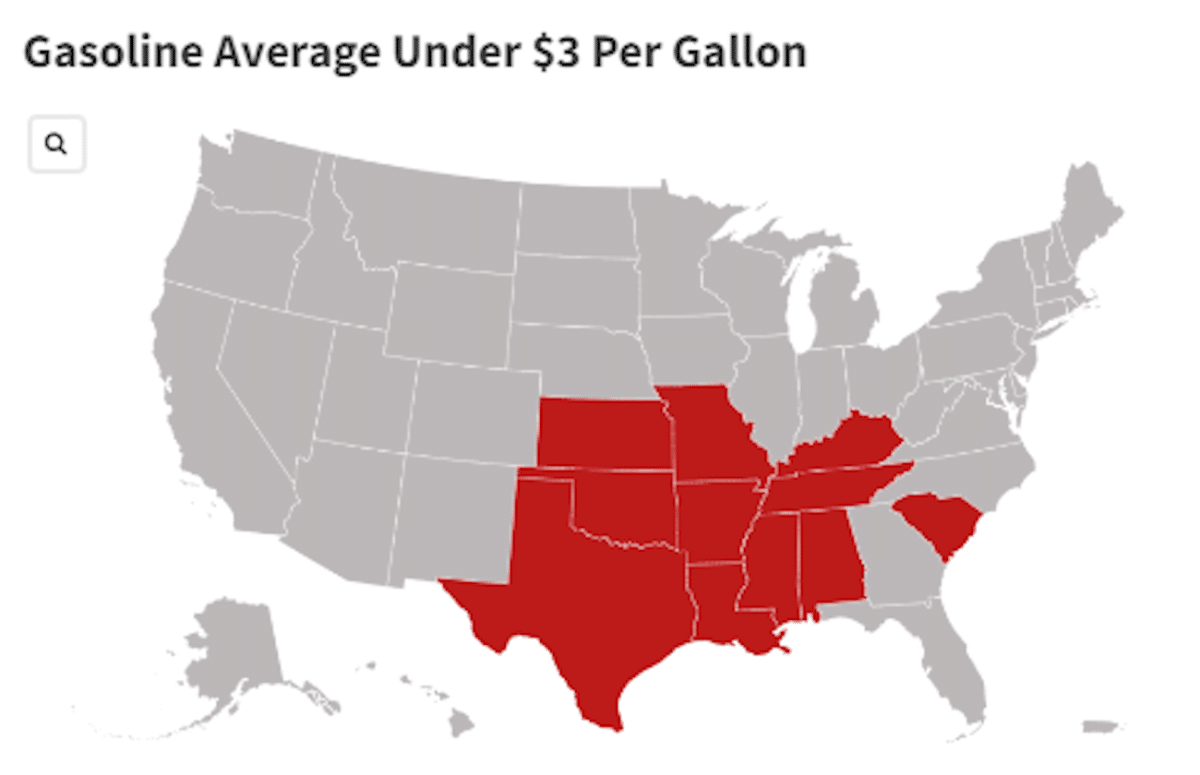
This map, created by Newsweek with data from AAA, shows the states where the price of a gallon of gas was below $3 as of Tuesday.
American Automobile Association
Below are the states where a gallon of gas costs under $3 on average, as of Tuesday, according to AAA.
- Kansas: $2.98
- Missouri: $2.94
- Kentucky: $2.91
- Arkansas: $2.90
- Louisiana: $2.87
- South Carolina: $2.84
- Alabama: $2.84
- Texas: $2.83
- Oklahoma: $2.81
- Tennessee: $2.81
- Mississippi: $2.78
Other states were just barely above the $3 mark. In North Carolina, the average price per gallon was $3 on Tuesday. The averages in Ohio ($3.04), Georgia ($3.05) and Wisconsin ($3.06) were close behind.
Gas prices in Florida have also dropped significantly. Mark Jenkins, a spokesman for AAA Auto Club Group, said in a press release Sunday that “about 23 percent of Florida retailers have prices below $3 a gallon.”
“That number is likely to grow this week,” Jenkins added. Sunday’s average of $3.16 per gallon was Florida’s lowest daily average since February 12, according to AAA.
Newsweek reached out to AAA’s national media office via email for additional comment.
Marie Dodds, the government and public affairs director for AAA in Oregon and Idaho, pointed out that “gas prices typically fall after Labor Day.”
“Demand decreases as the summer driving season comes to an end and the switch to winter-blend fuel occurs,” Dodds said in a press release. “Winter-blend fuel is cheaper to produce than summer-blend fuel, which is more environmentally friendly during the hot summer months.”
She added that prices “should continue to fall in the coming weeks, barring unforeseen events such as a refinery or pipeline outage, a storm that impacts the Gulf of Mexico, rising tensions in the Middle East, or other geo-political events.”
The most expensive price-per-gallon averages continue to be seen on the West Coast. As of Tuesday, California had the highest state average, at $4.73, followed by Hawaii ($4.65), Washington ($4.16) and Nevada ($3.98).
AAA said in its release that it is “typical for the West Coast to have six or seven states in the top 10 as this region tends to consistently have fairly tight supplies, consuming about as much gasoline as is produced.”