Over 100 villagers have been killed by suspected Boko Haram militants in northeastern Nigeria, local residents said,
If the death toll is confirmed, it would mark one of the deadliest attacks in the region this year.
The attack unfolded on Sunday evening in the Tarmuwa council area of Yobe State.
More than 50 extremists on motorcycles stormed the village, opening fire indiscriminately on marketgoers, worshippers, and families in their homes, residents reported.
Buildings were set alight and the streets were strewn with bodies, with many people still missing, according to Yobe police spokesperson Dungus Abdulkarim.
He attributed the attack to the jihadist group, notorious for its brutal campaign to impose its radical interpretation of Islamic law, or Sharia, across northeastern Nigeria.
“This is the first time our community has faced such a devastating attack,” said Buba Adamu, another local chief.
“We never imagined something like this could happen here.”
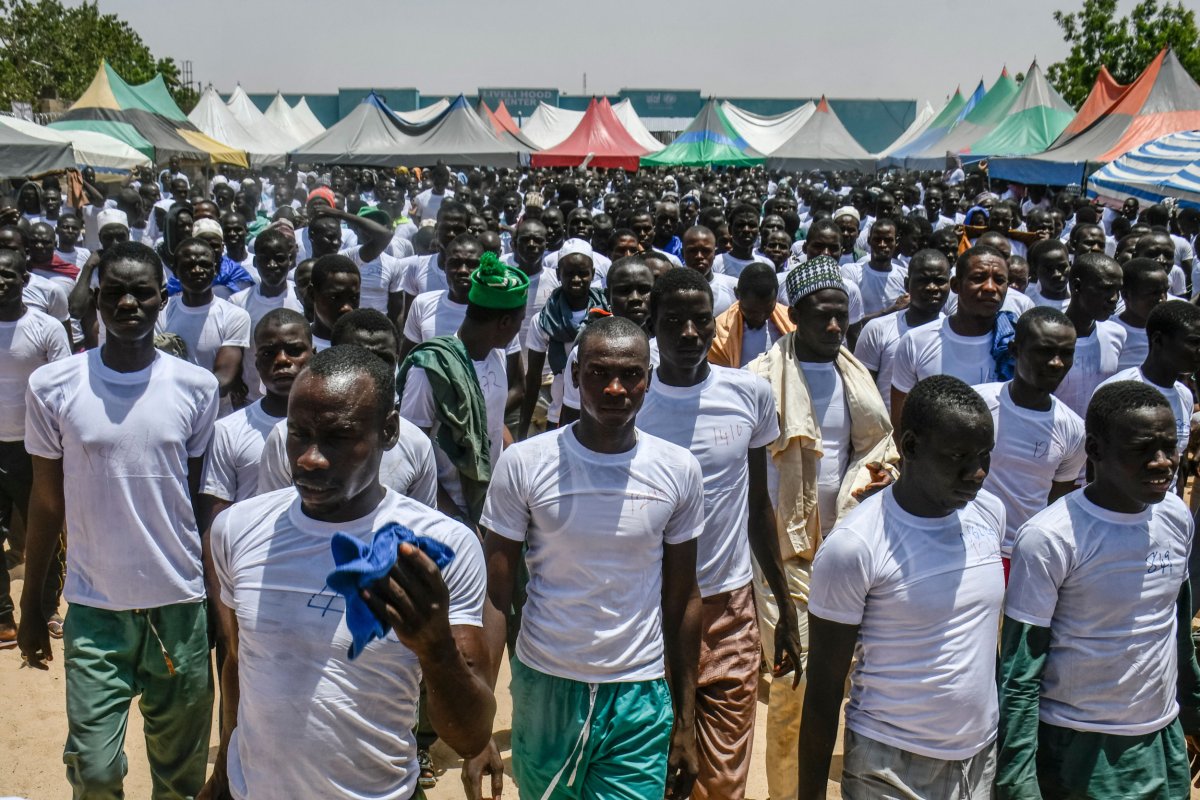
Some of the 2100 former members of Boko Haram and of the Islamic State West Africa Province (ISWAP) are seen at the Hajja Camp in Maiduguri, Nigeria, on May 30, 2023 prior to their release at the end of a five month rehabilitation program. Boko Haram and its offshoots have killed over 35,000 people, according to estimates by the Council on Foreign Relations.
AUDU MARTE/AFP via Getty Images
Local media reported that the militants claimed responsibility for the attack, describing it as retaliation for villagers providing information to security forces that led to the deaths of several Boko Haram members.
This massacre is one of the most devastating in Yobe State in recent memory.
Although Yobe has experienced fewer attacks compared to neighboring Borno State, which is the epicenter of the Boko Haram conflict, the incident highlights the pervasive insecurity in the region.
A more conservative death toll has been offered by the area’s local governor, Idi Barde Gubana, who estimates 34 people were killed in the attack.
This discrepancy is not uncommon in Nigeria’s conflict zones, where official figures often lag behind those reported by survivors.

Nigeria’s President Bola Tinubu delivers his speech after taking oath of office during his inauguration at the Eagle Square in Abuja, Nigeria on May 29, 2023. Tinubu’s campaign emphasized the need for a more robust approach to security, promising reforms and increased support for the military and other security agencies to combat Boko Haram effectively.
KOLA SULAIMON/AFP via Getty Images
Since its insurgency began in 2009, Boko Haram has been responsible for over 35,000 deaths and the displacement of more than 2 million people.
The Multinational Joint Task Force (MNJTF), composed of troops from Nigeria, Chad, Cameroon, Niger, and Benin, has been fighting Boko Haram since 2015.
Confidence MacHarry, a security analyst with Lagos-based SBM Intelligence, emphasized that in many parts of the region, the Nigerian military struggles to maintain control, leaving villagers vulnerable to brutal retribution.
“There are some places (in the region) totally out of the control of the Nigerian army and villagers often live in fear of reprisals,” he said.
Nigerian President Bola Ahmed Tinubu, who was elected last year on a platform promising to end the long-running insurgency, condemned the attack and assured villagers of justice.
“As we navigate through these temporary pains, please remember that every effort is being made to ensure a stable and prosperous future for all Nigerians,” he shared on X.
However, his statement was notably silent on specific security measures to prevent future attacks.
Critics argue Tinubu’s administration has yet to make significant strides in addressing the underlying issues of inadequate resources and manpower that have plagued Nigeria’s counterinsurgency efforts for years.
This article includes reporting from The Associated Press