Up to 45,000 East Coast and Gulf Coast dockworkers have threatened to strike on Oct. 1 in a move that could shut down half America’s shipping cargo.
If the dispute between workers represented by the International Longshoremen’s Union and port bosses negotiating through the United States Maritime Alliance do not reach an agreement it is feared that shortages could be felt by consumers if strikes persist for more than a month.
Union negotiators are demanding a 77% hike in wages over six-years, according to analysts, and promises of a total ban on the automation of cranes, gates and container ship movements currently used to load and unload freight at the 36 U.S. ports affected by the proposed industrial action.
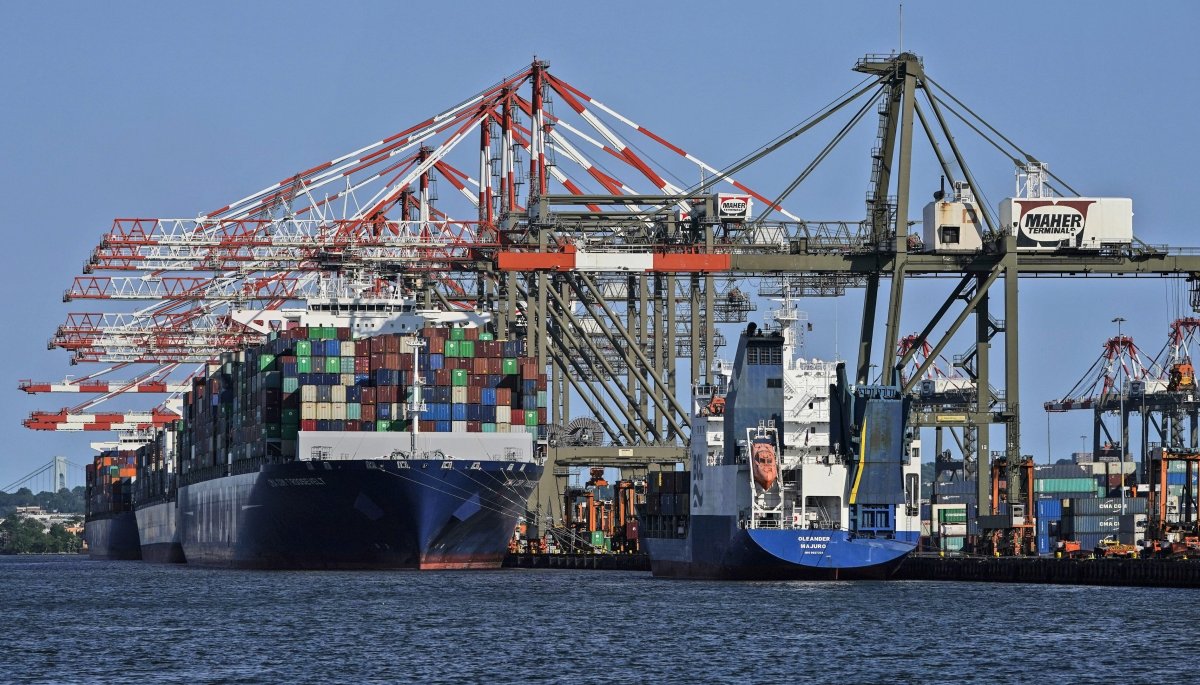
A container ship makes it way toward the Port of New York and New Jersey in Elizabeth, N.J., on June 30, 2021. Up to 45,000 East Coast and Gulf Coast dockworkers have threatened to strike in a move that could shut down half America’s shipping cargo.
Seth Wenig/AP
“I think everyone’s a bit nervous about it,” said Mia Ginter, director of North America ocean shipping for C.H. Robinson, a logistics firm. “The rhetoric this time with the ILA is at a level we haven’t seen before.”
The two sides have not met to negotiate since June, when the union said it suspended national talks to first complete local port agreements. No further national contract talks have been scheduled.
Harold Daggett, the union president, warned earlier this month that the longshoremen stood ready to strike once their contract expires on Sept. 30.
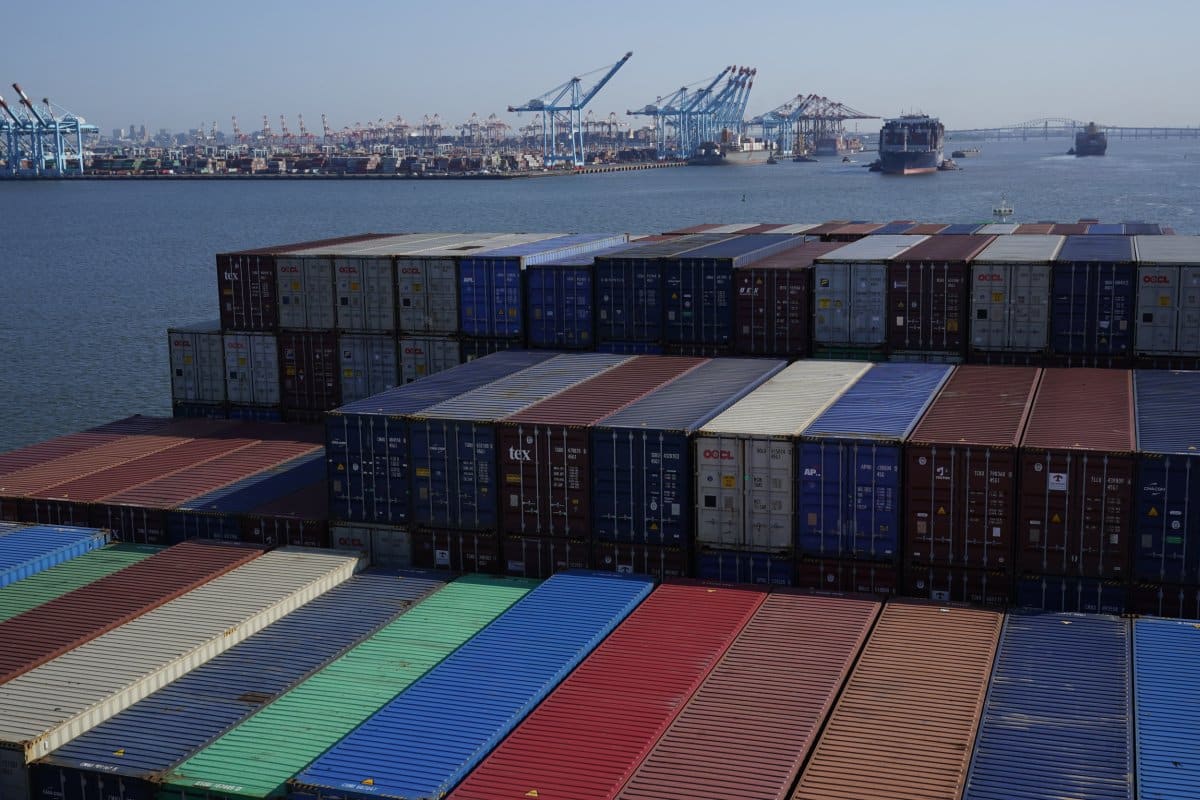
A container ship makes it way toward the Port of New York and New Jersey in Elizabeth, N.J., on June 30, 2021. Union negotiators are demanding a 77% hike in wages over six-years according to analysts.
Seth Wenig/AP
“We are very far apart,” Daggett said. “Mark my words, we’ll shut them down Oct. 1 if we don’t get the kind of wages we deserve.” He added “We do not believe that robotics should take over a human being’s job.”
Port workers currently earn a base pay of $39 an hour, or just over $81,000 a year. But with overtime and other benefits, some can make over $200,000 annually.
Neither the union nor the ports would discuss pay levels, but Daggot emphasized that higher-paid longshoremen work up to 100 hours per-week, losing time with their families as a result.
A 2019-2020 report by the Waterfront Commission, which oversees New York Harbor, said about a third of the longshoremen based there made $200,000 or more.
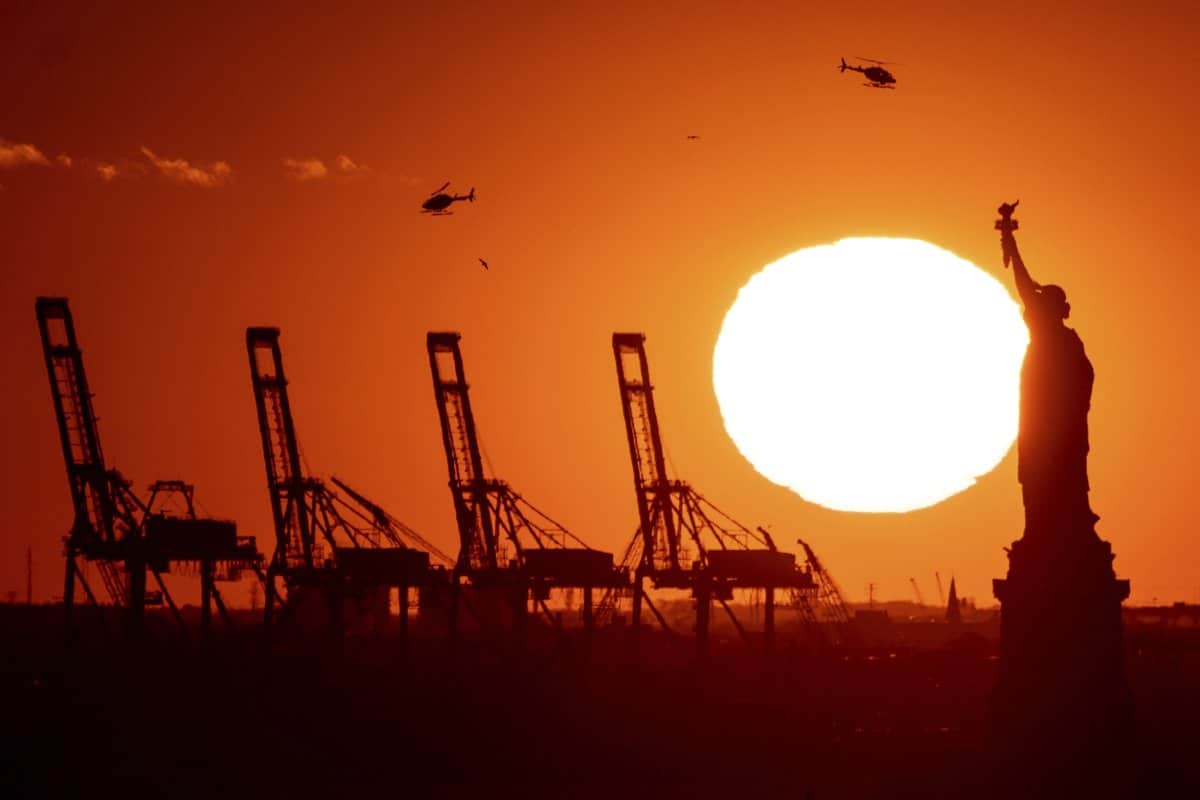
Cranes at the Port of New York and New Jersey appear behind the Statue of Liberty, Nov. 20, 2022, in a photo taken from New York. The two sides have not met to negotiate since June, when the union said it suspended national talks to first complete local port agreements.
Julia Nikhinson/AP
In the case of a short-lived strike, industry experts say consumers would be unlikely to be aware of shortages of store goods during the holiday shopping season. If a strike were to extend beyond a month or so, however, shortages of goods could develop, particularly in the auto and pharmaceutical industries. Exports of cars could be affected.
The Maritime Alliance has said it’s committed to resuming talks and avoiding the first national longshoremen’s strike since 1977. It has accused the union of having already decided in advance to walk off the job.
“We need to sit down and negotiate a new agreement that avoids an unnecessary and costly strike that will be detrimental to both sides,” the alliance said in a statement.
Industry analysts argue that U.S. ports can take longer to unload container ships than Asian and European ports and suggest that without more automation, U.S. ports could become less competitive. However President Biden pledged in February to upgrade U.S. port infrastructure in response to perceived Chinese threats around cybersecurity.
This article includes reporting from The Associated Press