An “error” of judgment made by Will Ferrell while filming his newly released documentary has been explained by the film’s director, who opted to include the uncomfortable moment in the finished product.
In Will & Harper, which was released on Netflix on Friday, Saturday Night Live (SNL) alum Ferrell is seen going on a road trip with his friend and longtime collaborator Harper Steele, who two years ago came out as a transgender woman at the age of 61.
When former SNL head writer Steele informed Ferrell, 57, the Los Angeles-based Elf star proposed that his friend leave her New York base to join him on a cross-country road trip, where they could talk about life and film it.
The resulting production saw the pair make their way to a Texas steakhouse, where Ferrell took a shot at raising laughs by donning his Sherlock Holmes costume from the 2018 comedy movie Holmes & Watson.
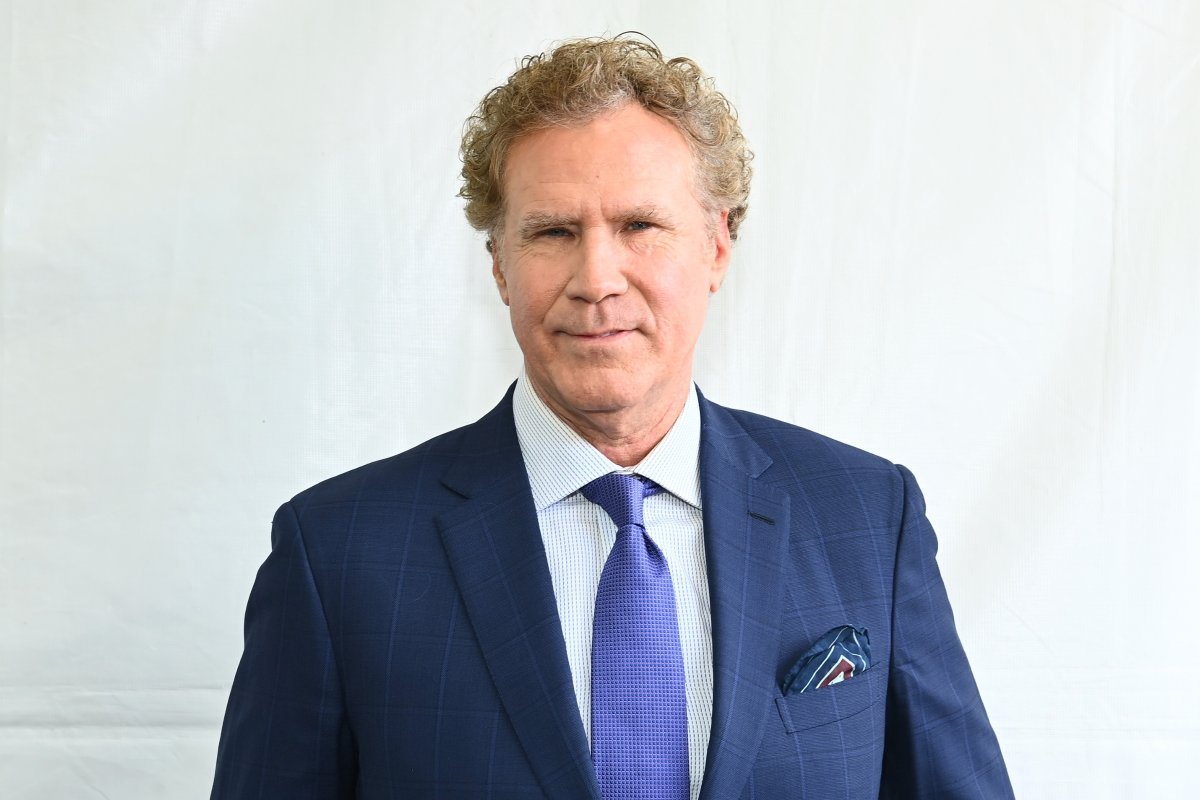
Will Ferrell is pictured on February 25, 2024 in Santa Monica, California. The comedian has returned to screens with his Netflix documentary “Will & Harper.”
Araya Doheny/Getty Images
However, as Steele and Ferrell sat opposite one another to partake in a testing steak-eating challenge, the mood in the room shifted as patrons directed their attentions to Steele. As photos of the pair at the eatery were shared on social media, a deluge of disparaging comments followed.
The stunt had backfired, leaving Steele at the hands of detractors, who expressed anti-transgender sentiment.
The following morning, Ferrell shared that he had let his friend down by inadvertently making her a target for negative attention. Josh Greenbaum, the documentary’s director, opted to allow this particular part of their road trip to play out for viewers, rather than relegate it to the cutting room floor.
“That was a learning point, certainly for Will, that not all attention is good attention, particularly for those in the trans community,” Greenbaum told U.K. newspaper The Guardian.
“It was an unforeseen error, but I didn’t want to then sweep that under the rug and not include it. A huge part of the trans experience is that there is just a massive amount of hatred, a lot of it online.”
Citing a statistic presented to production during research for the documentary, Greenbaum added: “Seventy percent of people don’t directly know or think they know a trans person. So they get what they get from the media, from politicians. So if they don’t know anyone, now they’ll know Harper. And she’s funny and charming and complicated and just all the things you would want to represent the human side of a trans person’s experience. Then maybe the politics will follow.”
The prospect of being the first trans person that a number of Netflix viewers will get to know—albeit through TV screens—was a factor that Steele told The Guardian she “wasn’t really thinking about.”
“That would be weird,” she said. “They gave us some fact that more people have said they’ve seen an alien than have seen a trans person, which I find it a little hard to believe. I’m travelling across America. Every family has queer people, whether they acknowledge it or not, and the trans community is a part of the queer community. I like to affirm that.
“So maybe it’s possible people don’t have trans people in their lives. But I believe they will,” she added.
Ferrell approached the film—in which he gives the spotlight over the Steele—without an agenda, explaining that they approached the project with the mindset that it would “just be whatever it’s going to end up being.”
“So if it happens to be funny, if none of it happens to be funny, it will find its way,” he told The Guardian. “It was great to not have, in a conventional sense, a shooting day where you’re hoping this scene works, or wondering why it isn’t working.
“We made it all the way to Santa Monica, and Josh said: ‘I think that’s a wrap.’ And then we walked back to our car going, ‘I don’t know if there’s a movie there. But that sure was fun.'”