In a move addressing ongoing concerns about judicial integrity, Supreme Court Justice Elena Kagan has reaffirmed her stance on the need for a robust enforcement mechanism for the High Court’s recently adopted ethics code.
Speaking on Monday at New York University School of Law, Kagan outlined her vision for strengthening the code’s implementation, pushing back against critics who claim such measures would be ineffective.
The Supreme Court, facing mounting pressure over alleged ethics violations primarily aimed at conservative Justices Clarence Thomas and Samuel Alito, issued its first-ever formal code of conduct in November. However, the code was immediately met with criticism for lacking any concrete means of enforcement, leaving many to question its practical impact on the justices’ behavior.
Alito’s participation in cases related to presidential immunity and the January 6 attack on the U.S. Capitol has drawn controversy. Reports emerged of flags associated with conservative movements were seen outside residences owned by Alito following the 2020 election. This has led to calls from some members of Congress and ethics watchdog groups for Alito to recuse himself from cases related to these topics. Alito has not recused himself.
Investigative reports last year raised questions about Thomas’ financial disclosures, as they alleged that Thomas may have submitted incomplete financial disclosure statements over nearly three decades. Such disclosures are required under the Ethics in Government Act (EIGA).
The lack of transparency from conservative justices regarding their recusal decisions could fuel speculation and potentially undermine confidence in the court’s integrity.
Newsweek contacted the Supreme Court’s press office via email on Monday for comment.
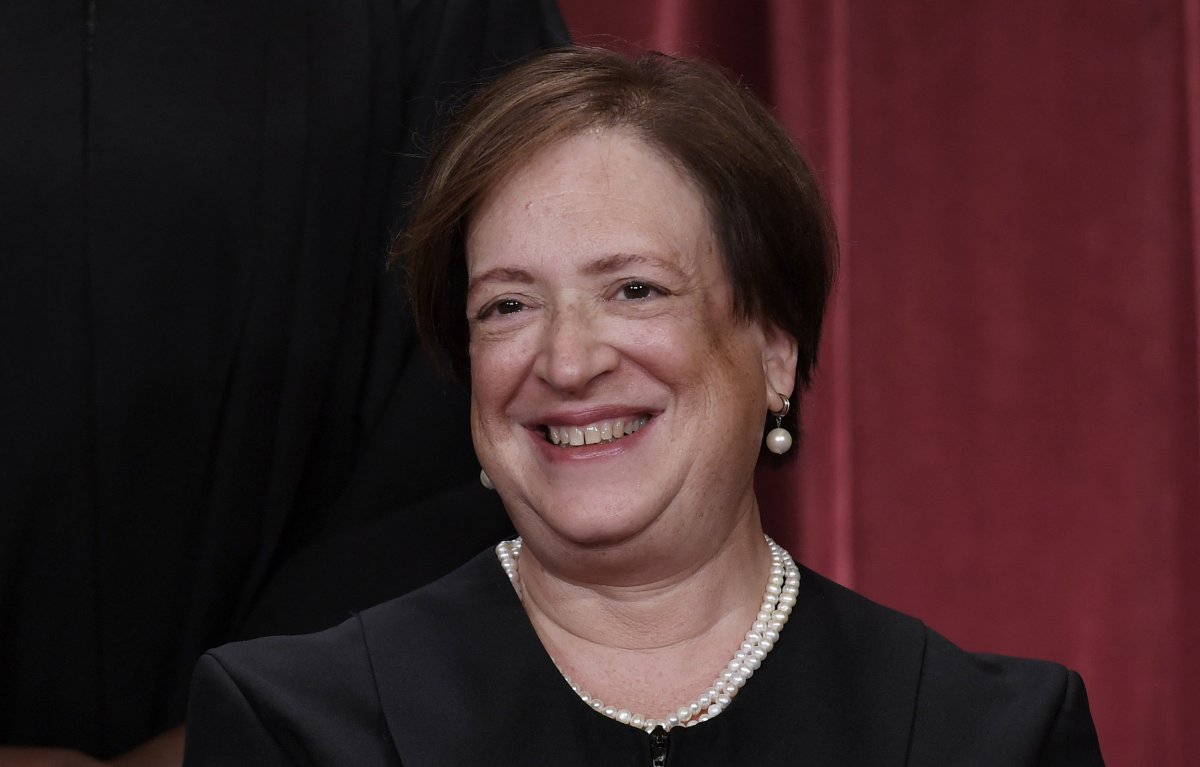
Supreme Court Justice Elena Kagan poses for the official High Court photo, in Washington, D.C., on October 7, 2022. Kagan on Monday called for an enforcement procedure regarding the court’s new ethics code. (Photo by OLIVIER DOULIERY/AFP via Getty Images)
Kagan, a member of the court’s liberal minority, has been at the forefront of calls for reform. Her proposal involves creation of a panel of lower court judges appointed by Chief Justice John Roberts. This panel would be tasked with handling allegations leveled against the justices, effectively serving as a filter to separate legitimate concerns from baseless accusations.
The justice’s proposal, however, has not been without its detractors. Some critics argue that such an enforcement procedure could open the floodgates to a barrage of unfounded claims against the jurists. Others suggest that a panel composed of lower court judges might be overly deferential to their Supreme Court superiors, potentially undermining the effectiveness of the oversight.
A significant development since the adoption of the ethics code has been the emergence of a clear divide between the court’s liberal and conservative justices regarding the disclosure of recusal reasons. The three liberal justices—Sonia Sotomayor, Kagan and Ketanji Brown Jackson—have consistently provided explanations for their recusals, citing specific provisions of the Code of Conduct. In contrast, the six conservative justices have generally not offered such explanations when recusing themselves from cases.
The code itself calls for justices to recuse when they have financial, professional or personal conflicts. It also includes a “presumption of impartiality” and states that the “rule of necessity may override the rule of disqualification.” These provisions have been criticized by some as potentially weakening the effectiveness of the recusal process.
In response to these ongoing concerns, U.S. Senator Sheldon Whitehouse, a Democrat from Rhode Island, has proposed legislation that would require justices to provide more information about potential conflicts of interest and explain their recusal decisions to the public. The bill, known as the Supreme Court Ethics, Recusal and Transparency Act, has cleared the Senate Judiciary Committee but faces significant hurdles in the Republican-controlled House and closely divided Senate.
With public trust in the judiciary at stake, the push for meaningful reform shows no signs of abating. As the Supreme Court prepares to face another potentially contentious term, the spotlight on judicial ethics is likely to intensify.
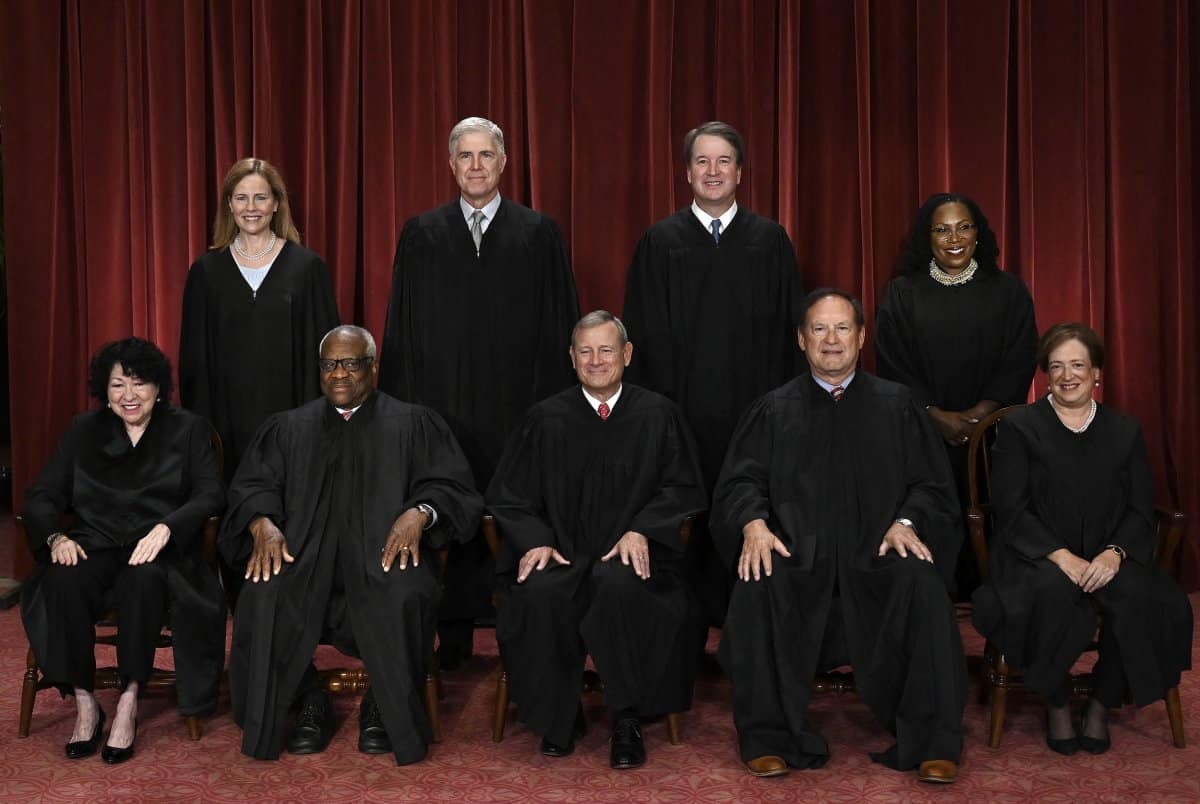
U.S. Supreme Court justices pose for their official photo in Washington, D.C., on October 7, 2022. Seated, from left: Sonia Sotomayor, Clarence Thomas, Chief Justice John Roberts, Samuel Alito and Elena Kagan; standing, from left: Amy Coney Barrett, Neil Gorsuch, Brett Kavanaugh and Ketanji Brown Jackson. Kagan outlined how the High Court’s new ethics code could be improved with an enforcement mechanism. (Photo by OLIVIER DOULIERY / AFP)