
3/27/26 4:00 PM — Misleading.com’s Cynthia McCallum zeroes in on the TSA debacle, where agents are expected to safeguard airports even as their paychecks stall. She calls out Congress for heading off on vacation instead of fixing the crisis they helped create. And she underscores the added strain of ICE agents being pulled in, pushing an already stressed workforce to the brink.
CYNTHIA McCALLUM: THE TSA MESS, THE PAYCHECK FREEZE, AND A CONGRESS THAT LEFT EARLY
The thing about airport security is that it only works when the people doing the job can actually afford to show up. That’s the part of the story no one in Washington seems eager to talk about. We’re told to take off our shoes, empty our pockets, and surrender our dignity to the conveyor belt — all while the Transportation Security Administration tries to keep the system running with a workforce whose paychecks have stalled. It’s a strange kind of national priority: protect the airports, but don’t pay the protectors.
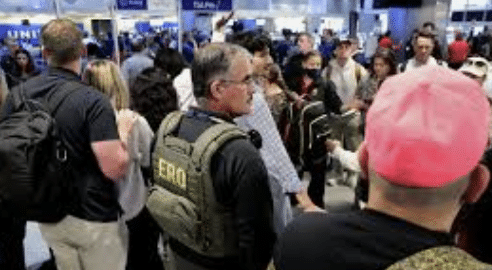
And now, as if the strain weren’t enough, ICE agents are being pulled in to help cover the gaps. That’s not a solution; that’s a pressure valve hissing before it bursts. But Congress? They packed their bags and left town. Vacation time. Recess. Whatever polite word you want to use for “walking away from a crisis you helped create.”
There’s a pattern here, and it’s not subtle. When the system starts to wobble, the people who rely on it — travelers, workers, families — are told to be patient. “We’re working on it.” “We’re negotiating.” “We’re close.” But the people who actually keep the system functioning don’t get the luxury of patience. They get unpaid hours, unpredictable schedules, and the expectation that they’ll keep smiling while confiscating water bottles from passengers who haven’t slept.
It’s easy to forget that TSA agents aren’t robots. They’re not background scenery. They’re human beings with mortgages, kids, medical bills, and the same rising grocery prices as everyone else. But when the government stalls, they’re the ones who feel it first. And somehow, they’re expected to keep the entire aviation system upright while the people in charge of funding it are wheels‑up to their next destination.
The irony is almost too on‑the‑nose. Congress leaves for vacation while TSA agents can’t even count on a paycheck. It’s the kind of storyline that would get rejected in a writers’ room for being too obvious. But here we are, living it.
And then there’s the ICE angle — a detail that should make everyone pause. ICE agents are trained for immigration enforcement, not airport security. Pulling them into TSA roles isn’t a fix; it’s a reshuffling of stress. It’s like trying to patch a leaking roof by moving buckets around the living room. The water still comes in. The damage still spreads. And the people doing the work are still soaked.
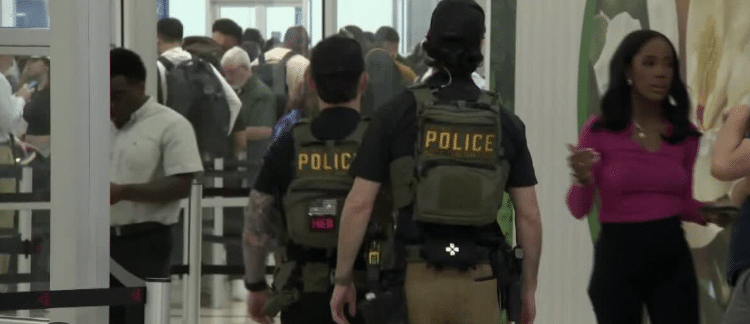
What’s most misleading about this whole situation is the messaging. We’re told the system is “resilient.” We’re told there’s “no immediate threat.” We’re told everything is “under control.” But resilience has limits. Threats don’t wait for paychecks to resume. And “under control” is a phrase that tends to appear right before something very much isn’t.
The public hears “temporary disruption.” Workers hear “good luck.” And Congress hears… apparently nothing at all, because they’re not in the building.
Let’s talk about the human side for a moment — the part that rarely makes it into official statements. Imagine being a TSA agent right now. You’re standing on your feet for hours, dealing with frustrated travelers, enforcing rules you didn’t write, and trying to maintain a level of vigilance that most people can’t sustain for more than a few minutes. Now add the stress of not knowing when your next paycheck will land. Add the knowledge that Congress left town without resolving the issue. Add the pressure of ICE agents being brought in, not because the system is improving, but because it’s cracking.
That’s not resilience. That’s exhaustion.
And here’s the part that should concern everyone, regardless of political leaning: when you push a workforce to the breaking point, mistakes happen. Not because people don’t care, but because they’re human. Fatigue, stress, uncertainty — these things erode focus. They erode morale. They erode the very security the system is supposed to guarantee. But instead of addressing the root problem — funding, staffing, stability — we get temporary patches and optimistic press releases. We get the illusion of action instead of the substance of it.
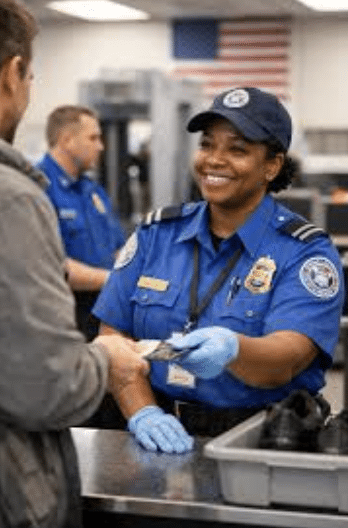
There’s also a broader question here about priorities. If airport security is truly essential — and we’re told it is — then why is it treated as optional when it comes to pay and staffing? Why is the workforce expected to absorb the consequences of political gridlock? Why is the public expected to accept “delays” and “disruptions” as if they’re natural phenomena rather than the result of choices made by elected officials?
It’s misleading to frame this as an unavoidable crisis. It’s not. It’s the predictable outcome of a system that treats essential workers as interchangeable parts rather than people.
And let’s not ignore the ripple effects. When TSA is strained, airports slow down. When airports slow down, commerce slows down. When commerce slows down, the economy feels it. This isn’t just an inconvenience; it’s a national vulnerability. And yet the people responsible for preventing that vulnerability from widening are… on break.
There’s a disconnect between the urgency of the situation and the behavior of the people tasked with solving it. And that disconnect is exactly what Misleading.com exists to highlight. Not to tell readers what to think, but to show them what’s happening behind the curtain so they can decide for themselves.
Some will argue that Congress needs breaks. That negotiations take time. That the system is complicated. And all of that may be true. But complexity doesn’t excuse abandonment. And time doesn’t excuse inaction. If anything, the complexity of the system should make lawmakers more present, not less.
Others will say TSA workers knew what they signed up for. But no one signs up for unpaid labor. No one signs up for political stalemates. No one signs up for being the first to feel the consequences of decisions made by people who won’t feel them at all.
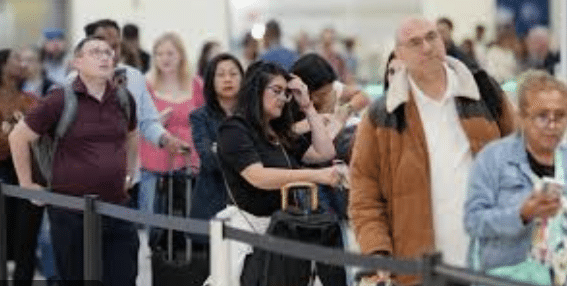
The public deserves honesty about what’s happening. TSA workers deserve stability. And Congress deserves scrutiny — not because it’s fashionable, but because accountability is the only thing that keeps a system like this from collapsing under its own contradictions.
So here’s the question I’ll leave to our readers, because this platform works best when the conversation doesn’t end with me:
How long can a system built on overworked, underpaid, and politically neglected workers hold? And at what point do we stop accepting “temporary disruption” as an explanation and start demanding something better?
Your turn. Misleading.com is built for your voice as much as mine. What do you see in this mess — and what do you think Washington is missing?