Historian Allan Lichtman, known for his election prediction system, “The Keys to the White House,” has suggested the war in Ukraine could prove to be a weak spot for the Democratic Party as it seeks reelection under Vice President Kamala Harris, according to the model.
Lichtman’s system revolves around 13 keys, which evaluate the incumbent party’s standing based on various factors, including the economy, foreign policy and domestic politics. If six or more of the 13 keys—all true/false statements—are false, the incumbent party is predicted to lose the election. Should five or fewer be false, it is expected to win.
Based on this model, Lichtman has officially predicted that Harris will win the election, though the system is not without its critics.
“Well, the shakiest key is the foreign policy success key,” Lichtman said during a live-streamed interview on YouTube on Wednesday in response to a question about which keys the Democratic Party could be in danger of losing.
“I gave that to the administration because it was [President Joe] Biden…who put together the coalition of the West that stopped Putin from conquering Ukraine and going after our NATO allies and deeply endangering America’s national security.”
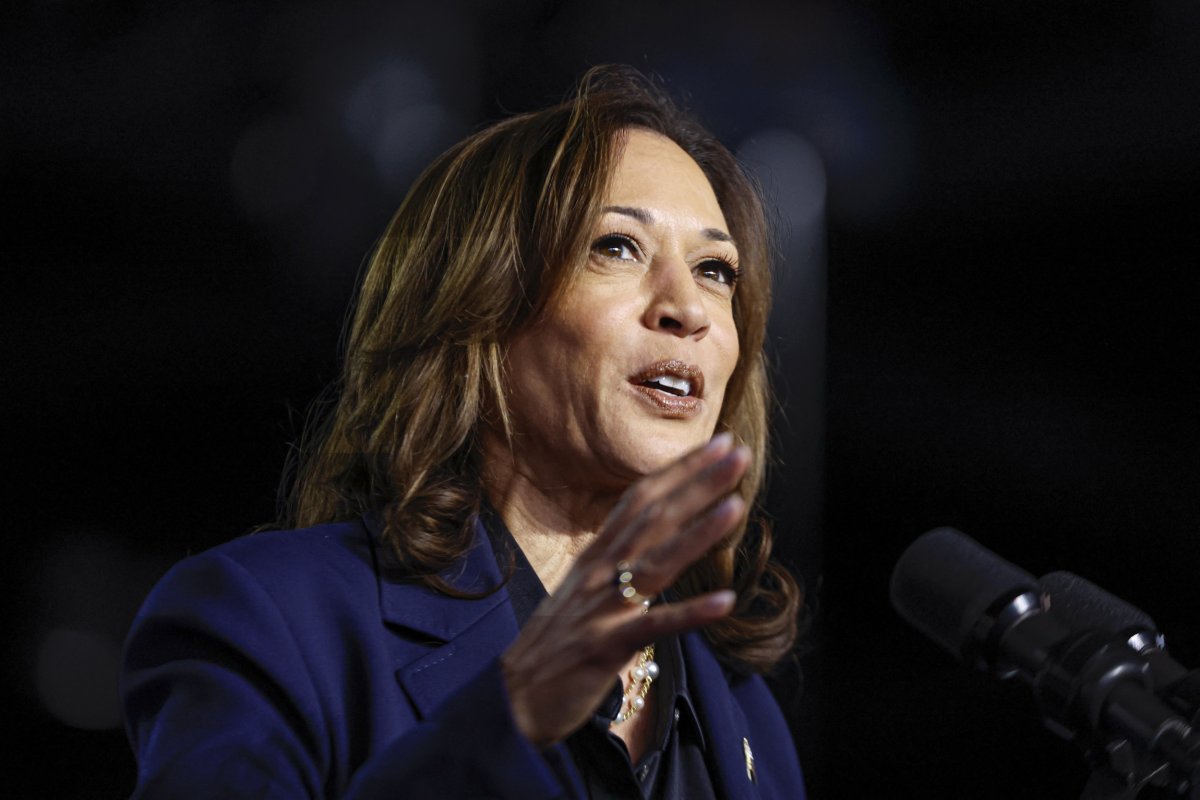
Kamala Harris speaks during a campaign event in Green Bay, Wisconsin, on October 17. Historian Allan Lichtman suggested the war in Ukraine could prove to be a weak spot for Harris and the Democratic Party.
Kamil Krzaczynski/AFP via Getty Images
Newsweek reached out to the Harris campaign for comment via email.
While he said American support had kept Ukraine “alive” for more than two and a half years, even enabling the Eastern European country to make an incursion into neighboring Russia, he caveated that “wars are fluid.”
“And I suppose there could be a catastrophe in Ukraine,” the American University professor said.
In an email to Newsweek on Friday, Lichtman clarified: “It is just the shakiest comparatively because wars are uncertain.
“However, by now I am confident it will not flip. Even so, a flip would not change the prediction because Harris has a two-key cushion with four negative keys.”
The 13 keys, as set out by the historian in a 2012 article for the Social Education journal, are:
- Party mandate: After the midterm elections, the incumbent party holds more seats in the U.S. House of Representatives than after the previous midterm elections.
- No primary contest: There is no serious contest for the incumbent party nomination.
- Incumbent seeking re-election: The incumbent party candidate is the sitting president.
- No third party: There is no significant third party or independent campaign.
- Strong short-term economy: The economy is not in recession during the election campaign.
- Strong long-term economy: Real per capita economic growth during the term equals or exceeds mean growth during the previous two terms.
- Major policy change: The incumbent administration effects major changes in national policy.
- No social unrest: There is no sustained social unrest during the term.
- No scandal: The incumbent administration is untainted by major scandal.
- No foreign or military failure: The incumbent administration suffers no major failure in foreign or military affairs.
- Major foreign or military success: The incumbent administration achieves a major success in foreign or military affairs.
- Charismatic incumbent: The incumbent party candidate is charismatic or a national hero.
- Uncharismatic challenger: The challenging party candidate is not charismatic or a national hero.
Do you have a story we should be covering? Do you have any questions about the 2024 presidential election? Contact LiveNews@newsweek.com