A woman who wants the best for her floral decor has shown what happens when you water plants with distilled water.
Kristen, 31, who works in higher education as an instructional designer, was reluctant to switch from tap water for some time, but she finally gave it a go, and the results speak for themselves.
In a TikTok video shared to @plantsofk93, she watered two calatheas that had brown tips and spots on the leaves. After switching, she described them as “healthier,” with the colors much more vibrant and “almost perfect.”
Kristen, from San Antonio, Texas, told Newsweek: “I was surprised by how apparent the results were after using distilled water. I was not expecting the difference to be so dramatic. But especially for houseplants that are known to be ‘finicky,’ it was obvious they were much happier with the distilled water.”
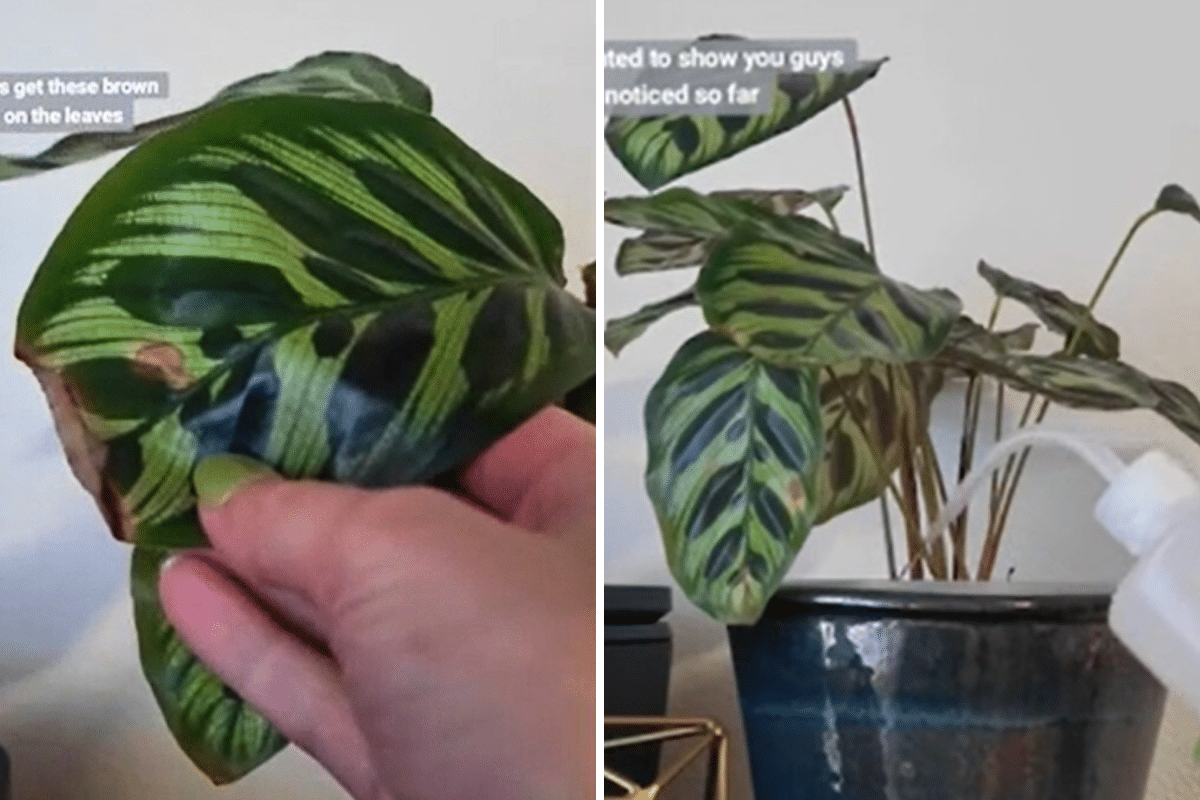
Screenshots from Kristen’s TikTok video. A close-up shot reveals a leaf with brown spots and ragged edges. She then films herself pouring distilled water into a watering can before using it to water the plants.
TikTok/@plantsofk93
According to a CivicScience study, 66 percent of 1,499 U.S. consumers surveyed own at least one houseplant. When asked about their reasons for owning a plant, the top three reasons were to improve air quality, have something pretty to look at, or enhance to the design of their home.
Gen Z and Gen Alpha are almost twice as likely as any other age group to cite the desire to care for something alive as their primary purchasing reason.
However, she admits, “I have not been consistent with using distilled water lately, but that is more due to a lack of planning on my part. I typically will add a gallon or two to my cart when grocery shopping, and it’s not very expensive (although it does cost more than water from the faucet).”
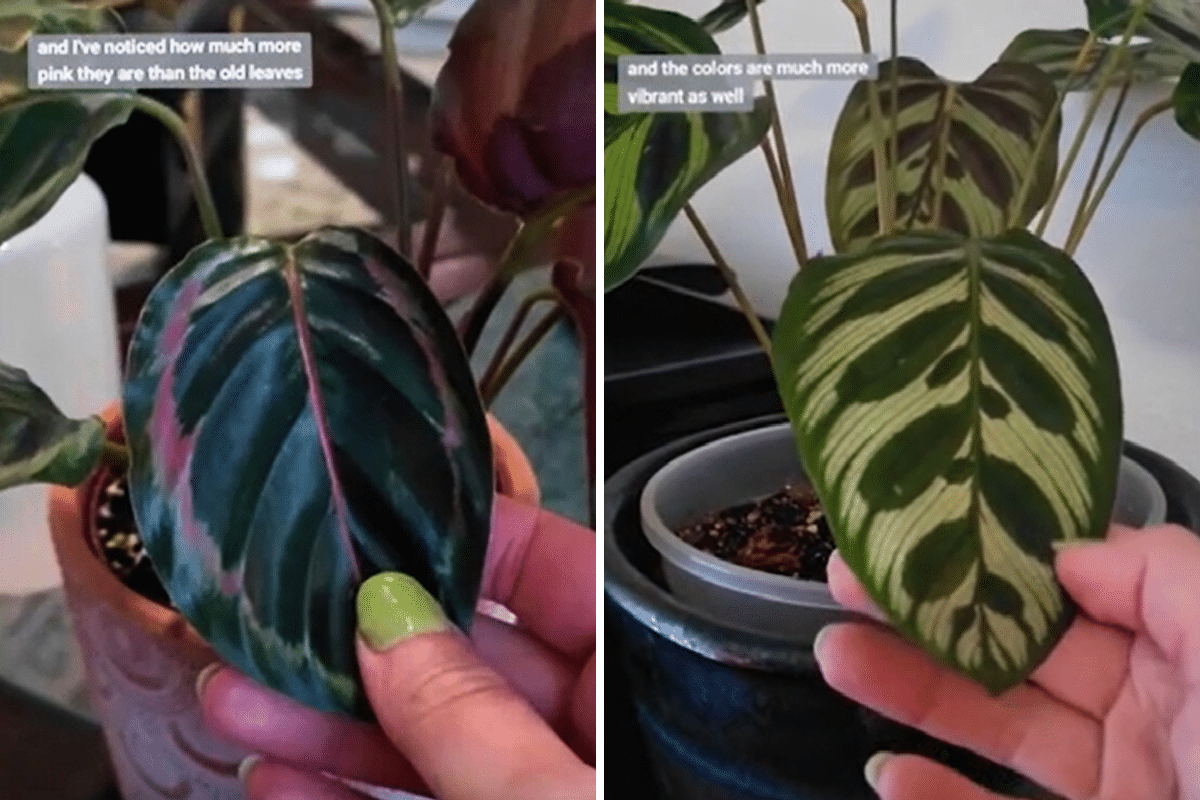
The results. The leaves appear to be more “vibrant” with different green tones and hints of pink.
TikTok/@plantsofk93
Newsweek discussed the clip, which has over 10,000 views, with Luke Dejahang, a gardening expert.
He explained: “Distilled water is purified water that has been boiled into vapor and then condensed back into liquid form. Distillation removes minerals and bacteria, resulting in water that is free from impurities, which can sometimes be harmful to sensitive plants.
“As a result, distilled water allows plants to grow and flourish in a healthier environment. By watering them with clean water, you help them stay blooming longer and ensure healthy root development, especially if that’s the only type of water they receive.”
While using distilled water may seem like an ideal choice, it isn’t always the best option, added Dejahang, the CEO of Crown Pavilions, a garden outdoor building company.
He told Newsweek: “Using distilled water can be a lengthy process and may be expensive if you need to buy it, especially compared to using tap water. Furthermore, because distilled water is extremely pure, it lacks the minerals often found in rainwater or tap water, which can lead to nutrient deficiencies in plants.
“Some plants, such as orchids, violets, peace lilies, and ferns, respond very well to distilled water, as they have adapted to environments with limited mineral exposure and thrive with this purified water.
“Overall, plants tend to thrive better with distilled water due to its purity, which allows them to grow and flourish alongside the right amount of sunshine and exposure to natural light.”
Dejahang, based in Oxfordshire, England, provided the following tips:
- Watering Routine: “Make sure to establish a water routine and understand the specific water needs of your houseplants. You want to avoid overwatering them, as this can lead to root rot and other issues. Some plants are incredibly low maintenance and may only need watering once a week, whereas others may need it every other day—each plant is different and requires different care.”
- Proper Lighting: “You need to ensure that your plants receive the right amount of light. Some plants thrive in bright, indirect light, whereas others may need direct sunlight. Knowing how much light your houseplants require will help you organize your home and place them accordingly where they will bloom and thrive.”
- Humidity and Temperature – “Many houseplants prefer and thrive in higher humidity levels. You can easily increase humidity in the areas surrounding your plant by misting them occasionally, using a humidifier, or simply placing a tray of water nearby. You want to keep houseplants away from any drafts and sudden temperature changes to avoid stress and the risk of your houseplant drying out.”
If you have a personal dilemma, let us know via life@newsweek.com. We can ask experts for advice on relationships, family, friends, money and work and your story could be featured on Newsweek‘s “What Should I Do? section.