A woman with postural orthostatic tachycardia syndrome (POTS) has gone viral after sharing footage of the moment she fainted during a workout.
We can all find gym sessions difficult, but for Karina Drury, 21, they are more than just physically demanding. Indeed, working out can be dangerous for Drury, who told Newsweek her fainting episodes are “disorienting, often painful, and emotional.”
Drury, of Indiana, was using a StairMaster when she began to feel the symptoms take hold, so she set up her phone to record what happened next. Footage shows how she eased off the machine and gradually got herself into a safe position on the floor before fainting. She believes she was unconscious for around 10 seconds. When she came back around, her husband hurried over to offer his support.
“With how many times I have fainted in my life, I have become quite good at knowing when it’s about to happen. In this video, I showed the steps and describe what I am feeling at each stage before, during, and after an episode,” Drury said.
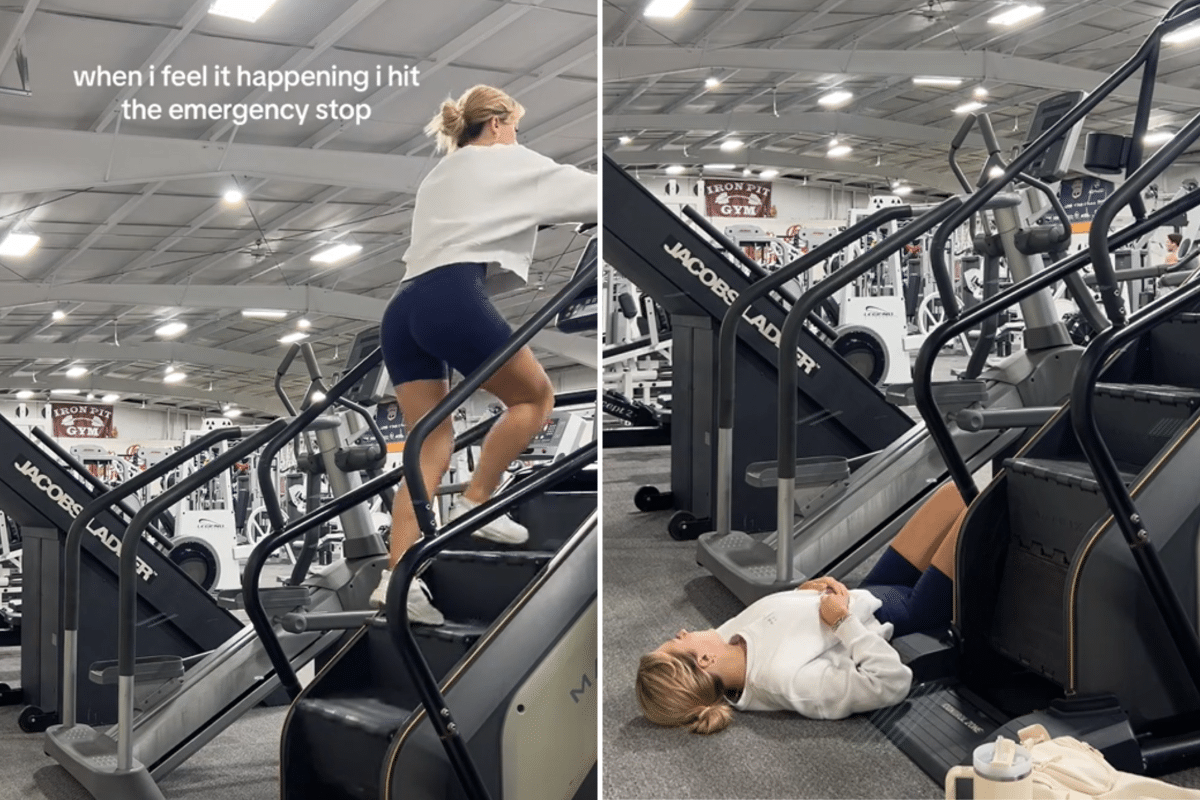
Karina Drury, 21, during a fainting episode while working out at the gym. Drury was diagnosed with POTS four years ago, and now she can recognize the signs of an episode before it takes hold.
@karinadrury / TikTok
“I scan my surroundings, decide the best plan of action for where to lay and what to do. I alert my husband or friend I’m with, and if I am alone, I tell staff. I can feel all the signals go off in my body prior to an episode. Typically, I have 5-10 more minutes I can squeeze out of my workout, so I don’t lay down until the last minute.”
What is POTS?
Drury was diagnosed with POTS when she was 17 years old, following years of unanswered questions and testing. As explained by the Cleveland Clinic, POTS is an orthostatic intolerance that causes the heart to beat faster when transitioning from sitting to standing up.
Typically, symptoms of the condition, which affects around 1 to 3 million people in the U.S., include dizziness, fainting, forgetfulness, exhaustion, chest pain, headaches, or disrupted sleep. Symptoms can be exasperated by warm environments, frequent standing, menstruating, or when participating in strenuous exercise.
There is no cure for POTS, but the main forms of treatment include exercise and nutrition. The Cleveland Clinic explains that physical activity such as swimming, rowing, and recumbent bicycling can help as they’re performed in reclined positions.
Dr. Anita Phung, medical monitor for Lindus Heath, told Newsweek that the symptoms of POTS are often made worse by prolonged periods of sitting, standing, or increased activity, and these can all cause an individual to faint.
“Normally, the autonomic nervous system regulates heart rate, blood pressure, respiration, digestion and sexual arousal, whereas in POTS, this is dysregulated,” Dr. Phung said.
“For example, when you move from a sitting to standing position, your nervous system responds by vasoconstriction and increasing your heart rate to prevent a drop in blood pressure. In POTS, vasoconstriction fails to happen, so you experience a drop in blood pressure and therefore a reduced blood supply to your brain, causing you to faint.”
Without a cure or specific treatment, Dr. Phung suggests people with POTS take an individualized approach to learn the patterns and triggers for their body—just like Drury displayed at the gym.
“My main recommendation is for individuals to keep themselves safe by identifying and avoiding triggers, educating the people around them about how to manage an episode (e.g. lie them down with legs raised, put them in the recovery position), and to strongly consider having a medical alert,” Dr. Phung added.
Why Share This Online?
Drury has had fainting episodes for many years, and she says it “does not alarm” her that much anymore. However, it’s still an unwanted experience, especially in a public place such as a gym.
“Back in high school, I fainted so many times each school day that I spent more time in the nurse’s office than in class,” Drury joked.
There are a few reasons why she records these moments, but she posts them on social media (@karinadrury on TikTok) to raise awareness and educate people about POTS. The video of her “fainting on the StairMaster” even went viral with over 13.6 million views and more than 910,600 likes on TikTok so far.
Drury continued: “I record my episodes for several reasons, first and foremost being safety for myself and peace of mind to look back and see exactly what happened while I was unconscious. Secondly, for my doctors, and thirdly, for social media to bring awareness to dysautonomia and postural orthostatic tachycardia syndrome.”
For many living with POTS, the idea of working out might seem near impossible to fathom. But Drury hopes to encourage others with a chronic illness to “continue to live a life that they dream of” and not let it control everything they do.
Posting about her experiences has allowed Drury to create a safe community online and connect with others who know these struggles all too well.
“Oftentimes, the thing I see most in my comments are other people going through similar struggles who feel less alone by watching my videos,” she told Newsweek. “The amount of love and support I receive is always so heartwarming and it encourages me to continue sharing this part of my life.
“For those with health issues like me, remember that whatever is happening to you is not solely who you are. Your circumstances do not define you.”
After sharing this vulnerable moment online, Drury’s video has amassed over 1,500 comments on TikTok as many people thanked her for bringing awareness to the condition. One comment reads: “This is good education for gym goers to be aware of this issue for their fellow gym members.”
Another TikToker wrote: “The fact that you’re still at the gym anyway is amazing!! What dedication! So inspiring.”
While another person commented: “TikTok is the first place I’ve ever even known this happen to other women too. I don’t have a single friend this happens to, so I haven’t found anyone to discuss it with. Thank you for sharing.”
Is there a health issue that’s worrying you? Let us know via health@newsweek.com. We can ask experts for advice, and your story could be featured on Newsweek.