The Internal Revenue Service (IRS) has reminded taxpayers of an important tax deadline due this month.
On September 16, third-quarter estimated tax payments for those whose income is not subject to withholding are due. Taxes must be paid as you earn or receive income throughout the year, either through employer withholding or estimated tax payments, both of which are also known as pay-as-you-go taxes.
Each time an employee receives their salary, a designated portion of earnings is withheld by their employer as income tax, which is remitted to the IRS by the employer.
However, if the withheld income tax from your wages or pension is not enough, or if you receive additional income such as interest, dividends, alimony, self-employment earnings, capital gains, prizes and rewards, you may be required to submit estimated tax payments.
Non-withholding taxpayers are most commonly the self-employed, retirees, investors, businesses and corporations. Estimated taxes are due four times a year, with each period having a specific payment due date. The September 16 payment date is for the third quarter of the year. The final pay-as-you-go deadline for 2024 is January 15, 2025.
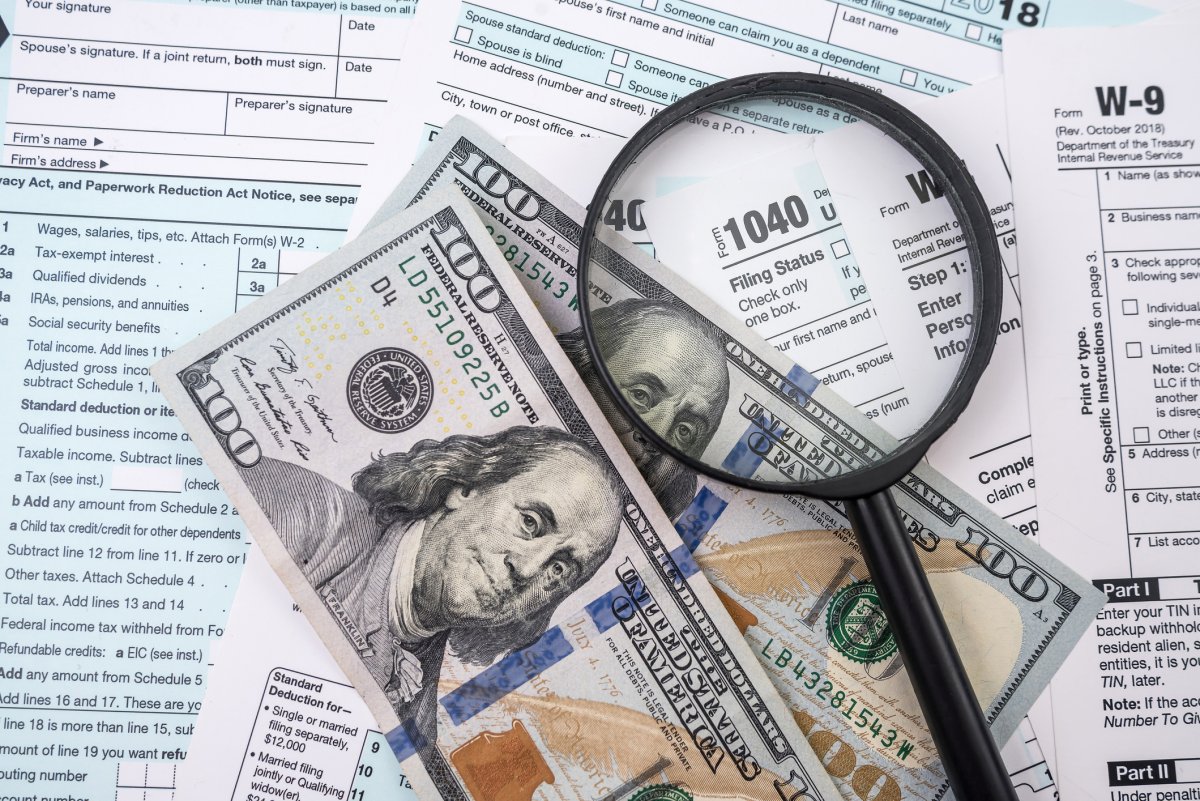
IRS tax forms and U.S. dollars lay with magnifying glass. Estimated tax payment deadlines come four times per year.
GETTY
Who Needs To Pay On September 17?
The IRS says that, as a “general rule of thumb, taxpayers need to make estimated tax payments if they expect:
- To owe at least $1,000 in taxes for 2024 after subtracting their withholding and tax credits.
- Their withholding and tax credits to be less than the smaller of:
- 90 percent of the tax to be shown on their 2024 tax return; or
- 100 percent of the tax shown on their complete 12-month 2023 tax return.
The deadline applies nationwide with the exception of those living in federally declared disaster areas, which are declared most commonly for natural disasters caused by extreme weather events. This applies to:
- Taxpayers in parts of Arkansas, Iowa, Mississippi, New Mexico, Oklahoma, Texas and West Virginia, who have an extra 46 days, until November 1, 2024, to pay any due amount.
- Taxpayers in all or parts of Florida, Georgia, Kentucky, Minnesota, Missouri, North Carolina, Puerto Rico, South Carolina, South Dakota, Texas, Vermont and the U.S. Virgin Islands, who have until February 3, 2025, an extra 140 days,
to make their payments.
For those who need to make estimated tax payments, the IRS recommends the “easiest, fastest and most secure way” to pay is online. Payments are accepted through their IRS Online Account or use IRS Direct Pay, or use a debit card, credit card or digital wallet.
If you do not wish to pay online, checks or money orders made payable to the “United States Treasury” are also acceptable.