
5/20/26 1:00 PM Eileen Wang’s case has become, according to analysts, the latest arena where both sides accuse the other of pushing a misleading narrative about who’s really influencing whom. What should be a straightforward legal matter is now tangled in claims of hidden motives and strategic outrage. Decker McCullough steps in to examine how this swirl of suspicion says more about the climate than the case itself.
DON’T MISLEAD — The Public Deserves the Truth About the Eileen Wang Case
By Decker McCullough, Misleading.com
The moment charges were announced against Arcadia Mayor Eileen Wang, the story didn’t just “break” — it detonated. It stopped being a legal case and instantly became a political Rorschach test, a magnet for every agenda‑pusher, narrative‑spinner, and opportunist who saw a chance to twist the moment into something useful. Before the ink on the press release was dry, the battle lines were drawn: who controls the story, who benefits from confusion, and who hopes the public walks away swallowing a version of events that serves someone else’s interests. Critics say the case has become the latest flashpoint in a much larger fight over influence, perception, and the uncomfortable question of whether foreign governments — including the People’s Republic of China — are quietly cultivating relationships in American political life. But if you ask watchdog groups, the real threat isn’t just the allegations. It’s the misleading fog that descends the moment a case like this hits daylight. That fog is where truth gets bent, agendas get buried, and the public becomes collateral damage.
According to prosecutors and investigators, Wang faces charges tied to improper dealings and alleged connections that raised national‑security concerns. Critics argue the case fits a familiar pattern: a local official accused of being influenced by foreign interests, followed by a political feeding frenzy where every faction tries to weaponize the story for its own gain. And the misleading narratives didn’t just appear — they erupted. One side immediately painted Wang as a symbol of foreign infiltration, a walking cautionary tale about how influence can seep into even the smallest corners of American politics. Meanwhile, defenders insisted the charges were exaggerated, politically motivated, or part of a broader pattern of unfairly targeting Asian American officials. Each side accused the other of misleading the public, and the average citizen was left staring at a pile of contradictions. The truth is simple and ugly: most people don’t read indictments. They read headlines. And headlines are where misleading thrives like mold in a damp basement.
For years, analysts have warned that discussions about Chinese influence in the United States are almost guaranteed to get distorted. Exaggeration on one side, denial on the other, and political opportunism everywhere in between. The Wang case, critics say, is now being sucked into that same gravitational field. National‑security experts argue that foreign governments — including China — have long sought to cultivate relationships with local officials, business leaders, and community influencers. They point to documented cases where individuals were charged with acting on behalf of foreign entities without properly registering under U.S. law. But every time a case like this surfaces, misleading narratives multiply faster than the facts can keep up. One side screams that the threat is everywhere. The other insists the threat is imaginary. Neither side wants to admit the truth might be somewhere in the messy, inconvenient middle. And that middle — the part that requires nuance, patience, and actual reading — is where the public gets misled most easily.
Zoom out from the Wang case and a pattern emerges — one critics say is so consistent it’s practically a blueprint. Foreign‑influence efforts, especially those attributed to China, tend to operate quietly, slowly, and locally. These patterns are documented in public reports, indictments, academic studies, and congressional testimony, yet they rarely make it into the public conversation without being twisted into something more dramatic or more politically useful. Analysts say influence efforts often begin at the local level, not the national one. Foreign governments may cultivate relationships with city council members, mayors, business leaders, community organizers, and university administrators because these individuals control land‑use decisions, sister‑city partnerships, local business incentives, and access to community groups. This “local‑first” strategy is subtle and long‑term — which makes it easy for the public to overlook and easy for political actors to misrepresent. Some critics say the Wang case fits this pattern. Others argue that invoking this pattern prematurely is itself misleading. And so the public gets caught between two competing interpretations, neither of which is fully grounded in the facts of the case.

Researchers also note that foreign‑influence efforts rarely look like spy movies. They look like networking. Donations. Cultural exchanges. Business partnerships. Community outreach. But the public has been conditioned to believe influence only counts if it involves trench coats and dead drops. That misunderstanding creates two predictable distortions: real influence efforts get dismissed as harmless, and harmless interactions get inflated into conspiracies. Both distortions mislead the public, and both show up every time a case like Wang’s hits the news cycle. Analysts say the goal of foreign influence is usually access, not control. It’s about gaining insight into political dynamics, shaping community narratives, and building soft power. But when stories break, the public is often misled into believing the goal is total control — or, conversely, that there is no influence effort at all. The truth, critics argue, is usually more nuanced: influence is about shaping the environment, not dictating outcomes.
The most overlooked factor, analysts say, is that real influence patterns are boring. They are slow, bureaucratic, relationship‑based, and paper‑trail heavy. They lack drama. And because they lack drama, they get overshadowed by misleading narratives that are more emotional, more clickable, and more politically useful. The result is predictable: the public ends up arguing about the wrong things. To understand why the Wang case is resonating so loudly, analysts point to other high‑profile incidents where allegations of foreign influence collided with political narratives and the public got caught in the crossfire. The Swalwell controversy became a political weapon even though no charges were filed. The Christine Fang case turned into a tug‑of‑war over whether it was a serious breach or an overhyped narrative. The “Thousand Talents” investigations produced both convictions and dismissals, leaving the public unsure whether the program represented a genuine threat or a misunderstood academic initiative. In each example, a legitimate concern became a misleading circus the moment politics entered the room.
If there’s one lesson from the Wang case, it’s that the public is not just consuming information — it’s being steered. Watchdog groups say misleading narratives thrive because people react to emotion, not evidence; headlines outrun facts; social media rewards outrage; political actors exploit confusion; and foreign governments benefit from division. In other words, the public becomes the battlefield. And influence — foreign or domestic — wins when people stop asking hard questions. As the legal process unfolds, one thing is already clear: the fight over Eileen Wang is no longer just about Eileen Wang. It’s about influence, perception, and who controls the story. And most of all, it’s about how easily the public can be misled when narratives move faster than facts. Whether Wang is ultimately found guilty or not, the case has already exposed something bigger — a political ecosystem where misleading narratives are not a side effect but a strategy. And in that ecosystem, the message from the public should be simple, loud, and impossible to ignore: Don’t Mislead.
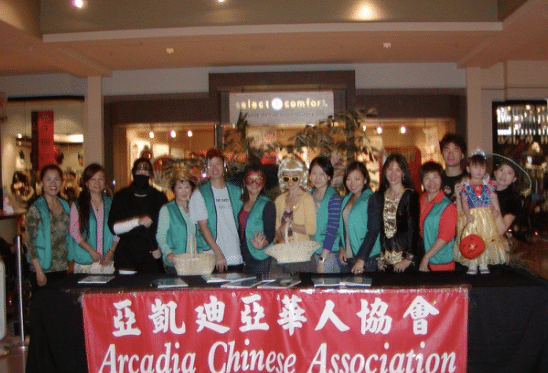
Some analysts argue that Beijing’s interest in Arcadia wasn’t accidental — it was calculated, drawn to a large and politically active Chinese American population that offered cultural familiarity and easier points of entry. Critics say foreign governments often look for communities where influence efforts can blend into the background, where outreach appears organic rather than strategic. In their view, the Wang case became the perfect convergence of local demographics and a foreign power eager to test the edges of soft influence. And that’s exactly why the public must stay alert whenever anyone tries to mislead them about what’s really at stake