6/29/26 Cynthia McCallum examines the unfolding Flamingo Revolution in Albania, where public outrage has erupted over a quiet land deal involving Jared Kushner, Saudi financing, and the Albanian presidency. The transaction transferred breathtaking, protected coastline into private hands without public consultation, igniting accusations of corruption and betrayal. What began as a concealed purchase has now triggered a nationwide uprising demanding transparency, accountability, and the protection of Albania’s natural heritage.
The Flamingo Revolution: How a Secretive Luxury Deal Sparked Albania’s Fiercest Public Uprising in Decades
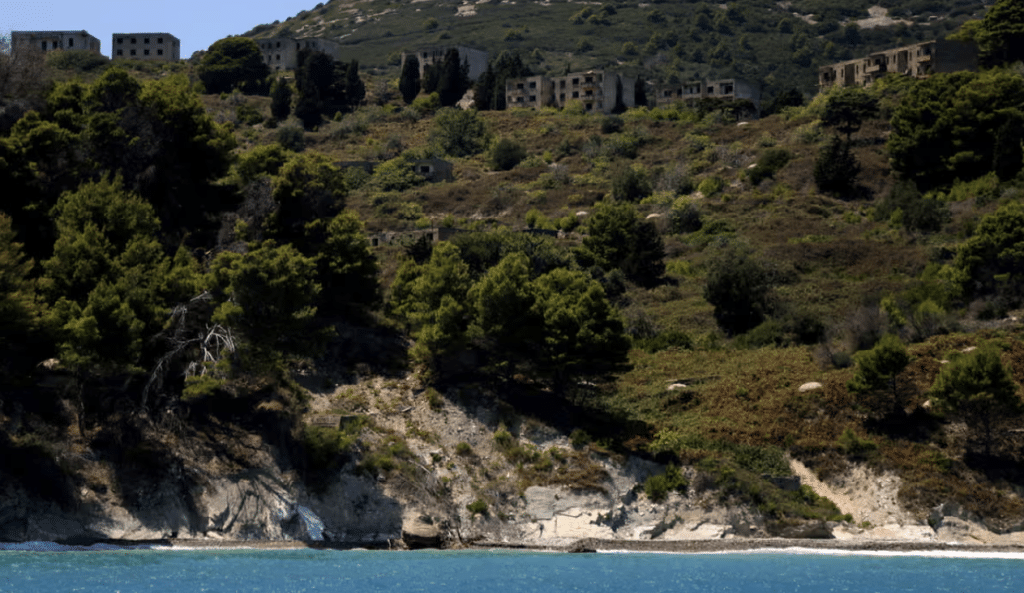
When the story first surfaced, it sounded almost too surreal to be true: a pristine stretch of Albania’s protected coastline—one of the last untouched Mediterranean jewels—quietly transferred into the hands of a foreign development group tied to Jared Kushner and Saudi financing. No public hearings. No environmental review. No national debate. Just a discreet, fast‑tracked approval from Albania’s president and a sudden announcement of a massive luxury resort project that locals had never been told about. Within days, the country erupted. What began as a land deal has now become a national reckoning.
For many Albanians, the coastline is not just geography—it is identity. Generations have grown up along those cliffs, fishing those waters, and defending them from overdevelopment. The idea that such land could be sold off without public consultation felt like a violation of the social contract. And when details emerged suggesting that the Trump‑Kushner orbit had been involved in securing the project through opaque channels, the outrage intensified. People felt misled, bypassed, and treated as obstacles rather than citizens.
The Albanian presidency’s role in the affair has become a central point of anger. Critics argue that the administration not only concealed the negotiations but actively shaped a narrative to make the deal appear routine. Government spokespeople initially framed the project as a “strategic investment,” a phrase that in Albanian politics has often been used to justify controversial development projects. But this time, the public wasn’t buying it. The secrecy was too blatant, the stakes too high, and the coastline too beloved.
As more information surfaced, the perception of misleading conduct grew. Reports circulated that the Trump‑Kushner group had been granted extraordinary privileges: accelerated permitting, exemptions from environmental protections, and access to land previously designated as protected. The government insisted these claims were exaggerated, but the lack of transparency made it impossible for the public to trust official statements. Albanians wanted documents, hearings, and accountability—not press releases.
The resort itself became a symbol of everything people feared: foreign money reshaping national heritage, political elites cutting deals behind closed doors, and a global network of powerful figures treating Albania as a playground for profit. The Trump family’s involvement—whether direct or peripheral—added a layer of geopolitical tension. Many Albanians felt that their country was being used as a stage for international interests that had little concern for local communities. The sense of betrayal was palpable.
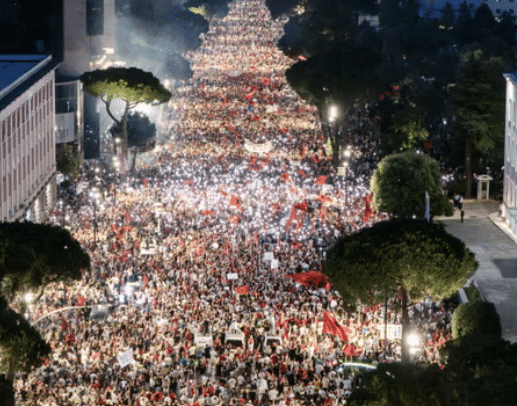
Protests began small, with environmental groups and local residents gathering near the coastline. But within a week, demonstrations had spread to Tirana, Vlora, Shkodër, and dozens of smaller towns. Students marched with signs reading “Our Coastline Is Not For Sale.” Fishermen blocked roads with their boats. Families camped outside government buildings demanding answers. The movement quickly gained a name: The Flamingo Revolution, inspired by the pink flamingos that migrate through the protected wetlands now threatened by development.
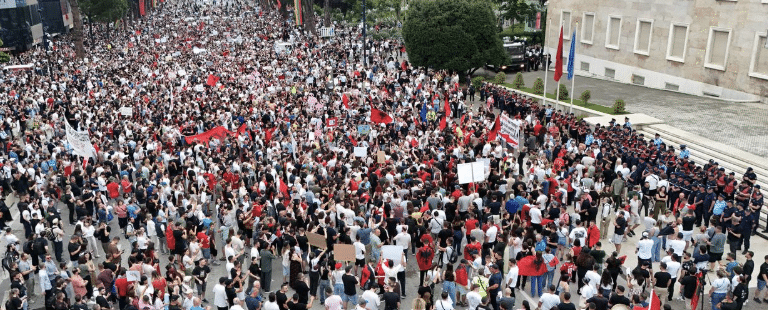
What makes this uprising unique is its diversity. It is not driven by a single political party or ideology. It is a coalition of environmentalists, nationalists, young professionals, retirees, and even members of the diaspora who flew home to join the demonstrations. The unifying message is simple: Albania’s natural heritage belongs to its people, not to foreign investors or political elites.
The government’s response has been uneven. At first, officials dismissed the protests as “misinformed.” Then they attempted to reassure the public by promising that the resort would bring jobs and tourism revenue. But these arguments only fueled more anger. Albanians have seen similar promises before—projects that enriched a handful of insiders while leaving communities displaced or ecosystems damaged. The public wanted transparency, not talking points.
As pressure mounted, the presidency attempted to distance itself from the Trump‑Kushner connection, insisting that the deal followed standard procedures. But leaked documents and investigative reporting suggested otherwise, revealing unusual levels of political involvement and expedited approvals. Whether these actions were illegal is for courts to decide, but the perception of impropriety has already reshaped the political landscape.
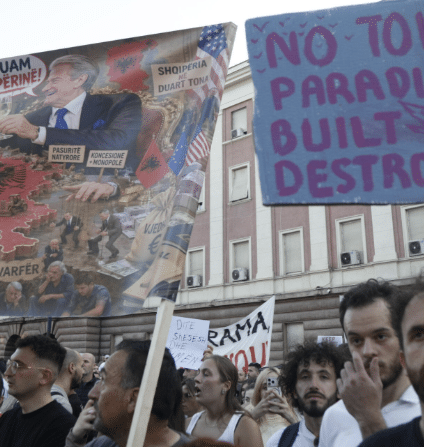
The Flamingo Revolution is now in its third week, and it shows no signs of slowing. Protesters have established semi‑permanent camps near the contested coastline. Artists have painted murals depicting flamingos rising from the sea as symbols of resistance. Musicians perform nightly concerts calling for unity and protection of Albania’s natural beauty. What began as outrage has evolved into a cultural movement.
International observers have taken notice. Environmental organizations across Europe have issued statements urging Albania to halt development until a full review can be conducted. Diplomats have quietly expressed concern about the political fallout. And global media outlets have begun covering the uprising as part of a broader trend: small nations pushing back against powerful international interests.
The Trump‑Kushner connection remains a lightning rod. Some Albanians see it as evidence that their country is being targeted by wealthy foreign actors who assume they can operate without scrutiny. Others view it as part of a larger pattern of political elites—domestic and international—working together to profit from public resources. Regardless of interpretation, the public consensus is clear: the deal was misleading, the process was opaque, and the people were excluded.
The revolution’s future is uncertain. The government may attempt to renegotiate the project, cancel it entirely, or push forward despite the backlash. Protesters may escalate their actions or shift toward political organizing. But one thing is , Albaniaundeniable: Albania has reached a turning point. The Flamingo Revolution has awakened a new civic consciousness, one that demands transparency, accountability, and respect for national heritage.
In the end, this uprising is not just about a resort. It is about trust. It is about whether citizens believe their leaders act in their interest. It is about whether foreign investors treat Albania as a partner or a commodity. And it is about whether the country’s most beautiful coastline will remain a place for flamingos, families, and future generations—or become another symbol of political mismanagement.
The people of Albania have made their stance clear. They will not be misled. They will not be silenced. And they will not allow their coastline to be quietly sold off behind closed doors. The Flamingo Revolution is their answer—a declaration that Albania’s natural beauty, cultural identity, and democratic rights are worth fighting for. We’d like your opinion at Misleading.com