On Monday, China warned Germany not to endanger its sovereignty following a report that Berlin would dispatch warships to a contested waterway off the country later this month.
The German magazine Der Spiegel reported on Saturday that Germany, a NATO member, would arrange for the frigate Baden-Württemberg and the replenishment ship Frankfurt am Main to transit the Taiwan Strait during their mid-September voyages from South Korea to Indonesia.
China respected the navigation rights enjoyed by all countries in accordance with Chinese law and international law, said Mao Ning, spokesperson for the Chinese Foreign Ministry. She referred to the United Nations Convention on the Law of the Sea or UNCLOS.
Beijing “opposes the provocation and endangerment of China’s sovereignty and security by relevant countries in the name of freedom of navigation,” the spokesperson stressed.
The 110-mile-wide Taiwan Strait separates mainland China to the west and the island of Taiwan to the east. China views the self-ruled Taiwan as a breakaway island province and has refused to renounce the use of force to resolve the cross-strait issue.
Beijing claimed it has jurisdiction over the waterway, where it deployed military aircraft and warships operating near Taiwan daily as a show of force, while the United States and its Western allies advocate that the narrow strait is part of international waters.
According to UNCLOS, transit passage applies to straits used for international voyages between one part of the high seas or an exclusive economic zone and another. The Taiwan Strait links the East China Sea to the north and the South China Sea to the south.
All ships, including warships, enjoy this freedom of navigation “solely for the purpose of continuous and expeditious transit” of the straits. The international treaty on maritime law grants all ships the right of innocent passage through the territorial waters of another state.
The U.S. military routinely transits the Taiwan Strait, the most recent occasion being the destroyer USS Halsey in May. Canada also sent frigate HMCS Montreal to the strait in July to reaffirm its commitment to a free, open, and inclusive Indo-Pacific.
“The waters within the Taiwan Strait are China’s internal waters, territorial sea, contiguous zone, and exclusive economic zone from both sides of the strait to the sea,” Mao said during a press conference in Beijing. She said Taiwan “is an inalienable part” of China.
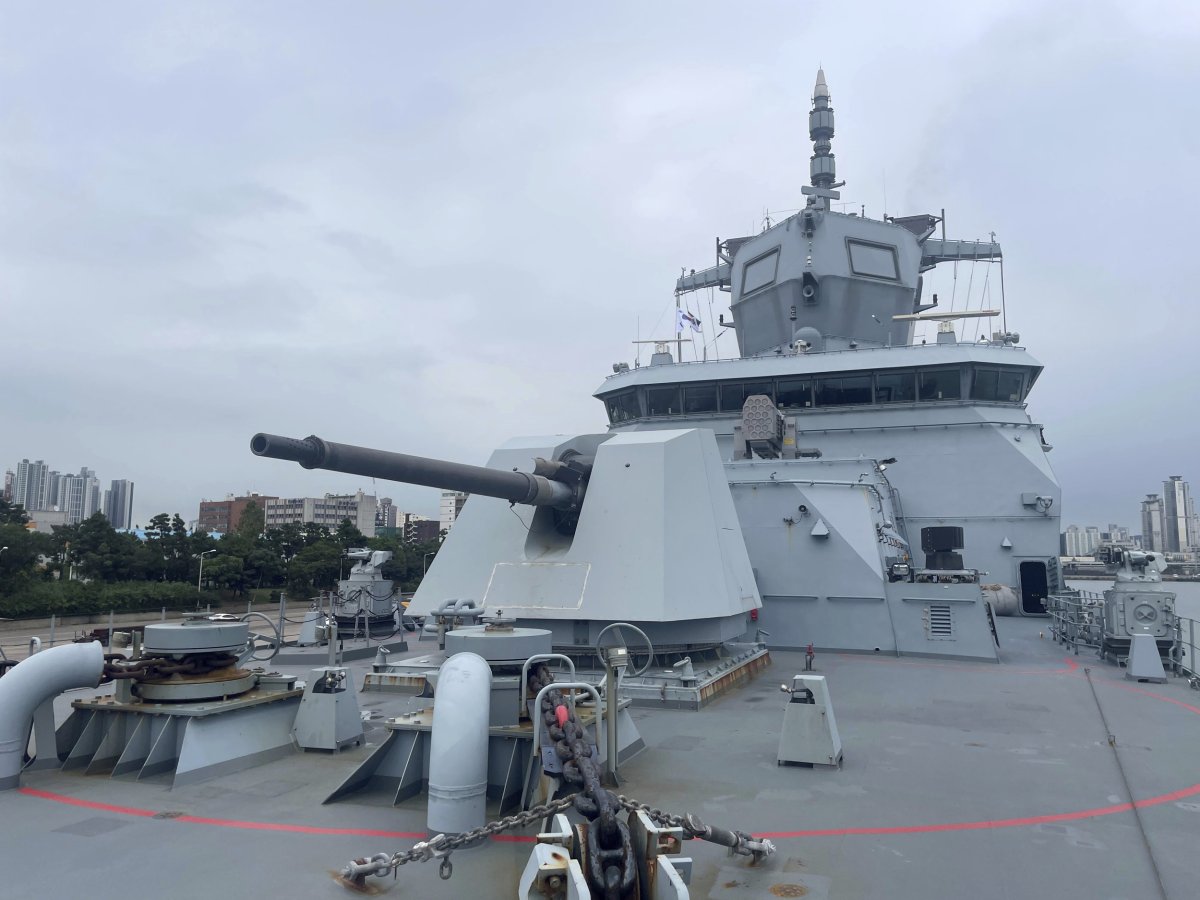
The German frigate Baden-Württemberg in port of Incheon, South Korea, on September 6. The ship will transit the Taiwan Strait in mid-September.
picture-alliance/dpa/AP Images/Fabian Kretschmer
How China would respond to a German transit in the strait was not immediately apparent. On past occasions involving the Americans and Canadians, the Chinese military claimed to have dispatched its air and naval forces to “track and monitor” the foreign warships.
Reuters cited German Rear Admiral Axel Schulz in a previous report as saying that if his warships transit the Taiwan Strait, they will not take specific security measures, but he was expecting the Chinese forces to shadow the German flotilla during any transit.
Der Spiegel reported that the German government did not want to publicize the transit, which would be the first time for the country’s navy since 2002. This is different from the U.S. and Canada, as the two NATO allies in North America announced their passages.
The rationale for a low-profile approach is to underline that the transit is entirely normal. The report also said Berlin was “relaxed about possible protests by Beijing.” Last month, China warned Germany not to interfere with its internal affairs by sending warships to the strait.
The Global Times, a state media outlet in China, said the possible strait passage by the German navy served as a “strategic gesture” to the U.S. and NATO. However, China would consider this a gesture of “flexing muscles” and an unfriendly move, the report claimed.
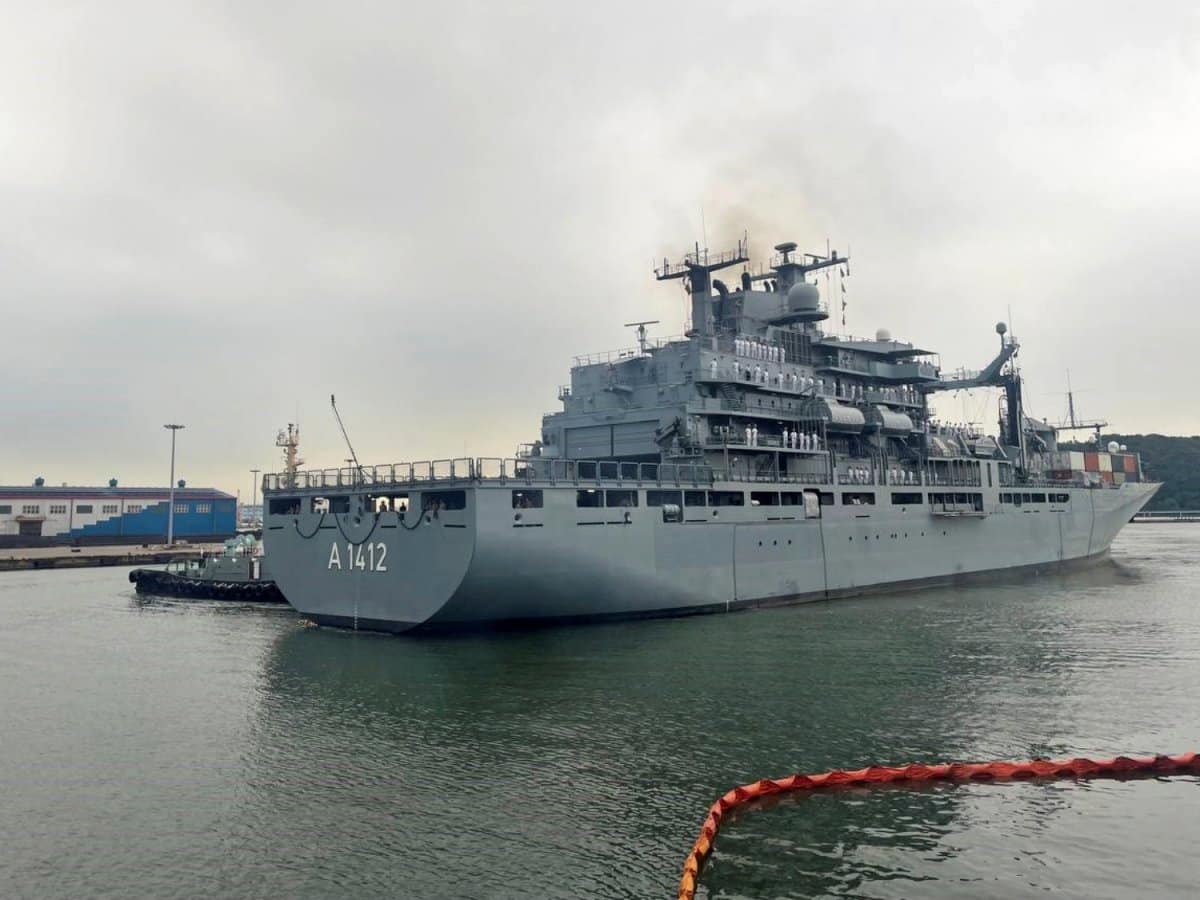
The German replenishment ship Frankfurt am Main arrives in the port of Incheon, South Korea, on September 6. The ship will join the frigate Baden-Württemberg in transiting the Taiwan Strait this month.
picture-alliance/dpa/AP Images/Fabian Kretschmer
The German Embassy in Seoul said that the Baden-Württemberg and the Frankfurt am Main arrived in the South Korean port of Incheon on Friday and are scheduled to leave on Tuesday. They took part in monitoring the United Nations arms embargo against North Korea.
The German warships began deployment in May. They were on a westward voyage, reaching the Pacific Ocean through the Panama Canal. In late June, they arrived in the U.S. state of Hawaii to take part in an exercise. The two vessels visited Japan in August.
The deployment is to showcase Germany’s commitment to free and secure shipping lanes, a rules-based international order, and increased cooperation for maritime security. In the previous deployment in 2021, however, the German navy avoided the Taiwan Strait.