More woman are getting their tubes tied in states with abortion bans, a new study has found.
Following the U.S. Supreme Court’s Dobbs v. Jackson Women’s Health Organization decision in June 2022 to overturn Roe v. Wade, which removed federal protections for abortion and left it up to the states to decide, multiple conservative states created abortion bans.
Currently, there are 14 states, mostly in the South, that have banned abortion from conception and eight states that banned it after six to 18 weeks.
A research letter published Wednesday in the peer-reviewed medical journal JAMA found that 18 months before the Dobbs decision, tubal ligations, which are surgeries to close the fallopian tubes to prevent pregnancies, remained stable, but in the latter half of 2022, the number of this procedure rose in states that banned, limited or protected abortion. Meanwhile, tubal ligations rose by 3 percent each month in banned states.
Researchers looked at insurance claims from 2021 and 2022 for around 4.8 million patients who got tubal ligations in 36 states and Washington, D.C. Each place was categorized as “banned,” “limited” or “protected” based on their abortion politics.
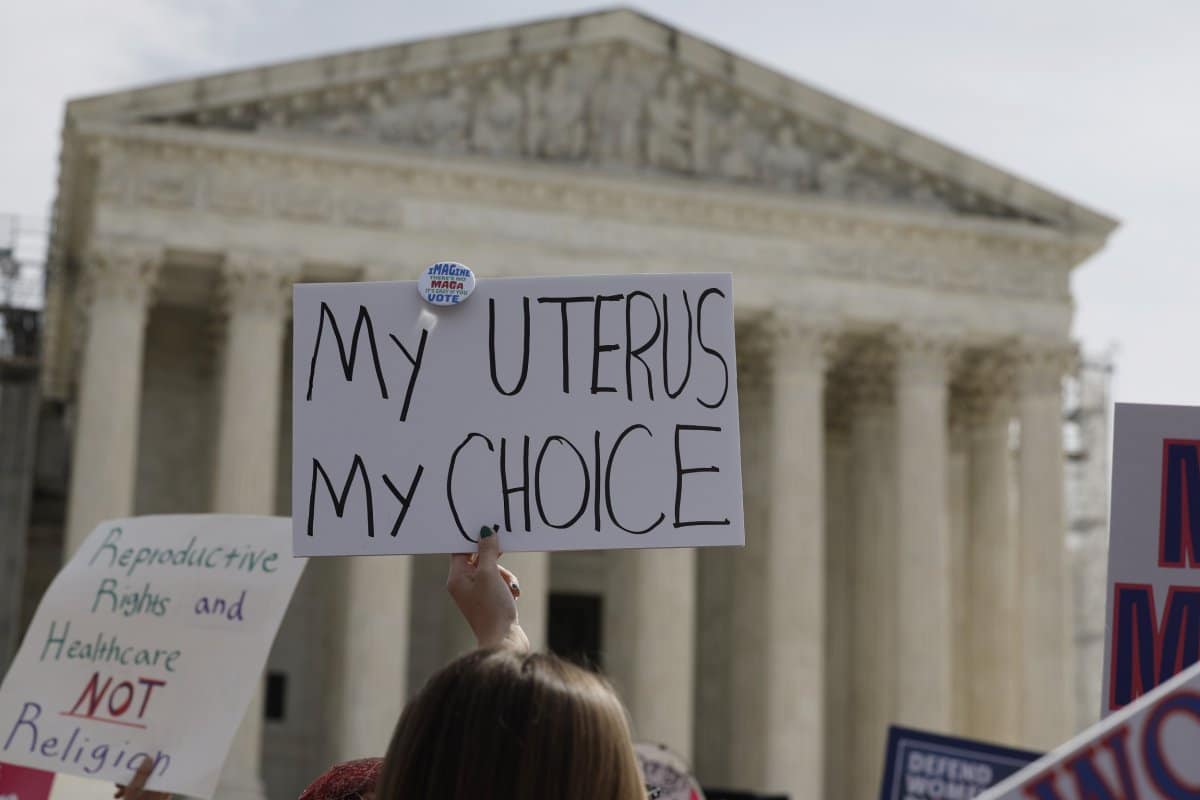
Demonstrators participate in an abortion rights rally outside the Supreme Court on March 26, 2024, in Washington, DC. More woman are getting their tubes tied in states with abortion bans, a new study has found.
Anna Moneymaker/Getty Images
The lead author of the research letter, Xiao Xu, who is an associate professor of reproductive sciences at Columbia University, said the findings are “not entirely surprising” given the changes to abortion laws post-Dobbs.
Meanwhile, in April, researchers published a study in JAMA Health Forum that found a spike in tubal ligations post-Dobbs among women 18 to 30 years old and vasectomies among men in that age group.
Dr. Clayton Alfonso, who wasn’t involved in either study, told The Associated Press (AP) that he saw a rise in tubal ligations in his OB-GYN practice at Duke University in North Carolina “especially closer to the Dobbs decision.”
In May 2023, North Carolina legislators banned most abortions after 12 weeks of pregnancy. There are expectations of rape or incest through 20 weeks of pregnancy and exceptions for “life-limiting” fetal anomalies during the first 24 weeks. There is also an exception for when the life of the pregnant woman is in danger.
Alfonso told the AP that patients who didn’t want children or didn’t want any more children were concerned about failed contraceptives causing an unexpected pregnancy. His patients reportedly told him they would rather get their tubes tied in case they weren’t able to get an abortion if they were to become pregnant.
The doctor said that the number of patients looking to get their tubes tied has fallen a bit, which he supposes happened when people became more sure of local legislation.
This article includes reporting from The Associated Press.