In the hills of southern Netherlands, a long-standing tradition keeps the memory of World War II sacrifices alive.
Dutch citizens have adopted the graves of American and Allied soldiers who died liberating their towns from Nazi occupation 80 years ago.
At the Netherlands American Cemetery in Margraten, rows of white marble headstones stand on 65.5 acres of pristine lawns.
This cemetery is a symbol of the deep gratitude felt by the Dutch for the soldiers who gave their lives. On Thursday, the site will host a concert marking the 80th anniversary of the liberation of the Netherlands.
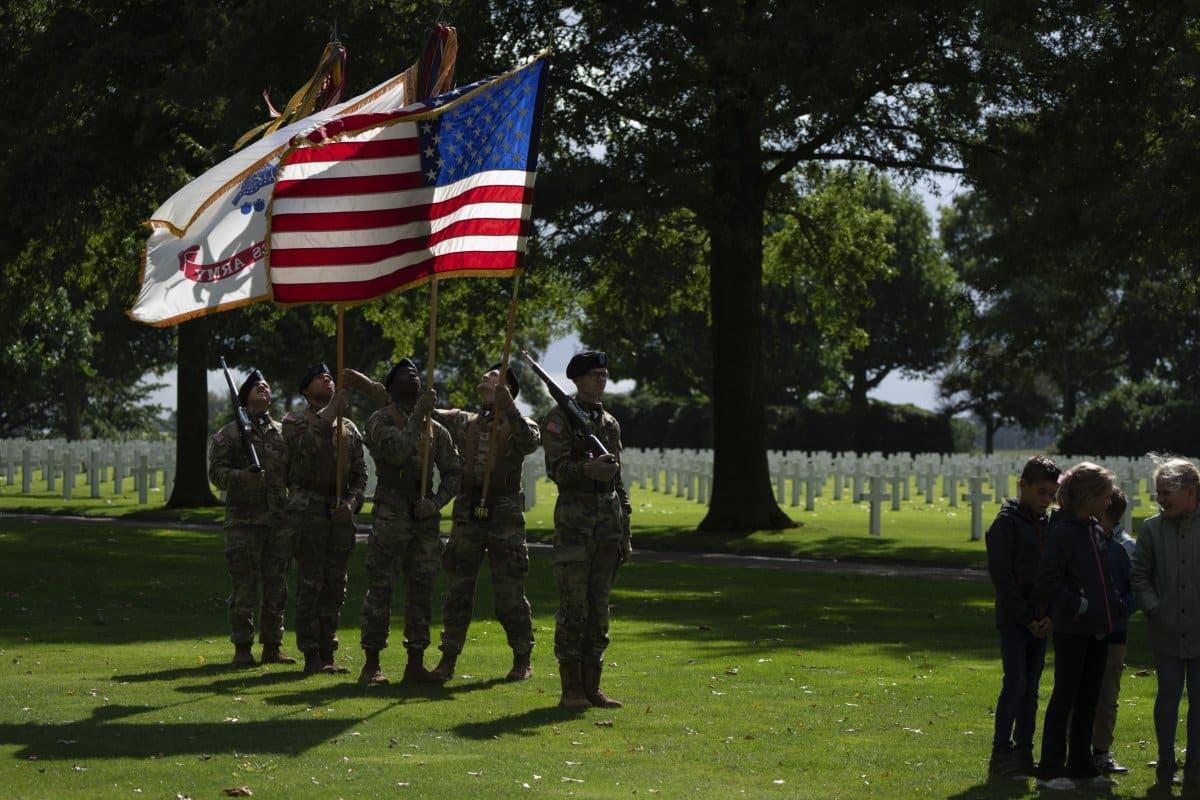
Flag bearers of the 101st Airborne Division, known as Screaming Eagles, out of Fort Campbell, Kentucky, rehearse for a commemoration eighty years after the liberation of the south of the Netherlands at the Netherlands American Cemetery in Margraten, southern Netherlands, on Wednesday, Sept. 11, 2024. Some Dutch families are honoring the legacy of fallen U.S. soldiers by adopting their graves.
Peter Dejong/AP Photo
Since the war ended, hundreds of Dutch families have adopted graves at the cemetery. They visit regularly, bringing flowers on birthdays, holidays, and anniversaries. Some families have even formed lasting friendships with the soldiers’ relatives in the United States.
Ton Hermes and Maria Kleijnen are two of the many who have taken part. They care for the grave of 2nd Lt. Royce D. Taylor, a 23-year-old bombardier killed when his B-17 plane was shot down over Germany in December 1943. His grandson, Scott Taylor, now a retired U.S. Air Force pilot, flew F-15E Strike Eagles in Iraq and Kosovo.
Scott, who calls his grandfather his hero, recently visited Margraten to honor his memory. He expressed his deep gratitude to Hermes and Kleijnen for their efforts. “I can’t care for my grandfather like they can,” he said. “Their care means so much to me and my family.”
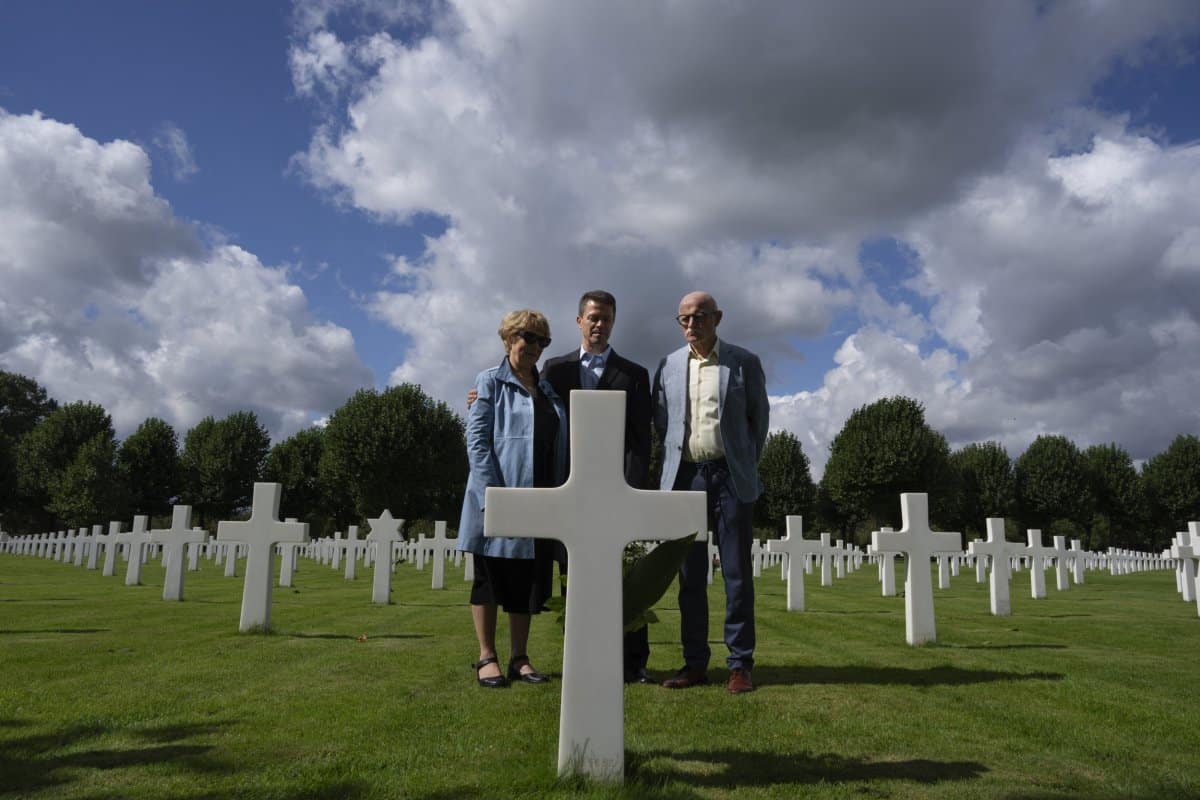
Eighty years after the liberation of the south of the Netherlands, Scott Taylor, center, Ton Hermes and Maria Kleijnen stand next to the grave of Scott’s grandfather Second Lt. Royce Taylor, a bombardier with the 527 Bomb Squadron, at the Netherlands American Cemetery in Margraten, southern Netherlands, on Wednesday, Sept. 11, 2024.
Peter Dejong/AP Photo
His visit coincided with the anniversary of American forces from the 30th Infantry Division entering the Netherlands from Belgium, marking the start of the country’s liberation. While southern areas were freed quickly, cities like Amsterdam and Rotterdam endured months of hardship, including the brutal “hunger winter” of 1944-1945, when famine killed more than 20,000 people.
For Hermes, a retired Dutch soldier who served in Bosnia, adopting a grave is a way to ensure future generations remember the cost of freedom. “Democracy and liberty are fragile,” he said, reflecting on his visit to the cemetery on Sept. 11. “That’s why I think it’s important to adopt a grave and remember what these soldiers did for us.”
Scott Taylor agrees. “If we don’t take the time to remember, we risk repeating the mistakes of the past,” he said. “Their sacrifice must never be forgotten.”
As the Netherlands commemorates this important anniversary, the tradition of grave adoption continues to unite Dutch families with the memories of fallen American soldiers, ensuring their legacy lives on for future generations.
This article includes reporting from The Associated Press