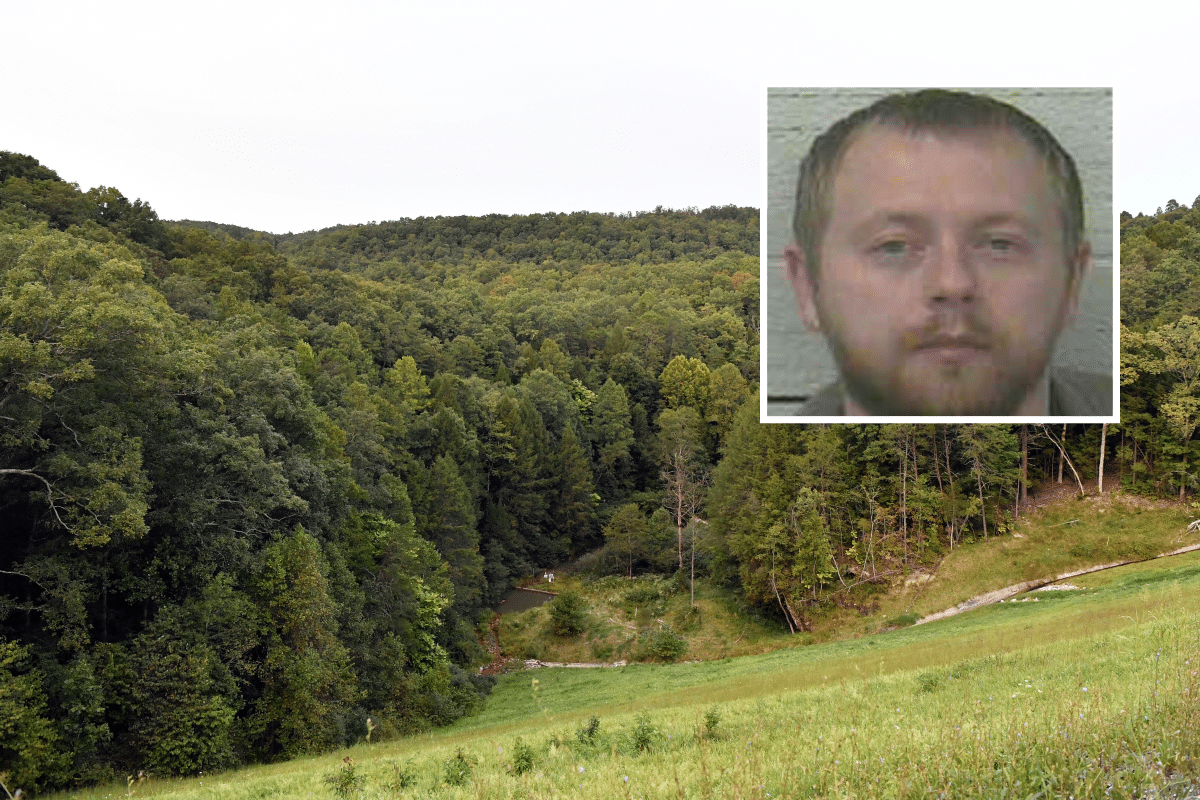
Archaeologists have discovered mysterious ancient architecture cut into a rocky landscape on Madagascar, the world’s fourth largest island, a study says.
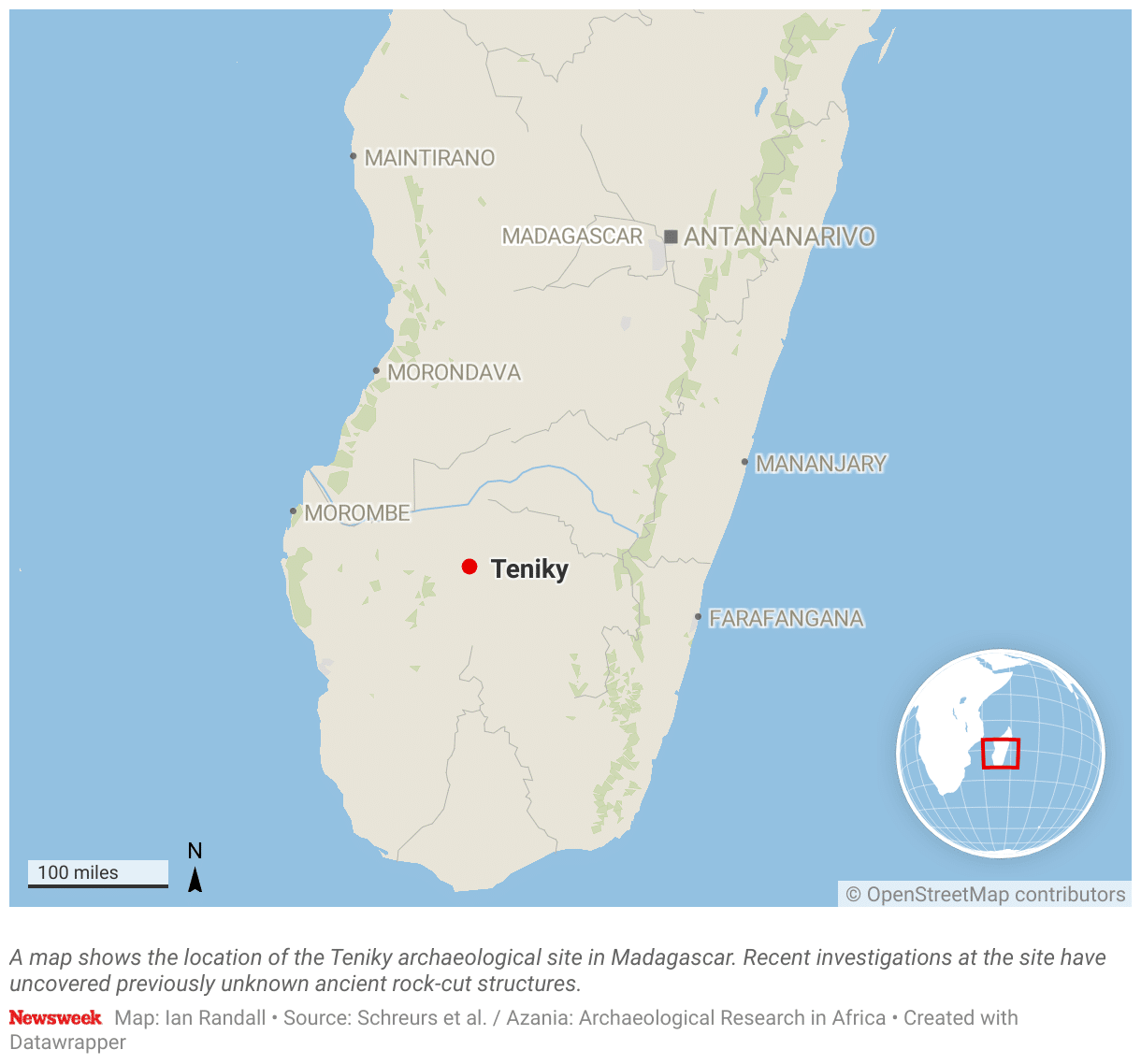
The study details recent investigations at Teniky, an isolated inland archaeological site in the Isalo massif, located in the south of the island, which lies off the southeastern coast of the African mainland.
The site, which is more than 120 miles from the nearest coast, features “enigmatic” rock-cut architecture that is unique in all of Madagascar and the wider East African coast, according to the study.
But the research has cast new light on Teniky, revealing, among other finds, that the site is “much larger” than previously thought and includes many previously unknown archaeological structures, study lead author Guido Schreurs, a geologist at Switzerland’s University of Bern, told Newsweek.
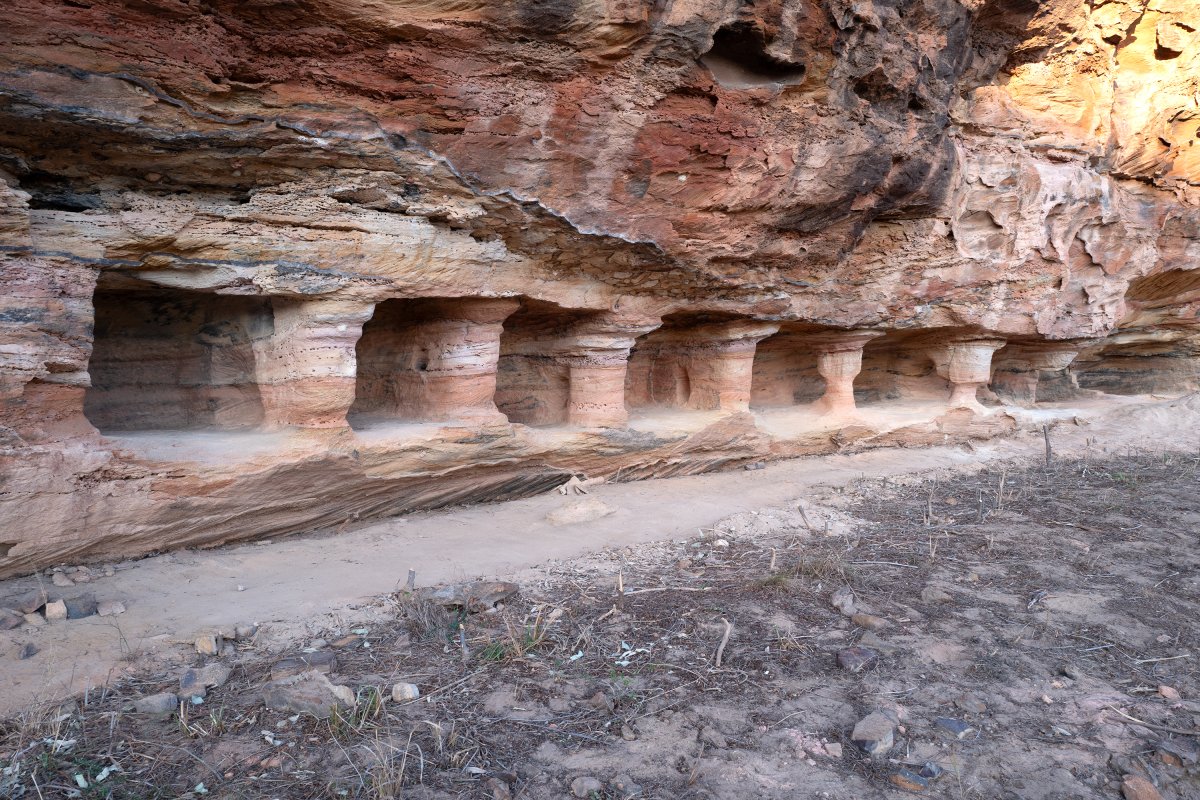
Ancient architecture at the Teniky site on Madagascar includes these rock-cut niches. The site is much larger than previously thought and includes many previously unknown archaeological structures, researchers say.
© Guido Schreurs
In the first half of the 20th century, visitors to the Teniky site in the Isalo National Park described archaeological structures within a fluvial cirque—an amphitheater-shaped valley formed by river erosion. The structures included man-made terraces, rock-cut niches in the steep cliffs and a rock shelter delimited by walls consisting of carved sandstone blocks.
While doing fieldwork in southern Madagascar in the 1990s, Schreurs heard about the rock shelter, sometimes known as the Grotte des Portugais.
“Supposedly, in the 16th century A.D., a Portuguese ship had sunk on the Malagasy coast, and the crew had traversed the island to go to another part of the coast, where it was more likely that Portuguese ships, on their way to India, would pass. During their traverse, they supposedly stayed in the Isalo National Park and, while there, built the stone walls,” he told Newsweek.
But after visiting an exhibition in 2010 featuring photographs of the Grotte des Portugais showing a beautiful carved stone wall and an entrance, the researcher began to wonder whether the Portuguese had actually constructed this wall.
“Why would they make the effort to build such a nice wall if they were just passing through?” he asked.
Subsequent research turned up a publication that appeared in a magazine published by the Tourism Office of Madagascar in 1963.
“This publication not only showed pictures of the sandstone walls at the rock shelter but also documented rock-cut architecture at the site of Teniky. I now began seriously to question the interpretation that all these structures were made by a shipwrecked Portuguese crew,” Schreurs said.
The researcher later investigated high-resolution satellite images of Isalo National Park. He discovered in late 2019 that there were more structures—rectangular and linear features, including man-made terraces—in another area more than a mile west of the fluvial cirque, where the previously known archaeological structures—including those at the Grotte des Portugais—had been described before.
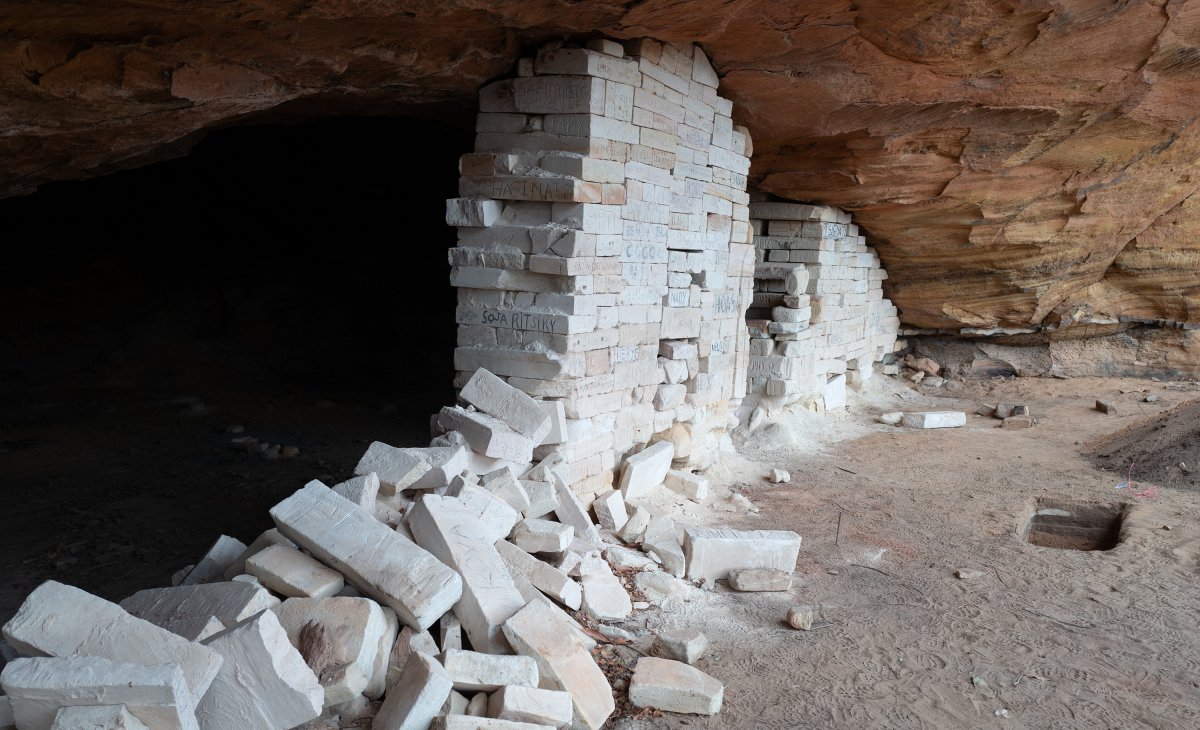
Pictured is the inner sandstone wall at the rock shelter of Grande Grotte (formerly known as the Grotte des Portugais). It was initially thought that the structure was built by a shipwrecked Portuguese crew in the 16th century.
© Guido Schreurs
In 2021, despite the COVID-19 pandemic, Schreurs managed to conduct an initial reconnaissance mission to Teniky with Malagasy archaeologists, accompanied by guides from Isalo National Park. During this mission, previously unknown rock-cut structures and nicely carved sandstone walls were discovered.
Then, in 2022, the geologist returned with Malagasy and Swiss archaeologists to this site, carrying out excavations and documenting the structures. During the excavations, the team found pottery shards and small pieces of charcoal that were dated at the University of Bern using radiocarbon methods.
The latest findings, presented in the study, indicate that the Teniky site is much larger and contains more archaeological structures than previously known, including terraces, stone walls, stone basins and rock-cut structures.
The researchers also shed light on the age of the site—when the sandstone walls and rock-cut architecture were made. The evidence suggests that the structures excavated in 2022 were built around a thousand years ago, roughly between the 10th and 12th centuries, and that the site was occupied then. Most likely, the structures in the fluvial cirque date to the same period, according to the researcher.
“We now know that shipwrecked Portuguese did not make the structures at Teniky in the 16th century,” Schreurs said.
In addition, the team showed that the enigmatic rock-cut architecture at Teniky has stylistic parallels to rock-cut architecture in present-day Iran, dated to the first millennium or earlier and attributed to Zoroastrian communities. Zoroastrianism, which originated in ancient Persia, is one of the world’s oldest monotheistic religions.
“Rock-cut niches cut in the cliff walls at Teniky and stone basins on terraces right adjacent to the cliff walls are interpreted as having had a ritual function, possibly related to Zoroastrian funeral practices,” Schreurs said. “I want to emphasize that further research is necessary to investigate this hypothesis.”
He continued: “If future research confirms this, it would imply that Zoroastrian communities not only left southwest Asia for India—where they are still present today and are known as the Parsis—but also for other parts of the Indian Ocean during the late first millennium/early second millennium.”
While the findings of the recent research shed new light on Teniky, they also raise further questions, according to Schreurs.
“Where and when did the community that ultimately settled at Teniky first arrive on the coast of Madagascar? Did they come straight from their region of origin, or did they first settle in other parts of the Indian Ocean? How did they interact with other contemporaneous sites in Madagascar and East Africa? Why did they move inland to an isolated site in the Isalo Mountains? When and why was the site abandoned?” Schreurs asked.
The researchers will try to address some of these questions when they return to Teniky in 2025 for further excavations.
Do you have a tip on a science story that Newsweek should be covering? Do you have a question about archaeology? Let us know via science@newsweek.com.
Reference
Schreurs, G., Allegro, T., Rouvinez, M., Radimilahy, C., Raharinoro, J., Sabe, N.F., Rakotoarisoa, J.-A., Rakotomavo, L., Rakotondrazafy, N.A., Randrianarivelo, N., & Szidat, S. (2024). Teniky: Enigmatic architecture at an archaeological site in southern Madagascar. Azania: Archaeological Research in Africa. https://www.tandfonline.com/doi/abs/10.1080/0067270X.2024.2380619