5/17/26 11:30 AM 5/17/26 Decker McCullough: It’s wildly misleading to believe Trump’s war is just an oil story, because the real fuse sits under helium and fertilizer. SOAS director Adam Habib is warning that the world’s most fragile supply lines aren’t the ones people argue about on TV. They’re the ones that keep crops growing, MRI machines cold, and global industry alive.
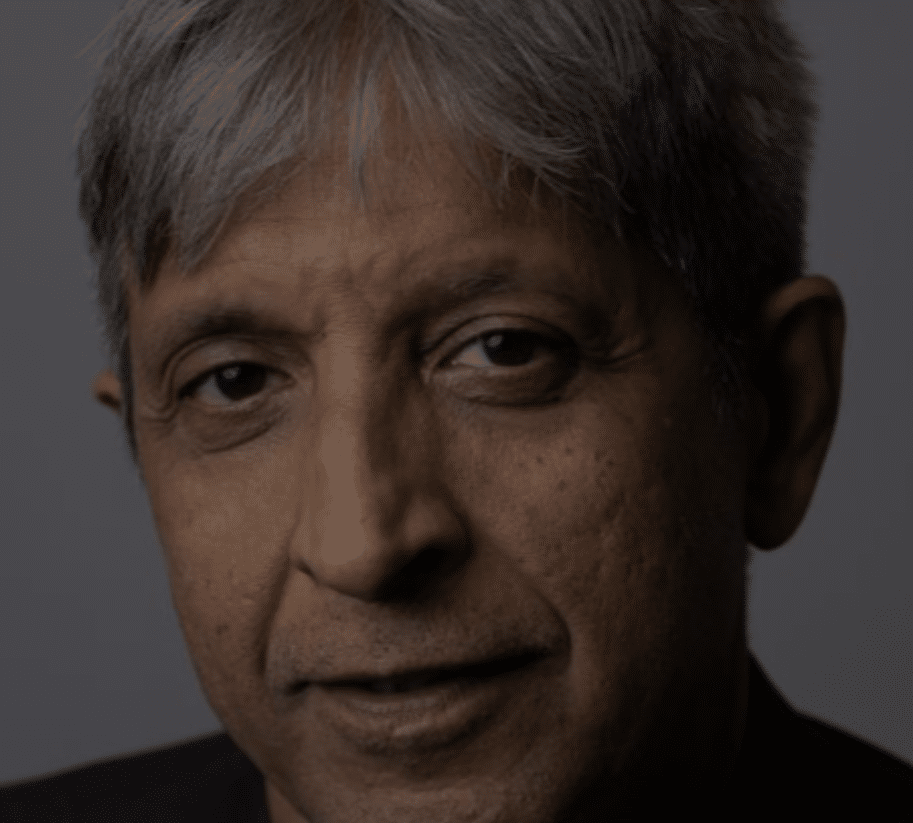
Adam Habib isn’t the kind of academic who throws alarms lightly. As director at the SOAS Middle East Institute and a professor at the University of London, he’s spent decades studying the quiet machinery behind global markets — the supply chains, the petro‑states, the industrial dependencies that most people never see. So when he says the real danger in Trump’s war isn’t oil but the fragile lifelines of helium and fertilizers, you pay attention. Because Habib isn’t talking about theoretical vulnerabilities. He’s talking about the kind of slow‑burn crisis that starts in the Persian Gulf and ends up on your grocery bill, in your hospital, in your electronics, and in the research labs that keep the modern world running.
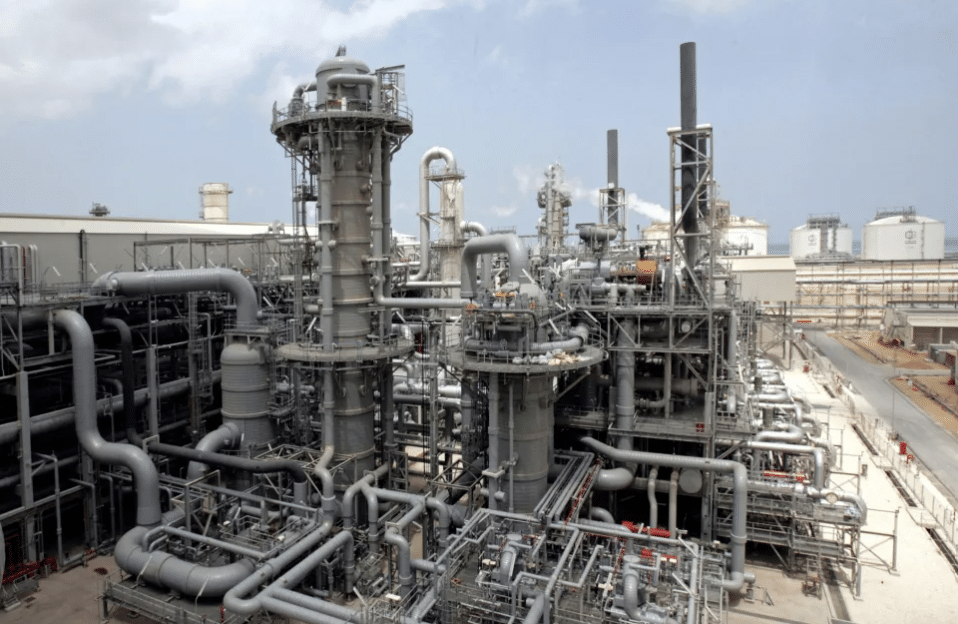
The public conversation always gravitates toward oil because it’s loud, familiar, and politically convenient. But the world doesn’t run on oil alone. It runs on nitrogen fertilizers that keep crops alive, on urea that stabilizes food production and fuels industrial chemistry, and on helium that cools MRI machines, enables semiconductor manufacturing, and keeps scientific research from grinding to a halt. These are the quiet commodities — the ones that don’t trend on social media until they’re already gone. And right now, the Persian Gulf holds the keys to a large share of the world’s nitrogen fertilizer production, while the global helium supply is already stretched thin from years of underinvestment and geopolitical disruption.
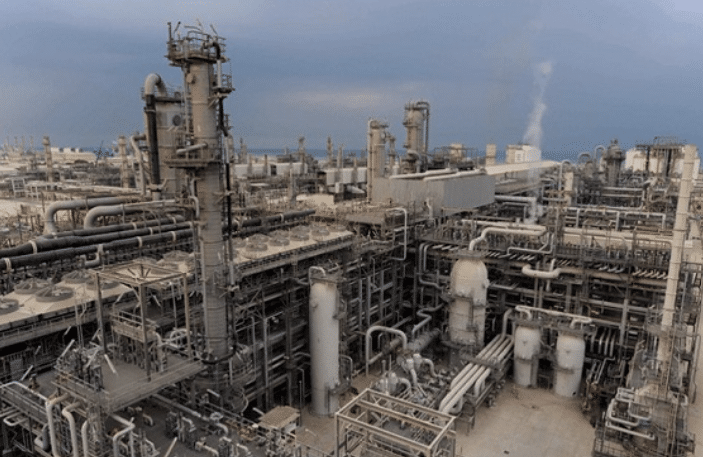
Start with urea. It’s one of the simplest nitrogen fertilizers, but it’s also one of the most indispensable. Farmers from Montana to Mumbai rely on it to keep yields stable, and without it, food prices don’t just rise — they spike. The Persian Gulf states, especially Qatar, Saudi Arabia, and the UAE, have become major producers because they have the one ingredient urea manufacturing can’t function without: cheap natural gas. That gas is the feedstock for ammonia, which becomes urea, which becomes the fertilizer that keeps global agriculture from collapsing. When Habib warns that Trump’s war could destabilize these supply lines, he’s pointing to a truth policymakers don’t like to admit: the world’s food security is built on a handful of gas‑rich nations in one of the most politically volatile regions on Earth.
If conflict disrupts shipping lanes, energy infrastructure, or export capacity in the Gulf, the ripple effects won’t be subtle. Fertilizer prices will jump first, followed by grain prices, followed by meat, dairy, and everything else that depends on stable feed costs. Countries that rely heavily on imported fertilizers — much of Africa, South Asia, and parts of Latin America — will feel the shock the hardest. But even wealthy nations won’t escape it. The global food system is interconnected, and when one link snaps, the whole chain tightens. Habib’s point is that the world has built a food‑production architecture so concentrated, so geographically fragile, that a single geopolitical flare‑up can send shockwaves through dozens of countries at once.
Then there’s helium — the commodity most people associate with party balloons, even though almost none of it goes there. Helium is the coolant that keeps MRI machines at superconducting temperatures. It’s the gas that enables semiconductor lithography, the process that etches the chips inside every phone, car, and computer. It’s essential for fiber‑optic manufacturing, aerospace engineering, cryogenic research, and countless scientific instruments. And unlike nitrogen fertilizers, helium can’t be manufactured. It’s a finite resource trapped in underground gas fields, and once it escapes into the atmosphere, it’s gone forever.
The world’s helium supply has been unstable for years, bouncing between shortages, price spikes, and production outages. The U.S. Federal Helium Reserve — once the backbone of global supply — has been winding down. Qatar, one of the largest producers, has faced repeated geopolitical tensions that threaten its export routes. Algeria and Russia, two other major suppliers, have had their own disruptions. Habib’s warning is simple: in a world already struggling to maintain helium stability, a major conflict involving Gulf states or their shipping corridors could push the system past its breaking point.
Imagine hospitals rationing MRI scans because they can’t get enough helium to keep their machines cold. Imagine semiconductor fabs slowing production just as global electronics demand rises. Imagine research labs — the places where new medicines, materials, and technologies are born — shutting down experiments because they can’t maintain cryogenic temperatures. These aren’t hypotheticals. They’ve happened before during smaller helium shortages. The difference now is scale. A geopolitical shock in the Gulf wouldn’t just tighten supply. It could choke it.
What makes Habib’s analysis so sharp is that he connects these dots — the fertilizers, the helium, the shipping lanes, the energy infrastructure — into a single picture of systemic vulnerability. The modern world is built on invisible dependencies, and those dependencies are clustered in regions where political stability is never guaranteed. When policymakers talk about “energy independence,” they’re usually talking about oil. But the real dependencies — the ones that could break the system — are hiding in the background, unglamorous and unexamined.
Take urea again. If Persian Gulf exports falter, countries like India, which imports millions of tons annually, will scramble to secure supply. That scramble will drive prices up globally, hitting farmers everywhere. Food inflation will follow, and governments will face pressure to subsidize fertilizers or food imports. Some will manage. Others won’t. Food insecurity has a way of turning into political instability, and political instability has a way of spreading. A fertilizer shock doesn’t stay in the fields. It moves into parliaments, streets, and borders.
Helium shortages follow a different path but end in the same place: cascading disruption. When semiconductor production slows, electronics prices rise. When electronics prices rise, everything from cars to medical devices becomes more expensive. When research labs can’t operate, innovation slows. And when innovation slows, the entire technological ecosystem — the one that underpins economic growth — loses momentum. A helium shock doesn’t look dramatic at first. It looks like delays, shortages, and rising costs. But over time, it erodes the foundations of modern industry.
Habib’s warning isn’t that Trump’s war will automatically trigger these crises. It’s that the global system is brittle enough that it wouldn’t take much. A shipping disruption in the Strait of Hormuz. A targeted strike on gas infrastructure. A diplomatic breakdown that interrupts trade flows. The world has built a supply chain architecture optimized for efficiency, not resilience. And efficiency is a fair‑weather strategy. It works until it doesn’t.
What’s striking — and what Decker would say outright — is that none of this is being discussed in mainstream coverage. The headlines stay glued to oil prices, troop movements, and political theatrics. Meanwhile, the real vulnerabilities sit in the background, waiting for a spark. Habib’s insight cuts through that noise because he’s looking at the structural risks, not the surface‑level drama. He’s looking at the commodities that don’t make headlines until they’re already in crisis.
If the world wants to avoid a cascading breakdown, it needs to diversify fertilizer production, invest in alternative helium sources, and build redundancy into critical supply chains. But those are long‑term solutions, and long‑term solutions rarely get political attention. So the system stays fragile, and analysts like Habib keep issuing warnings that policymakers file away until it’s too late.
The uncomfortable truth is that the modern world is more interconnected — and more vulnerable — than most people realize. A conflict in the Persian Gulf doesn’t stay in the Persian Gulf. It moves through fertilizer markets, food systems, medical imaging, semiconductor fabs, and research labs. It moves through economies and governments. It moves through households. And by the time the public notices, the shock has already spread.
Habib isn’t predicting collapse. He’s pointing out the fault lines. And if the world keeps ignoring them, those fault lines won’t stay quiet forever.
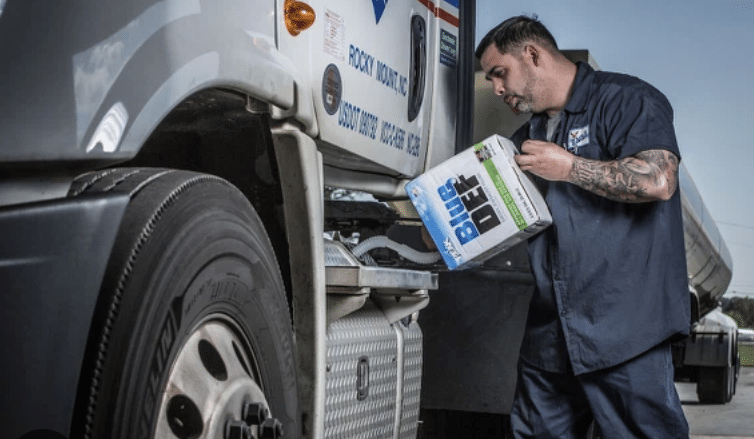
And here’s the part that’s almost misleadingly absent from every mainstream discussion: urea isn’t just a fertilizer input — it’s the chemical backbone of DEF, the emissions‑control fluid every modern diesel engine in the United States is electronically hard‑wired to depend on. These engines don’t “prefer” DEF; they are programmed to derate, shut down, or drop into 5‑mph limp mode the moment DEF quality or volume falls outside spec. That means every long‑haul semi, every freight hauler, every agricultural diesel, every municipal plow, every delivery fleet — the entire circulatory system of the American economy — is chained to a steady, uninterrupted supply of urea.
A real shortage wouldn’t look like higher prices. It would look like trucks stalling on the shoulders of interstates, fleets sidelined in yards, freight brokers watching loads stack up with no engines legally able to move them. Warehouses would fill, then empty, then freeze. Grocery distribution would seize first, followed by fuel deliveries, medical shipments, and the industrial inputs that keep factories alive. The country wouldn’t need a press conference to understand what happened. The silence of the highways — the sudden stillness of a nation built on motion — would tell the story long before anyone in Washington admitted they never saw it coming. We want to hear from you, Join Misleading.com