
5/27/26 4:50 PM MVNOs love to boast that they run on the “same network” as the major carriers, but they bury the part that actually matters: you’re not getting the same priority. It’s a carefully engineered half‑truth — reassuring on the surface, misleading at its core, and designed to keep customers from noticing the real performance gap. Misleading? Absolutely. Illegal? Not even close — and that’s exactly why they keep doing it.
Exposing these half‑truths and bringing clarity to a broad audience is what Misleading.com exists for. We appreciate your questions and your drive to cut through the noise
In the wireless industry, truth has become negotiable. Not because companies are lying outright, but because they’ve mastered the art of omission—an art that allows them to present half a fact as the whole picture. MVNOs, or mobile virtual network operators, have built their empires on this tactic. They proudly proclaim that they run on the “same network” as the major carriers, while quietly sidestepping the critical detail that they do not receive the same priority. It is a distinction that fundamentally shapes the user experience, yet it is consistently buried beneath patriotic branding, celebrity endorsements, and marketing language engineered to soothe rather than inform. This is not a minor oversight. It is a deliberate strategy, and it deserves to be called out with the volume and clarity the public has been denied.
Patriot Mobile and Pure Talk have positioned themselves as the wireless choices for conservative Americans, wrapping their messaging in the language of faith, freedom, and national pride. Their ads are filled with flags, values, and promises of supporting causes aligned with their audience. But beneath the political packaging lies a technical truth they rarely highlight: they operate on borrowed networks with lower priority access. When the network becomes congested, their customers fall to the back of the line. This is not speculation. It is how MVNO agreements work. Yet the marketing focuses on ideology rather than infrastructure, creating a narrative that appeals to identity while obscuring performance limitations. It is a clever strategy, but it is also a misleading one.
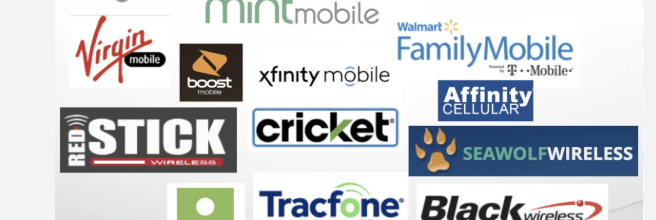
Mint Mobile takes a different approach, relying on humor and the charm of a celebrity spokesperson. Ryan Reynolds is a marketing force, capable of making even the driest product feel fresh and approachable. Mint’s ads are witty, self‑aware, and intentionally disarming. They lean into the idea that the company is on the consumer’s side, poking fun at the industry while positioning themselves as the honest alternative. But humor does not erase the technical reality. Mint customers ride on the same physical network as T‑Mobile customers, but they do not receive the same priority. When the network is strained, Mint users are the first to feel the slowdown. This is not a scandal; it is simply the nature of MVNO service. But Mint’s marketing rarely makes that distinction clear. Instead, it leans heavily on the “same network” claim, allowing consumers to assume parity where none exists.

The phrase “same network” has become the centerpiece of MVNO advertising, and it is technically accurate. These companies do use the same towers, the same infrastructure, and the same spectrum as the major carriers. But the experience is not the same, because priority determines performance. Priority dictates whether your phone loads a webpage instantly or stalls. It determines whether your navigation app updates in real time or lags behind. It determines whether your call connects during a crisis or drops without warning. These are not trivial differences. They are the core of what consumers expect from their wireless service. And yet, MVNOs routinely gloss over them, because acknowledging the truth would undermine the simplicity of their marketing message.
This is where the ethical line begins to blur. The wireless industry is already notorious for complexity, fine print, and opaque terminology. Consumers should not need to be telecom engineers to understand what they are buying. MVNOs had the opportunity to be the antidote to this confusion. They could have embraced transparency, offering straightforward alternatives to the major carriers. Instead, many have chosen to replicate the same tactics—just with different branding. Patriot Mobile leans on political identity. Pure Talk emphasizes simplicity and values. Mint uses humor and celebrity charm. But beneath the surface, the same omission persists: the service is not equal to the major carriers, and the difference is not disclosed with the clarity consumers deserve.

Legally, these companies are on solid ground. Current FCC rules do not require MVNOs to disclose priority levels in their marketing. They are not obligated to explain deprioritization or how often it may occur. They can simply state that they use the same network infrastructure, and the statement is technically true. But legality is not the same as honesty. A half‑truth can be more misleading than an outright lie, because it creates the illusion of transparency while concealing the most important details. Consumers believe they are getting the same service at a lower price, when in reality they are getting a different tier of service altogether.
There have been early discussions in Washington about revisiting telecom transparency rules. Some lawmakers have expressed interest in requiring clearer disclosures about network management practices, including deprioritization. These conversations are preliminary, and no formal legislation has been passed. But the fact that the issue has reached the halls of Congress indicates growing awareness of the problem. Whether meaningful action will follow is uncertain. Telecom regulation moves slowly, and industry lobbying is formidable. But consumer frustration is rising, and pressure may eventually force change.
If Congress does intervene, the most likely outcome would be new disclosure requirements. Not price controls, not restrictions on MVNO operations, but simple, honest communication. A requirement that companies state plainly that their plans may receive lower priority during times of congestion. A requirement that the phrase “same network” be accompanied by an explanation of what that does—and does not—mean. These changes would not harm MVNOs. They would simply ensure that consumers understand the trade‑offs before making a decision. If MVNOs truly believe in the value they offer, transparency should not be a threat.

Until such rules exist, the responsibility falls on consumers and independent voices to expose the gap between marketing and reality. That is the purpose of Misleading.com: to shine a light on the tactics companies use to shape perception while avoiding accountability. The wireless industry has relied for too long on the assumption that consumers will not ask the right questions. It is time to challenge that assumption. It is time to demand clarity. It is time to insist that companies stop hiding behind technicalities and start telling the full truth.
MVNOs are not inherently bad actors. They provide affordable options for millions of people, and they play an important role in the market. But affordability should not come at the cost of honesty. Consumers deserve to know what they are paying for. They deserve to understand the limitations of their service. They deserve transparency, not marketing sleight of hand. And until the rules change—or until MVNOs choose to hold themselves to a higher standard—it is up to us to raise our voices and make the truth impossible to ignore.