The U.S. Senate is set to vote Tuesday on a bill aimed at enshrining in vitro fertilization (IVF) as a nationwide right.
The bill is expected to fail again after the law was rejected in June by Republicans.
This is the latest move by Democrats to spotlight women’s health issues ahead of the 2024 presidential election between Vice President Kamala Harris and former President Donald Trump.
Democratic lawmakers hopes to contrast their reproductive health policies with those of their Republican counterparts.
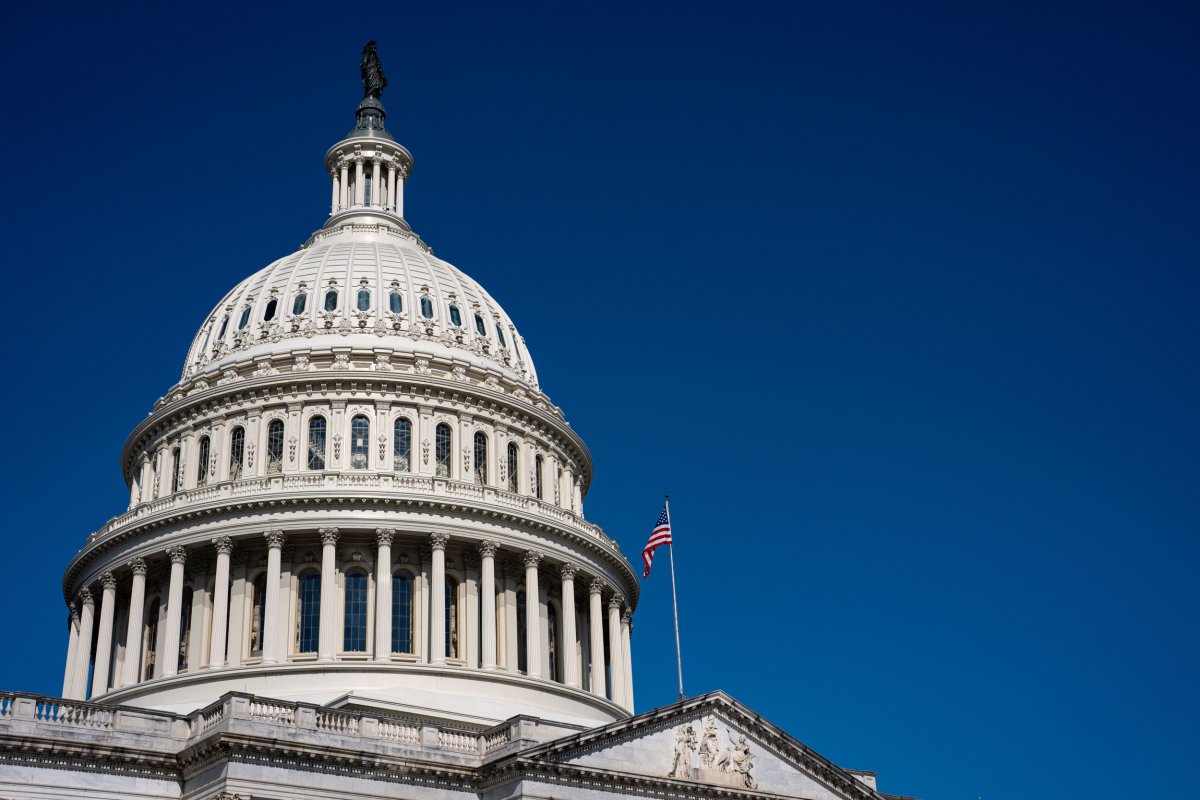
The dome of the U.S. Capitol on Sept. 9, 2024 in Washington, DC. Members of the Senate and U.S. House of Representatives returns to the Nation’s capitol, following their August recess. The Senate will vote on Tuesday for the second time this year on legislation that would establish a nationwide right to in vitro fertilization.
Kent Nishimura/Getty Images
The IVF bill is a response to the Alabama Supreme Court ruling that frozen embryos could be classified as children.
This prompted some clinics to halt IVF services until the state legislature intervened with protective laws.
The bill aims to enshrine protection for IVF into federal law, as a barrier against rulings such as the one in Alabama.
Sen. Tammy Duckworth of Illinois, the bill’s sponsor, and other Democrats warned that the U.S. Supreme Court could eventually target IVF rights, just as it overturned Roe v. Wade in 2022.
“The hard right has set its sights on a new target,” Senate Majority Leader Chuck Schumer said Monday.
Sen. Tammy Duckworth is a mother of two who conceived her children through IVF.
“How dare you,'” she told GOP colleagues after the first vote blocking the bill.
Most Republicans oppose the federal bill, citing states’ rights, but are proponents of IVF.
Republican lawmakers, such as Senators Katie Britt and Ted Cruz, have proposed withholding Medicaid funding from states that ban IVF.
Meanwhile, Sen. Rick Scott of Florida, whose daughter is undergoing fertility treatments, has called for expanding health savings account options to help families afford IVF.
Democrats maintain that the GOP’s proposals fall short.
Trump has also aimed to position himself as a proponent of IVF, and condemned the Alabama court decision, calling it “very negative.”
Trump last month announced plans, without additional details, to require health insurance companies or the federal government to pay for the common fertility treatment.
IVF is a tricky topic for Trump, who is stuck between moderate Republicans who are pro IVF, and conservatives who are against.
An overwhelming majority of Americans—more than 85%—believe that IVF should be legal, according to a CBS News/YouGov poll from March.
The Harris campaign has pointed toward Trump’s “long history of hostility toward IVF and women’s reproductive freedom.”
“Because of Donald Trump, women relying on IVF are losing their chance to grow their families out of fear the state will take control of their embryos. It’s a nightmare straight out of Trump’s Project 2025 agenda,” Harris-Walz 2024 spokesperson Sarafina Chitika said. “If he wins this November, it will only get worse.”
Last month, Harris’s campaign hosted a press call on “Donald Trump’s Threat to Reproductive Freedom, Including IVF.”
The issue came up again in the presidential debate last week.
During the debate’s segment on abortion, Trump faced tough questioning regarding his recent comments on reproductive issues, including abortion and IVF.
But Trump is also facing pressure from conservatives to be more hard-line on reproductive issues such as IVF.
Earlier this month, Southern Baptist leader Albert Mohler, a long-standing figure in conservative Christian politics, raised concerns that Trump‘s recent positions on issues like abortion and IVF could weaken his support among evangelicals.
This article includes reporting from The Associated Press