Hundreds of members of Hezbollah were seriously wounded on Tuesday when communication pagers exploded, Lebanese state media and security officials said.
It wasn’t immediately clear if people were killed.
A senior military intelligence official and an official with a Lebanese group with knowledge of the situation, both of whom spoke on condition of anonymity because of the sensitivity of the situation, said that pagers carried by Hezbollah members were detonated. The second official said it was believed to be an Israeli attack.
The Israeli military declined to comment.
An anonymous Hezbollah official told Reuters that the detonation of the pagers was the “biggest security breach” the group had been subjected to.
Hezbollah is a political party and militant group with significant influence in Lebanon, often positioning itself as a leading force against Israel.
The state-run National News Agency reported that “the handheld pagers system was detonated using advanced technology, and dozens of injuries were reported.”
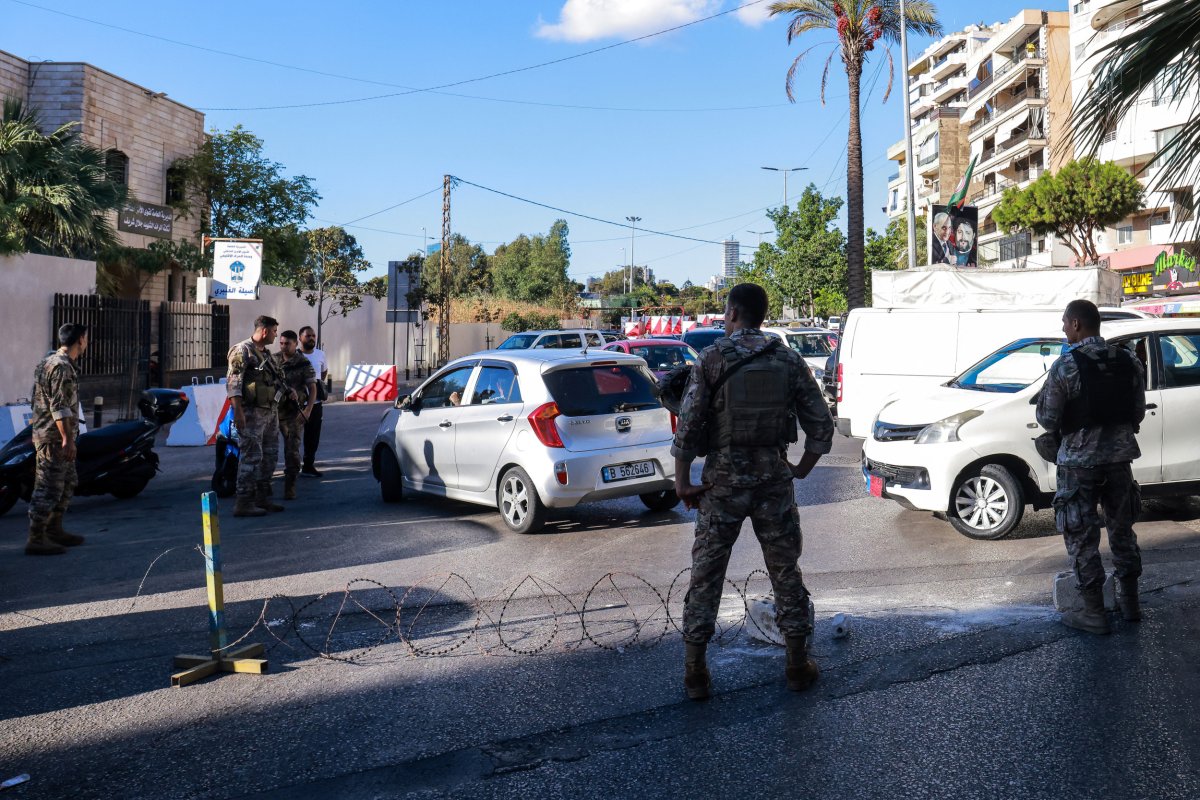
Lebanese army soldiers block an entrance of a Beirut southern suburb on Sept. 17, 2024, after explosions hit locations in several Hezbollah strongholds around the country amid ongoing cross-border tensions between Israel and Hezbollah fighters. Hundreds of people were wounded when Hezbollah members’ paging devices exploded simultaneously across Lebanon on Sept. 17, in what a source close to the militant movement said was an “Israeli breach” of its communications.
Ibrahim AMRO / AFP/Getty Images
The attack on Tuesday caused injuries to fighters and medics.
Ambulances were driving through the southern suburbs of Beirut, Lebanon, amid widespread panic, a Reuters journalist reported.
Witnesses said explosions were continuing 30 minutes after the initial blasts.
The security source also said that the explosions had been taking place in southern Lebanon.
Developing 🚨🚨🚨
Hezbollah communication devices across Lebanon exploded, causing devastation that even reached hospitals. The attack was a cyber operation carried out by Israel. pic.twitter.com/0kbZiqpoub
— Open Source Intel (@Osint613) September 17, 2024
Military analyst Elijah Magnier told Al Jazeera that Hezbollah relies heavily on pagers to prevent Israel intercepting their communications.
He speculated the pagers would have been tampered with before being distributed.
“These explosions … are powerful enough to hit the psychology of Hezbollah.”
An official with a Lebanese group with knowledge of the situation said that it was believed to be an Israeli attack.
A Hezbollah official said that at least 150 people were wounded in different parts of Lebanon when the pagers exploded.
The official said the explosions were the result of “a security operation that targeted the devices.”
“The enemy (Israel) stands behind this security incident,” the official said.
He said that the new pagers that Hezbollah members were carrying had lithium batteries that apparently exploded.
Lithium batteries, when overheated, can smoke, melt and even catch on fire.
Photos and videos on social media and in local media showed people lying on the pavement with wounds on their hands or near their pants pockets in Beirut’s southern suburbs.
Hezbollah fighters were using pagers after leader Hassan Nasrallah cautioned members against carrying cellphones, warning that Israel could use them to track movements and conduct targeted strikes.
The attacks come days after Hamas leader Yahya Sinwar thanked Hezbollah chief Hassan Nasrallah for his support in the war with Israel, as detailed in a letter released by Hezbollah’s media office on Friday.
In the letter, dated Sept. 13, Sinwar thanks Nasrallah for the “blessed acts” of Iranian-backed groups that have provided assistance to Hamas since Oct. 7.
Hezbollah’s attacks from Lebanon are seen by many as a coordinated effort with Hamas, aiming to pressure Israel on multiple fronts.
For years, Hezbollah and Iran have provided financial and military support to Hamas.
Hezbollah escalated tensions with Israel by launching attacks on Israeli military positions along the Lebanon-Israel border starting on Oct. 8.
This provoked a series of cross-border strikes that have continued to this day.
Each clash has resulted in significant loss of life on both sides, with reports of over 500 people killed in Lebanon, many of them Hezbollah fighters, but also more than 100 civilians.
In northern Israel, Hezbollah’s strikes have killed 23 soldiers and 26 civilians.
This article includes reporting from The Associated Press