A woman has vowed never to drink oat milk again after consuming the plant-based alternative for three years and experiencing negative side effects.
Newsweek spoke to Kelly Ann Shuman, 31, who made waves on TikTok with a bold statement: “I quit drinking oat milk and here’s why I would never go back.” Her video, posted to her account @kellyannshuman, racked up over 35,000 views as she shared her journey of eliminating oat milk from her diet and its surprising impact on her health.
Oat milk was once a staple of plant-based wellness culture, but now many are moving away. Newsweek discussed this consumer shift with nutritionist Laura Southern, who explained why some of the ingredients in oat milk can lead to negative consequences.
Shuman, who resides in Austin, Texas, opened up about her experience. A former vegan for over seven years, Shuman spent three of those years regularly consuming oat milk. However, as time went on, she began experiencing a range of concerning health issues.
“I was dealing with brain fog, sluggishness, fatigue, anxiety, and even cavities,” Shuman revealed. “I was always sick—cold, flu, you name it.”
Determined to figure out the cause of her symptoms, Shuman tried numerous solutions. She underwent extensive medical testing, including brain scans and blood work.
“Everything came back fine, except for high inflammation and cortisol levels,” she explained.
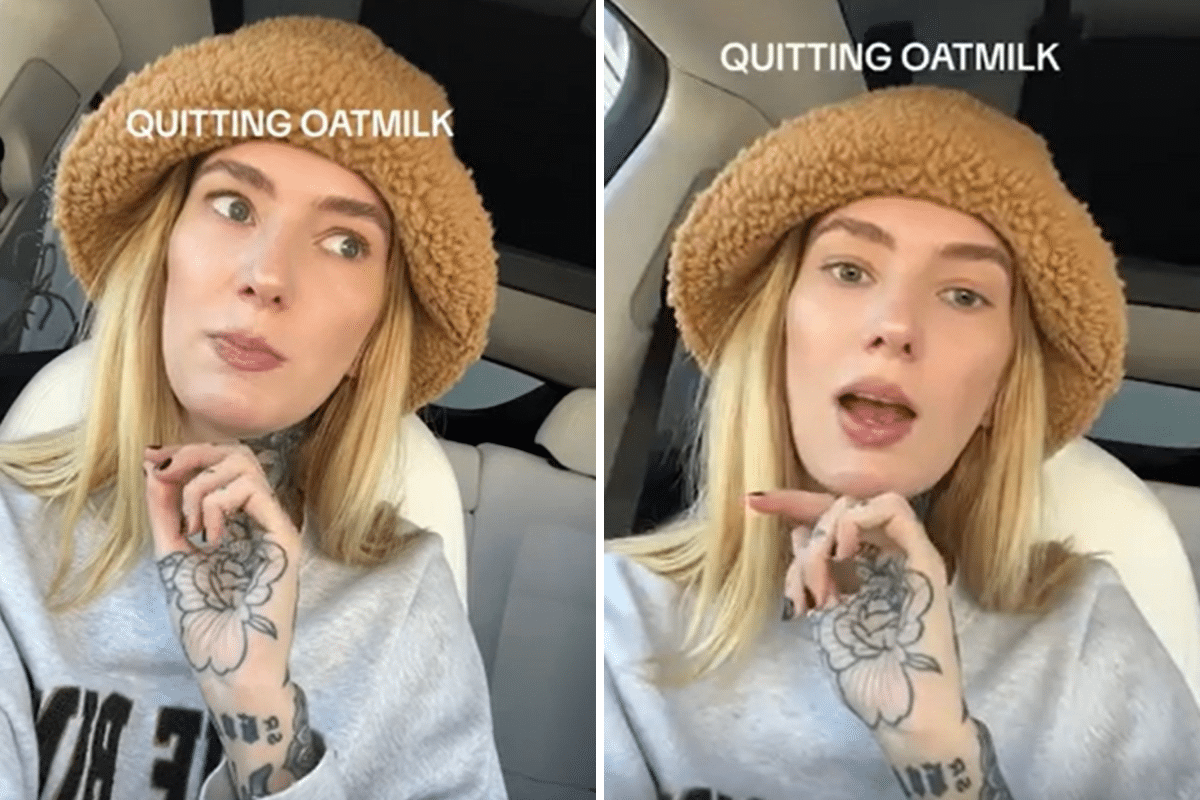
Two screenshots from Shuman’s viral video. It showed Shuman sitting in her car, explaining why she no longer consumes oat milk.
Kelly Shuman/TikTok/@kellyannshuman
Switching Diet and Finding Relief
Frustrated, she eventually decided to move away from veganism and reintroduce eggs, shrimp and meat into her diet. While she remained largely dairy-free, Shuman occasionally added organic whole milk to her coffee and quickly noticed a difference.
“On the days I used whole milk in my coffee, I didn’t feel jittery or anxious,” she said. “But when I used oat milk, I would feel anxious, tired, and just generally unwell. It suddenly clicked for me—oat milk was the problem!”
Since switching to a diet that includes both meat and dairy, Shuman says her symptoms have completely disappeared. “It felt like a light switched on in my brain.”
Newsweek discussed Shuman’s symptoms with Southern, who said: “For some, the milk alternative might cause digestive issues due to thickeners, emulsifiers, and added sugars present in some brands. Additionally, the low protein levels might lead to insufficient daily protein intake, which can leave people lacking the ‘building blocks’ to create neurotransmitters such as serotonin.”
What’s in Oat Milk?
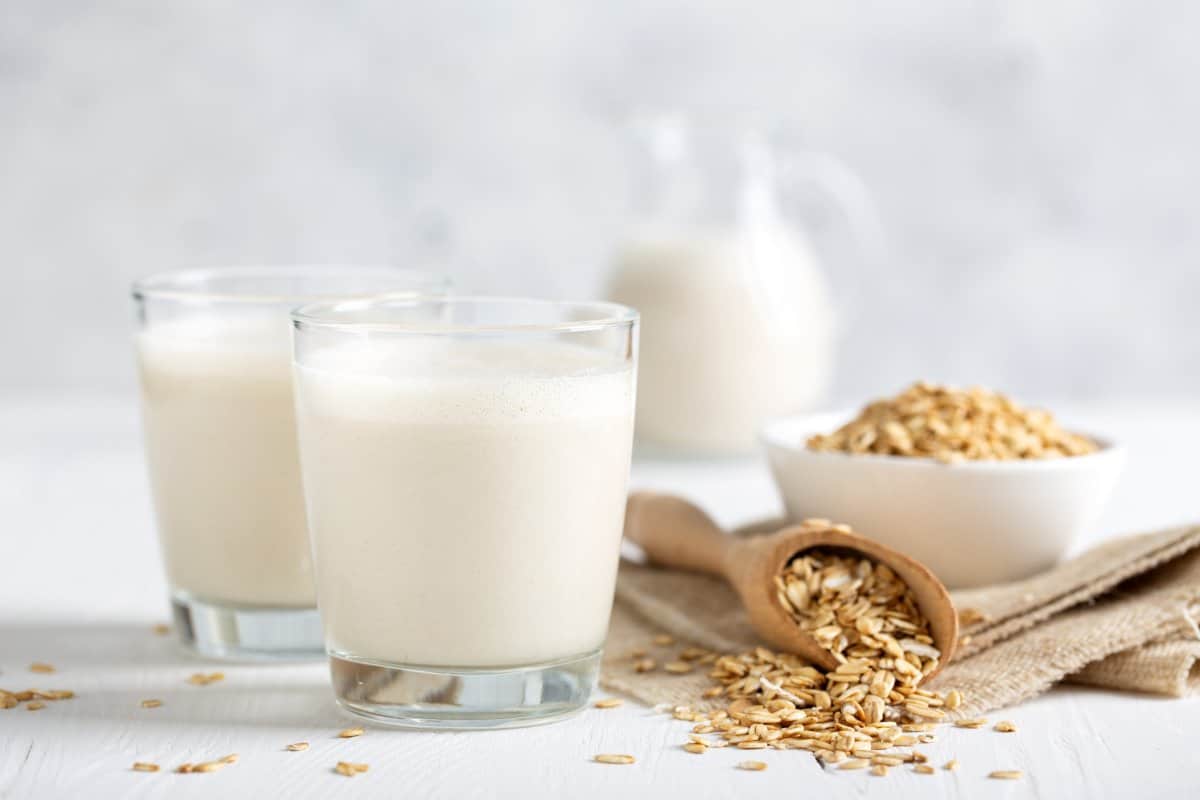
A stock image of two glasses of oat milk with a bowl of grains next to it. Newsweek discussed Shuman’s claims about oat milk with a nutritionist.
YelenaYemchuk/iStock / Getty Images Plus
In recent years, plant-based alternatives have surged in popularity, with almond milk leading the market at $1.6 billion in sales, according to Statista. Oat milk is the second favorite, and together, these two categories generate nearly $2.3 billion in sales. But what exactly is in oat milk?
The United States Department of Agriculture (USDA) states that oat milk (made of water and oats) contains 2 percent or less of ingredients such as rapeseed oil, dipotassium phosphate, calcium carbonate, tricalcium phosphate, sea salt, dicalcium phosphate, riboflavin (vitamin B), vitamin A, vitamin D2 and vitamin B12.
Newsweek discussed the ingredients with Southern, a consultant at W-Wellness. The United Kingdom-based wellness platform offers expert guidance and personalized supplement plans to help individuals achieve their health goals efficiently.

Nutritionist Laura Southern. She spoke to Newsweek about the pros and cons of oat milk.
W-Wellness
She said: “Some oat milks contain emulsifiers, which can negatively impact gut health. These are thickening agents that can affect the gut microbiome and, for some people, result in inflammation. Many oat milks also contain added sugar, which can disrupt our gut microbiome, supporting the growth of ‘pathogenic’ (bad) bacteria, which will negatively affect digestion.”
Phosphorus is a vital mineral that, along with calcium, helps build strong bones and maintain overall health, according to the National Kidney Foundation. However, high phosphorus and calcium levels can also cause dangerous calcium deposits in blood vessels, lungs, eyes, and the heart. Over time, this increases the risk of heart attack, stroke, or death.
High Phosphorus Intake and Breast Cancer Risk
A 2023 study by researchers from the University of Waterloo followed middle-aged women for 10 years, tracking their phosphorus intake through food questionnaires. The study found that women consuming more than 1,800 mg of phosphorus daily (similar to USDA guidelines) had a 2.3 times higher risk of breast cancer compared to those consuming 800–1,000 mg, as recommended by the National Kidney Foundation.
Glucose Spikes and Starch Content in Oat Milk
Although the increased risk wasn’t statistically significant, likely due to the small sample size, researchers believe the findings are still significant. The pattern of risk and how it aligns with other research suggests a possible link between high phosphorus intake and breast cancer.
During her video, Shurman mentions French biochemist Jessie Inchauspé, the Glucose Goddess (@glucosegoddess_), who recently addressed the “oat milk craze” on TikTok.
Racking up over 813,000 views, she explains how oat milk is full of starch, as it comes from a grain. She said: “Starch is essentially just long chains of glucose molecules attached together,” which break down into individual molecules that enter the bloodstream and cause a glucose spike.
The USDA notes that a cup of oat milk contains 16 g of carbohydrates, which is higher than in other milks. According to the CDC, carbohydrates significantly impact blood sugar, so tracking carb intake is key.
Southern told Newsweek: “The carbohydrate levels of oat milk are higher than those of dairy milk, which might not be suitable for anyone managing blood sugar issues. The protein content is also lower than that of dairy milk, which again might not be supportive for some.”
Oat Milk’s Potential Benefits When Consumed in Moderation
However, Southern emphasized that oat milk isn’t entirely bad; those who consume it in moderation can still enjoy several health benefits.
“Oat milk has less saturated fat and more unsaturated fat than whole milk, making it a good option for people who are trying to reduce their blood lipids,” Southern said.
“It also contains vitamins A and E and beta-glucan, which can help reduce harmful cholesterol. While there are a number of different types of oat milk available, it tends to be lower in calories than whole milk and contains more fiber.”
Is there a health issue that’s worrying you? Let us know via health@newsweek.com. We can ask experts for advice, and your story could be featured on Newsweek.