A Chinese national has been extradited to the U.S. for his alleged involvement in a multi-million dollar scheme to facilitate the sale of North Korean tobacco to finance Pyongyang’s Weapons of Mass Destruction program.
On Monday, the Department of Justice revealed that Jin Guanghua, 53, had been handed over to the U.S. by Australian authorities on Friday, and had already made his first appearance in a Washington D.C. court.
Jin, alongside three co-conspirators – two Chinese nationals and one North Korean banker – were charged in 2022 for their involvement in a scheme which used the U.S. financial system to process payments for North Korea’s illicit tobacco smuggling network.
The announcement from the DOJ outlined the complex scheme executed over several years, which involved financial deception and the evasion of international sanctions targeting Pyongyang.
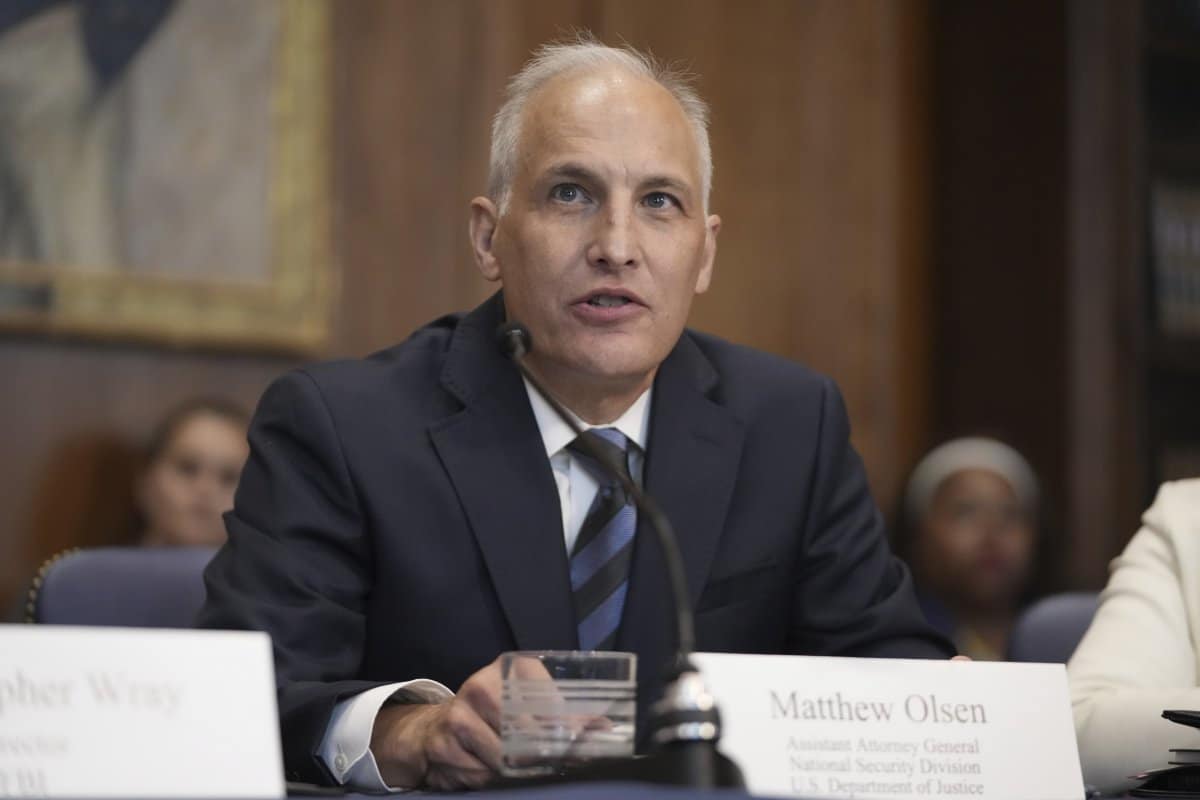
Assistant Attorney General, National Security Division, Matthew Olsen, speaks before a meeting of the Justice Department’s Election Threats Task Force, at the Department of Justice, Wednesday, Sept. 4, 2024, in Washington. On Monday, Olsen announced that the DOJ had extradited a Chinese national for their involvement in a scheme to facilitate the sale of North Korean tobacco.
Mark Schiefelbein/AP Photo
The announcement alleged that, between 2009 and 2019, the defendants purchased leaf tobacco for North-Korean owned entities, while using false documentation and front companies to process hundreds of transactions through U.S. financial institutions.
According to the DOJ, the transactions – which would have otherwise been “frozen, blocked, investigated, or declined” – resulted in around $700 million being funneled to North Korean entities and, ultimately, the North Korean Government.
Tobacco trafficking has been a key source of revenue for Pyongyang since at least 1992, and forms part of the wider illicit trade network which the country uses to bypass international sanctions.
“North Korea’s counterfeit cigarette production capacity is estimated to exceed two billion packs a year,” the DOJ said. “Counterfeit cigarettes are a major source of income to the North Korean regime and may be the single most lucrative item in the North Korean portfolio, as smuggled tobacco is estimated to garner revenue as much as $20 on every $1 spent in cost.”
The proceeds from this are “alleged to flow back to the North Korean government,” the DOJ added, and are designed to both “sustain the loyalty of a core party elite,” and to advance North Korea’s WMD programs.
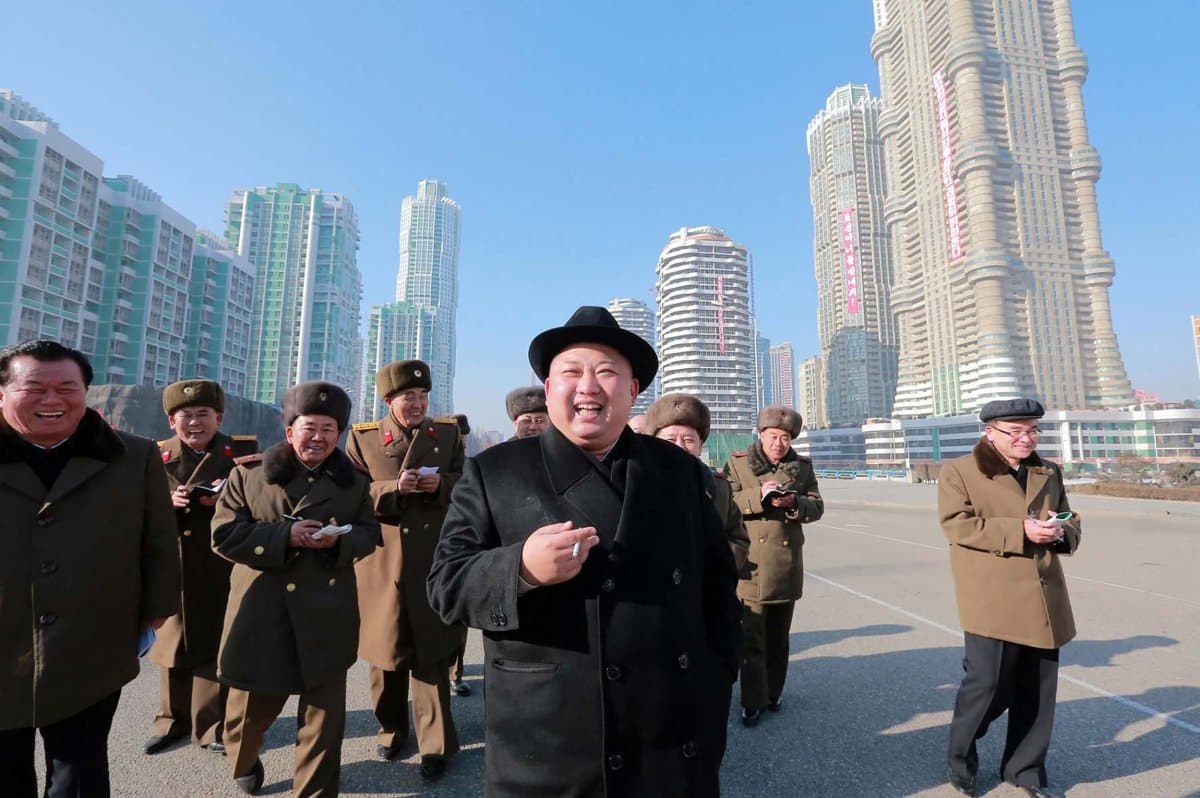
This undated picture released from North Korea’s official Korean Central News Agency (KCNA) on January 26, 2017 shows North Korean leader Kim Jong-Un smoking while inspecting housing blocks at a construction site at Ryomyong Street in Pyongyang. Tobacco trafficking has been a key source of revenue for Pyongyang since at least 1992, and forms part of the wider illicit trade network which the country uses to bypass international sanctions.
KCNA/AFP via Getty
The extradited individual had been living in Australia and was attempting to flee to China at the time of his arrest in March, 2023. His arrest followed an American request to apprehend Jin and place him in extradition custody, amid a wider Justice Department effort to crack down on North Korean efforts to evade sanctions.
Following the recent extradition, Jin now faces a maximum sentence of 30 years in prison for bank fraud, 20 years for violating sanctions and 20 years for money laundering.
The DOJ’s release follows a similar case last year, in which British American Tobacco (BAT) was forced to pay around $635 million to resolve bank fraud and sanction violation charges with U.S. authorities.
BAT, one of the largest tobacco companies in the world, used a Singaporean subsidiary to “circumvent U.S. sanctions and sell tobacco products to North Korea,” according to Assistant Attorney General Matthew G. Olsen of the DOJ’s National Security Division. “allowing funds to illegally flow into the coffers of the Democratic People’s Republic of Korea.”
Do you have a story we should be covering? Do you have any questions about this article? Contact LiveNews@newsweek.com.