A number of current and former Australian military commanders have had their medals stripped following allegations of war crimes committed during the Afghanistan War, Australian Defense Minister, Richard Marles announced on Thursday.
The move follows recommendations from an extensive investigation led by Major General Paul Brereton, which revealed serious misconduct by Australian special forces between 2005 and 2016.
Brereton’s inquiry discovered that around 25 members of the Australian Special Air Service (SAS) Regiment and Commando Regiment were involved in the extrajudicial killings of 39 Afghans.
“The allegations contained in the Brereton Report are arguably the most serious accusations of Australian war crimes in our history,” Marles told the Australian parliament.
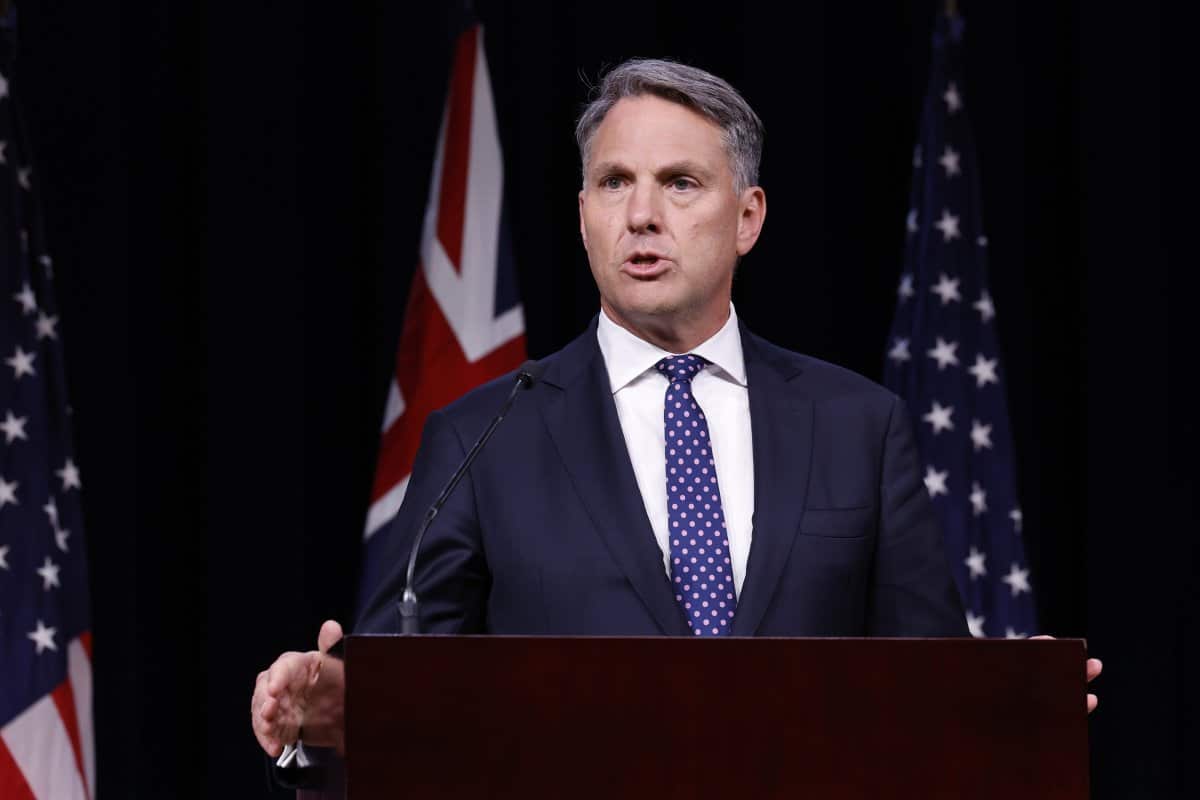
Australian Deputy Prime Minister, Richard Marles holds a joint news conference during the Australia-U. S. Ministerial Consultations on August 06, 2024. He announced on 12th September 2024 that several senior commanders in the Australian military will be stripped of their medals following allegations of war crimes among their ranks.
Chip Somodevilla/Getty Images
He informed the commanders, whose troops were implicated in the alleged atrocities, about the decision to revoke medals awarded during the period in question.
But he did not disclose how many commanders were affected or what their ranks were.
The decision has sparked backlash among some quarters, with Martin Hamilton-Smith, chair of the Australian Special Air Service Association, condemning the action as a betrayal of the soldiers’ bravery.
He said in a statement: “The government’s decision overlooks the courageous leadership of these young officers on the battlefield, basing its judgment on unproven allegations that an unlawful act may have occurred far from their direct oversight.”
Marles later clarified that the medals were not revoked due to any specific wrongdoing by the commanders.
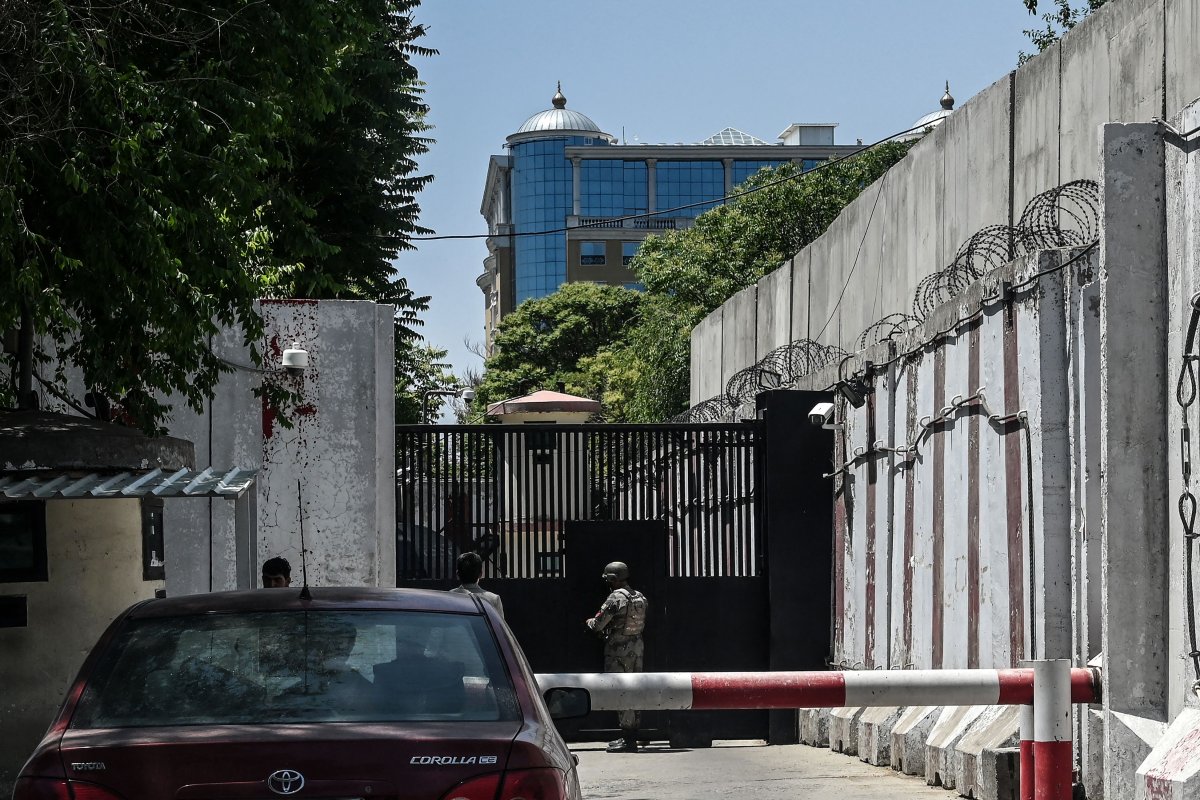
A security personnel guards an entrance near the Australian embassy at the Green Zone in Kabul on May 25, 2021, after Australia abruptly announced to shutter its embassy in Afghanistan this week over security fears as foreign troops withdraw.
WAKIL KOHSAR/AFP via Getty Images
He told reporters: “No one is suggesting they were aware of or failed to act on what happened. The issue is that, as commanders, they were responsible for the conduct of their units. They received the accolades when the units performed well, and with that comes the responsibility when failures occur.”
Opposition lawmaker Andrew Hastie, a former SAS captain who commanded troops in Afghanistan in 2013, said military and political leaders should also be held accountable for the failures that led to these war crimes.
He told the House of Representatives: “I believe our troops were let down by a lack of moral courage that extended up the chain of command, all the way to Canberra, including this House.”
He added: “Those in the chain of command who saw post-mission reports with kill counts and images of dead individuals had a duty to ask questions.”
Hastie, who did not receive any medals for his service in Afghanistan, was not among those whose honors were revoked.
No Australian veteran has been convicted of war crimes in Afghanistan so far. However, former army lawyer and whistleblower David McBride was sentenced in May to nearly six years in prison for leaking classified information that exposed allegations of these crimes.
In 2023, former SAS trooper Oliver Schulz became the first veteran to be charged with a war crime, after allegedly killing a noncombatant in Uruzgan province in 2012.
Last year, a civil court also found that Australia’s most decorated living war veteran, Ben Roberts-Smith, likely unlawfully killed four Afghans while serving as an SAS corporal.
Although Roberts-Smith has not been criminally charged, the case has cast a shadow over the Australian military’s reputation.
This article includes reporting from The Associated Press