A family from Florida managed to stay safe during Hurricane Helene thanks to their specially built weather-resistant home, which allowed them to safely shelter without having to evacuate, and was only minimally damaged by the storm.
Since making landfall in Florida on September 26, Helene has so far claimed more than 120 lives, across many southern states, including Florida, Georgia, South Carolina, North Carolina, Tennessee and Virginia.
Jenny Reimold, media stylist, HomeGoods’ spokesperson, and mom of seven, from Crystal Beach, Florida, told Newsweek that since her family home was built in 2020, it incorporates advanced building codes and engineering methods for storm protection that make it safer than standard homes during extreme weather conditions.
“Our home’s foundation is constructed with concrete blocks for reinforcement, with additional concrete poured into the cells to enhance its overall strength. A concrete block foundation provides a strong, stable base that helps a structure resist the lateral forces of hurricane winds and storm surges,” she said.
“Its heavy, reinforced construction makes it less likely to be lifted, shifted, or damaged during severe weather.”
Located near Tampa Bay, Reimold’s home is in a High Velocity Hurricane Zone, where tropical storms usually hit hardest, often with catastrophic consequences. Homes in these areas require stricter building code standards, like the use of high-impact glass, to stop hurricane winds from breaking in.
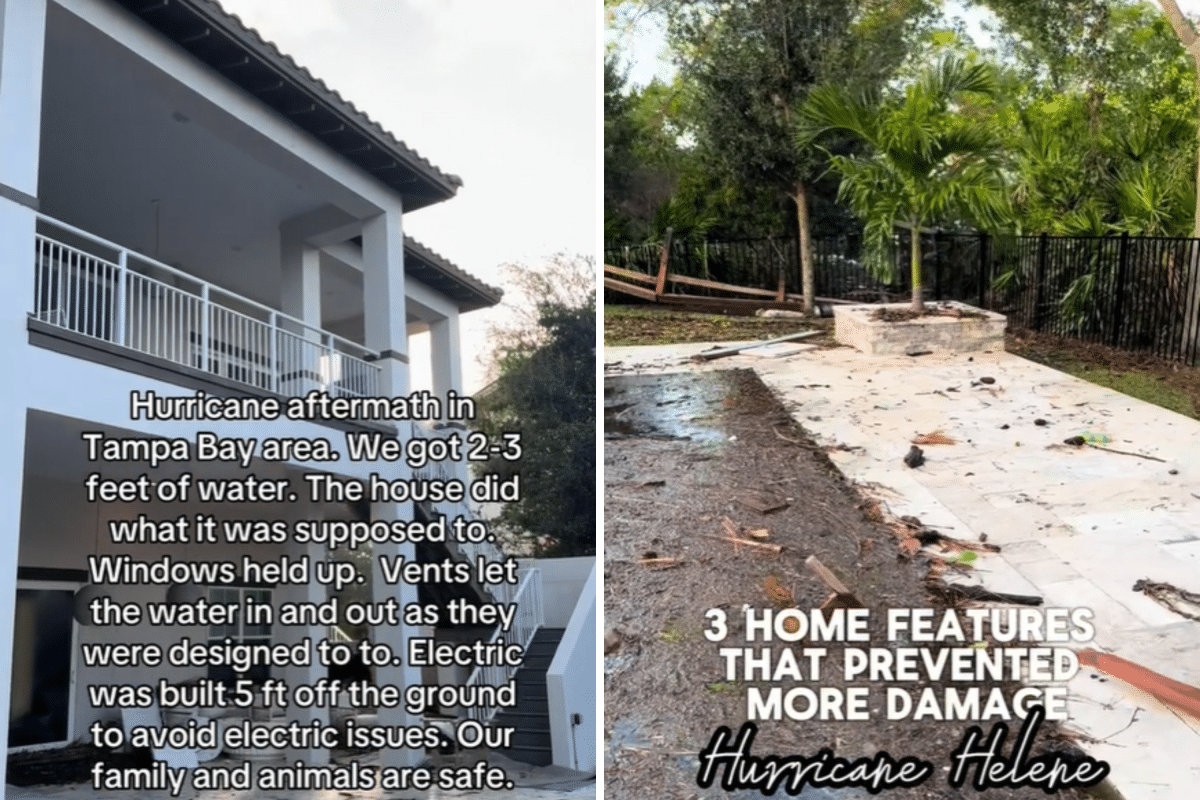
Images of the relatively undamaged home in Florida (left) and the aftermath of the recent violent weather system that hit Florida and many other Southern states (right). A hurricane-resistant home kept a family safe near Tampa Bay during Hurricane Helene.
@jennyreimold via TikTok
In a video shared on TikTok on Saturday under the username @jennyreimold, she explains that her home was kept safe by three major features that prevented damaged from getting a lot worse.
High-impact windows, installed as per local regulation, prevented water, wind and debris from entering Reimold’s home above the vent level, and the hydrostatic vents allowed water to pass in and out to equalize the pressure inside and outside the walls.
“We knew it would flood, but this prevented structural damage,” a voice-over explains in the video.
Reimold’s electrical outlets were all raised to avoid contact with water, built about 5 feet off the ground. This particular feature kept her home same from electrical fire, which some neighboring homes without it experienced.
“Hurricane Helene brought an unprecedented storm surge to our area, unlike anything we had experienced before. The fact that it struck at high tide only made the situation worse,” Reimold said, as she explained that in such conditions, completely preventing damage was nearly impossible.
“Our safety features significantly minimized what could have been a much worse outcome. Our bottom floor flooded to about 2.5 feet, just around the level of the flood vents. While most belongings were lost, the house performed as it was designed to: it limited the water intrusion, the windows held strong, and we had no fires, unlike many homes around us.”
Before the hurricane hit, she and her family, made sure to be prepared with backup power, sufficient food, water, kayaks, and an off-road vehicle in case they needed to evacuate or assist others.
While the Reimold’s family did lose parts of their home, including their private gym, sauna, and pool, everyone in the family managed to get through the hurricane unhurt, including their pet horses.
“A section of the pier crashed through our back fence, and the Gulf surged into our pool, breaking the tiles and leaving dead fish and small turtles scattered around the patio. The first floor took on extensive water damage, causing us to lose a playroom, our home gym, mudroom, the staging materials for my design business, and all of our recreational equipment.
“Having said that, we are among the lucky ones. We’ve seen immense loss in our community and across the country. We were fortunate to have the resources to safeguard our home, family, pets, horses, and elderly parents. I recognize not everyone had that same capability.”
As she cleaned up her home, after the hurricane, Reimold was also focused on giving back by organizing donations, guiding others on where to give help, and sharing supply lists to help people across the country support others.
One important safety tip not to overlook according to Reimold, is ensuring that all electric cars and e-bikes are completely unplugged during extreme weather to avoid extra unnecessary damage.
“What many don’t see is that, no matter how much preparation goes into protecting our homes—whether we have advanced hurricane features or none at all—people are doing the best they can,” she said.
“During those frantic hours, we’re not just preparing to evacuate; we’re caring for our families, securing our pets, safeguarding what we can, moving cars to higher ground, helping neighbors, supporting elderly parents, hunting for supplies, and often trying to juggle work on top of it all.
“And for some, financial limitations make leaving or relocating simply impossible. In times of such loss and uncertainty, I urge everyone to show compassion. Instead of criticism, offer a helping hand or share resources that can support those in need.”
Do you have any dramatic experiences you want to share? Were you affected by Hurricane Helene? Send them to life@newsweek.com with some details and you could feature on the Newsweek website.