With one week remaining until Election Day, Kamala Harris and Donald Trump are locked in a competitive battle for the presidency, while uncertainty looms over the final days of the 2024 campaign.
The stakes are high, and events in the Middle East, voter turnout trends, and each candidate’s messaging could shape the election’s outcome.
Here’s what to watch in the final week.
Trump and Harris’ Positions on Israel
Foreign policy rarely dominates U.S. elections, but wars in the Middle East could influence voters while the conflict escalates between Israel and Iran.
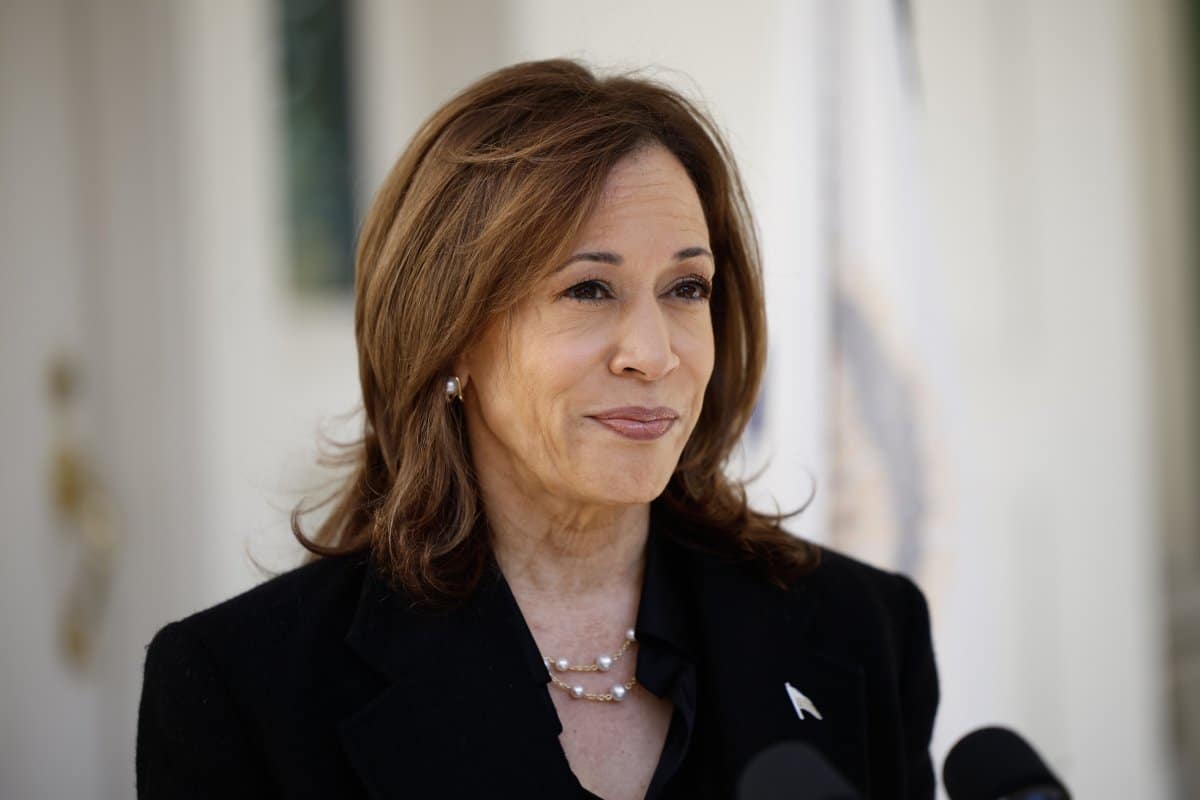
Democratic presidential nominee, U.S. Vice President Kamala Harris delivers remarks before departing the vice president’s residence on Oct. 23, 2024 in Washington, DC. As the campaign enters its final week, Harris is set to deliver her “closing argument” at the Ellipse, the same spot near the White House where Trump spoke on Jan. 6, 2021 shortly before his supporters attacked the Capitol.
Kevin Dietsch/Getty Images
On Friday, Israel conducted airstrikes on Iran, raising concerns about how Iran might respond and whether the region could plunge further into chaos.
The potential fallout from these events could shift the focus of the presidential race.
Harris, the Democratic candidate, has expressed support for Israel, while acknowledging the humanitarian crisis unfolding in Gaza.
This stance has attracted criticism from progressive voices within her party, who have been vocal in condemning Israel’s actions.
In contrast, Trump has maintained steadfast support for Israel.
Despite his past record, including travel bans targeting Muslim-majority countries, he has won some unexpected support from Arab American leaders especially in swing-state Michigan.
Whoever wins the election will inherit one of the most volatile foreign policy challenges in decades.
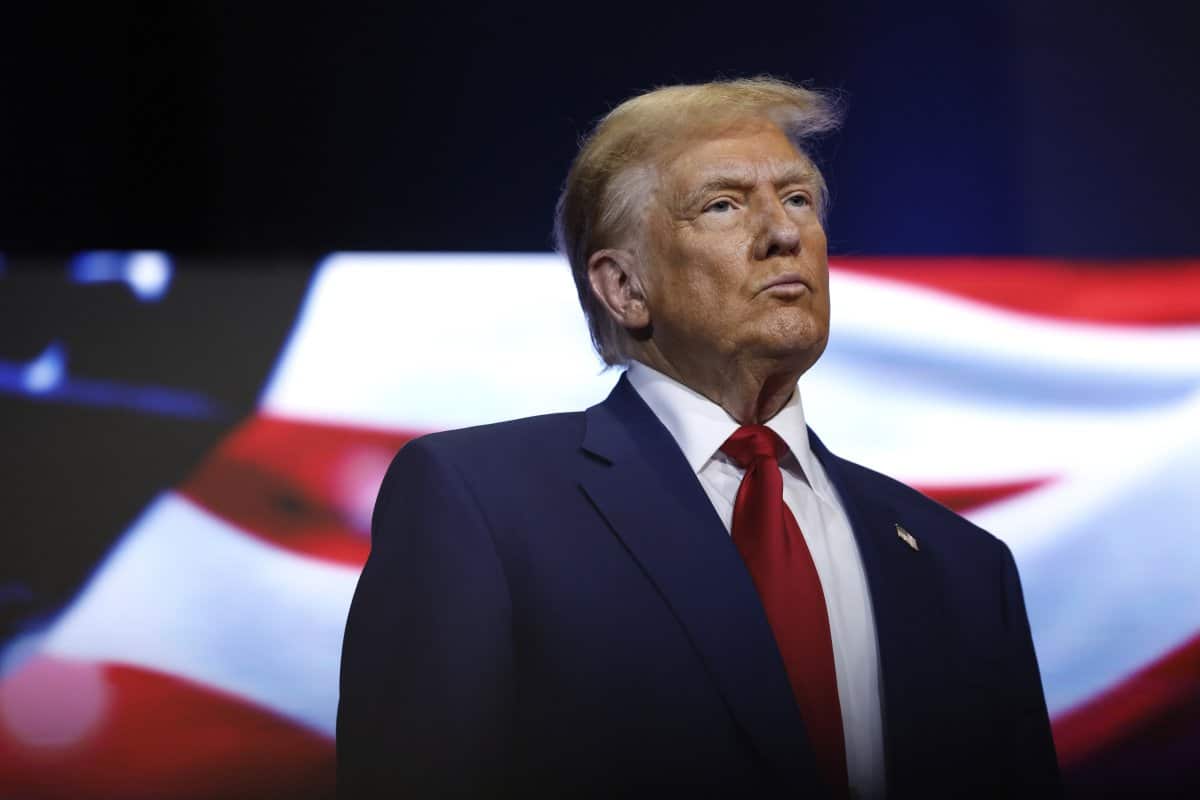
Republican presidential nominee, former U.S. President Donald Trump looks on during a roundtable with faith leaders at Christ Chapel on Oct. 23, 2024 in Zebulon, Georgia. Trump faces the challenge of staying on message in the final days of the campaign.
Anna Moneymaker/Getty Images
Trump’s Challenge: Staying on Message
Trump’s campaign faced controversy even before the week began.
A Sunday rally at Madison Square Garden in New York City was intended to convey a unifying message, but the event was overshadowed instead by racist insults, including a comedian who called Puerto Rico a “floating island of garbage.”
Trump has been using authoritarian-style rhetoric in recent days, including referring to his political opponents as “the enemy within,” and as more dangerous than Russia and China.
Democrats are closely monitoring his statements and public appearances for any potential missteps or controversies to exploit.
There are also multiple ongoing criminal investigations into Trump, who has already been convicted of 34 felony charges, that could reveal new information.
Which Swing States Will Be Important?
The candidates’ travel schedules offer insight into their strategic focus on key battleground states.
Both campaigns are concentrating their efforts on seven critical states that could decide the election: Michigan, Pennsylvania, Wisconsin, Arizona, Georgia, Nevada, and North Carolina.
Harris began the week in Pennsylvania and plans multiple stops in key states, with visits to North Carolina, Wisconsin, Nevada, and Arizona later in the week.
Trump, for his part, has scheduled rallies every day leading up to Election Day, with a heavy focus on Pennsylvania, Wisconsin, and Nevada.
How could Early Voting affect results?
Early voting has surged nationwide, with over 41 million votes already cast.
While Democrats generally have an advantage in early voting, Republican participation has increased compared to previous elections.
Trump, who had previously urged supporters to vote in person, reversed course this year, leading to record early turnout in states including Georgia and North Carolina.
Harris’ Closing Message
As the race enters its final stretch, the Harris campaign is aiming to alleviate growing anxiety within the Democratic base.
Harris’ senior adviser Jenn O’Malley Dillon predicted victory on MSNBC on Sunday: “We are confident we’re going to win this thing,” she said. “We’re seeing extraordinary enthusiasm. This is going to be a close race, and our campaign is exactly where we want to be.”
Harris is set to deliver a “closing argument” at the Ellipse in Washington, D.C., on Tuesday.
The location holds symbolic significance, because it was where Trump addressed his supporters on Jan. 6, 2021, just before the attack on the U.S. Capitol.
Harris is expected to center her remarks on the risks posed by Trump to American democracy, describing her opponent in recent days as a “fascist.”
Her message aims to reach undecided voters, particularly moderate Republicans who may be uncomfortable with Trump’s rhetoric and approach.
However, some progressive Democrats remain uneasy, fearing that she might overlook key economic issues in the campaign’s closing days.
Will Trump Call Election Fraud?
Trump has repeatedly claimed that the election is being rigged against him.
The claims have raised concerns about election security and the potential for unrest.
The Republican National Committee has invested heavily in an “election integrity” initiative, deploying polling monitors and legal teams nationwide.
Democrats have expressed concerns about potential voter intimidation and the degradation of public trust in the election process.
Both campaigns are gearing up for the possibility of prolonged legal battles over the election results.
This article includes reporting from The Associated Press