Canada has alleged that Indian Home Minister Amit Shah directed a campaign targeting Sikh separatists in Canada, sparking significant diplomatic tension.
Deputy Foreign Affairs Minister David Morrison testified before the national security committee Tuesday, revealing that Shah’s involvement had been confirmed to The Washington Post, which initially reported the claims.
Morrison explained to the committee how he had verified Shah’s name to the journalist. “The journalist called me and asked if it was that person. I confirmed it was that person,” Morrison stated, without detailing how Canadian intelligence identified Shah’s connection.
India’s embassy in Ottawa didn’t immediately respond to messages for a request for comment on the allegation against Shah.
The allegations mark an escalation in Canada’s ongoing concerns over foreign interference, following Prime Minister Justin Trudeau‘s statement last year that agents from India were implicated in the 2023 killing of Canadian Sikh activist Hardeep Singh Nijjar in British Columbia.
Canadian officials insist evidence was shared with Indian authorities, though Indian officials have denied receiving proof and labeled the accusations baseless.
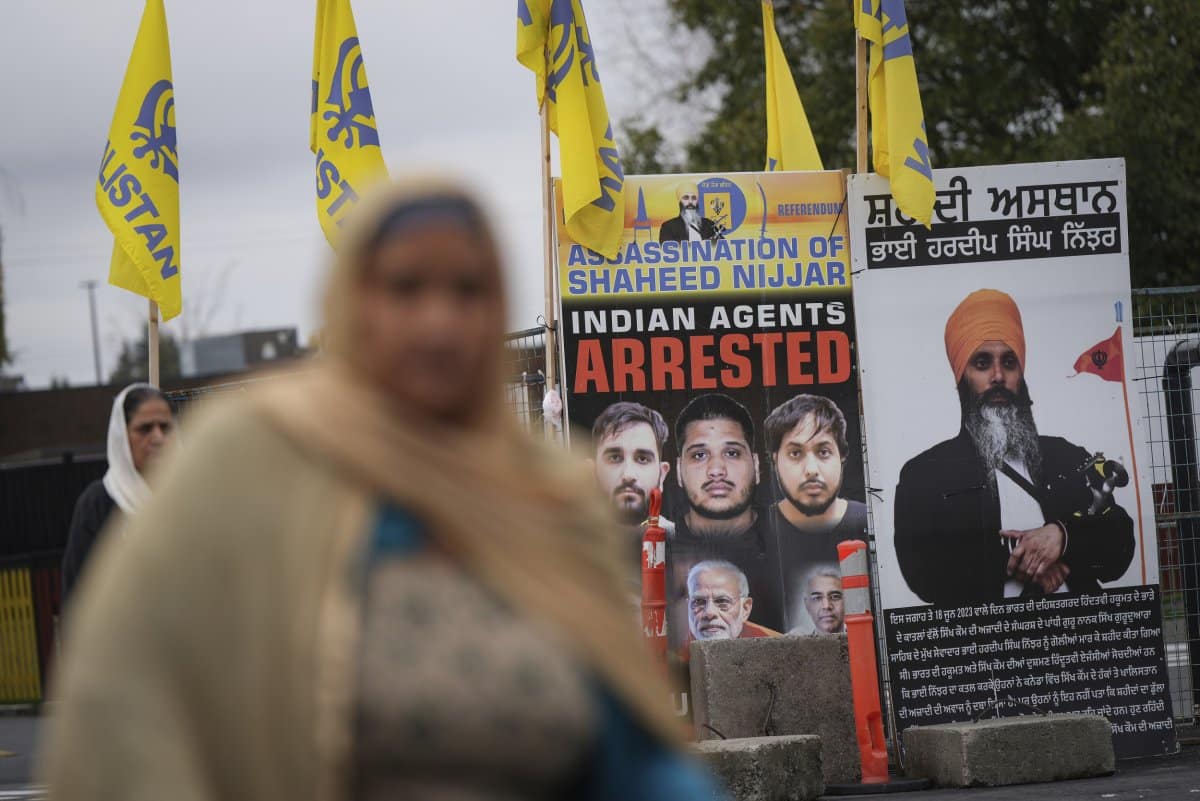
A photograph of Hardeep Singh Nijjar, back right, is displayed outside the Guru Nanak Sikh Gurdwara Sahib in Surrey, British Columbia, Oct. 15, 2024. On Tuesday, Canada’s government alleged that India’s home affairs minister was behind a recent series of plots to murder and intimidate Sikh separatists on Canadian soil.
Darryl Dyck/AP Photo
Diplomatic Expulsions
In October, Canada expelled India’s high commissioner and five other diplomats, alleging they were linked to coercive efforts aimed at silencing Sikh separatists’ activism in Canada. The expulsion follows Canada’s long-standing concerns over external interference, particularly while other nations report similar activities.
In mid-October, the U.S. Justice Department charged an Indian official, Vikash Yadav, over a murder-for-hire plot targeting a Sikh separatist leader in New York.
According to U.S. authorities, Yadav allegedly aimed to instigate a series of politically motivated killings in both the United States and Canada.
Networks and Covert Operations
During the committee hearing, Trudeau’s national security adviser Nathalie Drouin shared more details, revealing that Canada possesses evidence suggesting that India’s government collected intelligence on both Canadian and Indian nationals through its diplomatic channels.
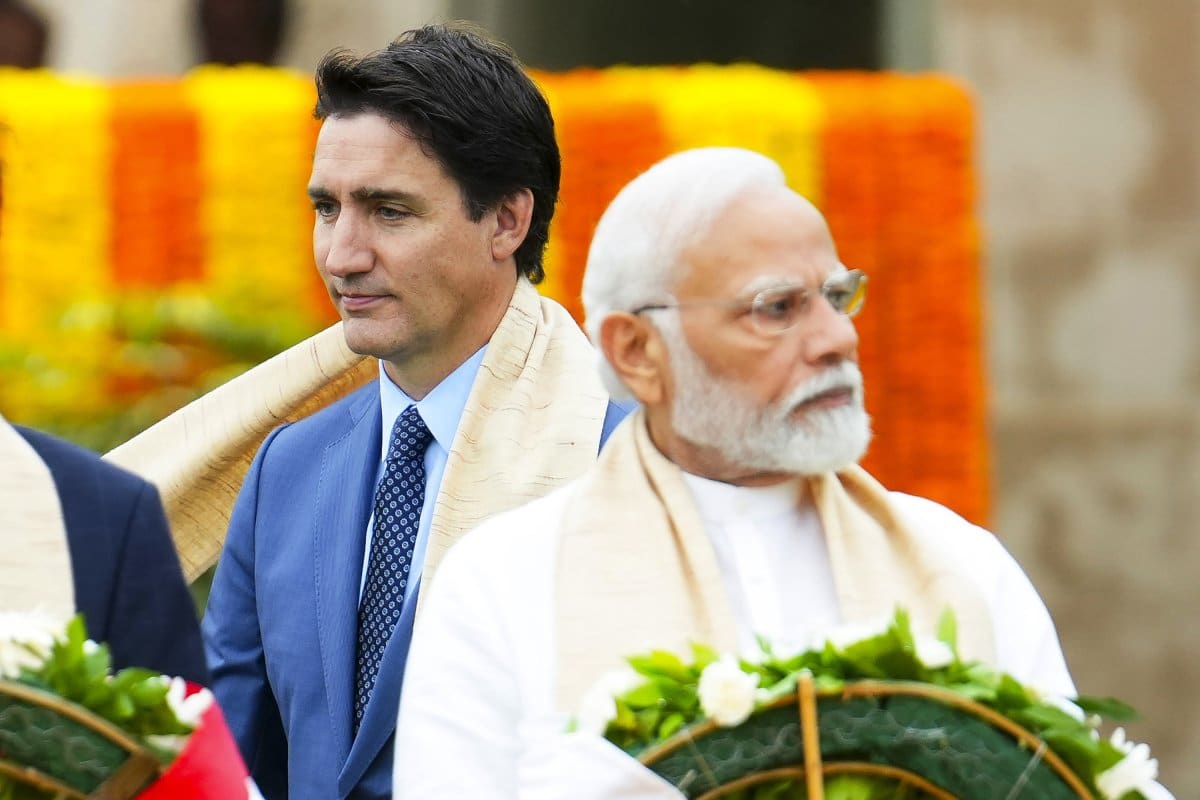
Canada’s Prime Minister Justin Trudeau, left, walks past India’s Prime Minister Narendra Modi while they take part in a wreath-laying ceremony at Raj Ghat, Mahatma Gandhi’s cremation site, during the G20 Summit in New Delhi, Sept. 10, 2023. Canada claims to have presented India with intelligence linking Indian government officials to illegal activities that have taken place in Canada.
Sean Kilpatrick/AP Photo
This intelligence was allegedly passed to New Delhi, where Indian officials reportedly worked with criminal networks, including one affiliated with Lawrence Bishnoi, a notorious figure currently incarcerated in India.
Drouin cited links between Bishnoi’s network and various violent acts in Canada, ranging from coercion to assassination plots, describing a sophisticated web of organized efforts.
Drouin also disclosed that the Royal Canadian Mounted Police (RCMP) had approached Indian officials in an attempt to secure cooperation. She described a meeting in Singapore with India’s national security adviser, Ajit Doval, to discuss working together on Canadian safety concerns.
However, RCMP decided to make its investigations public due to potential threats to Canadian public safety.
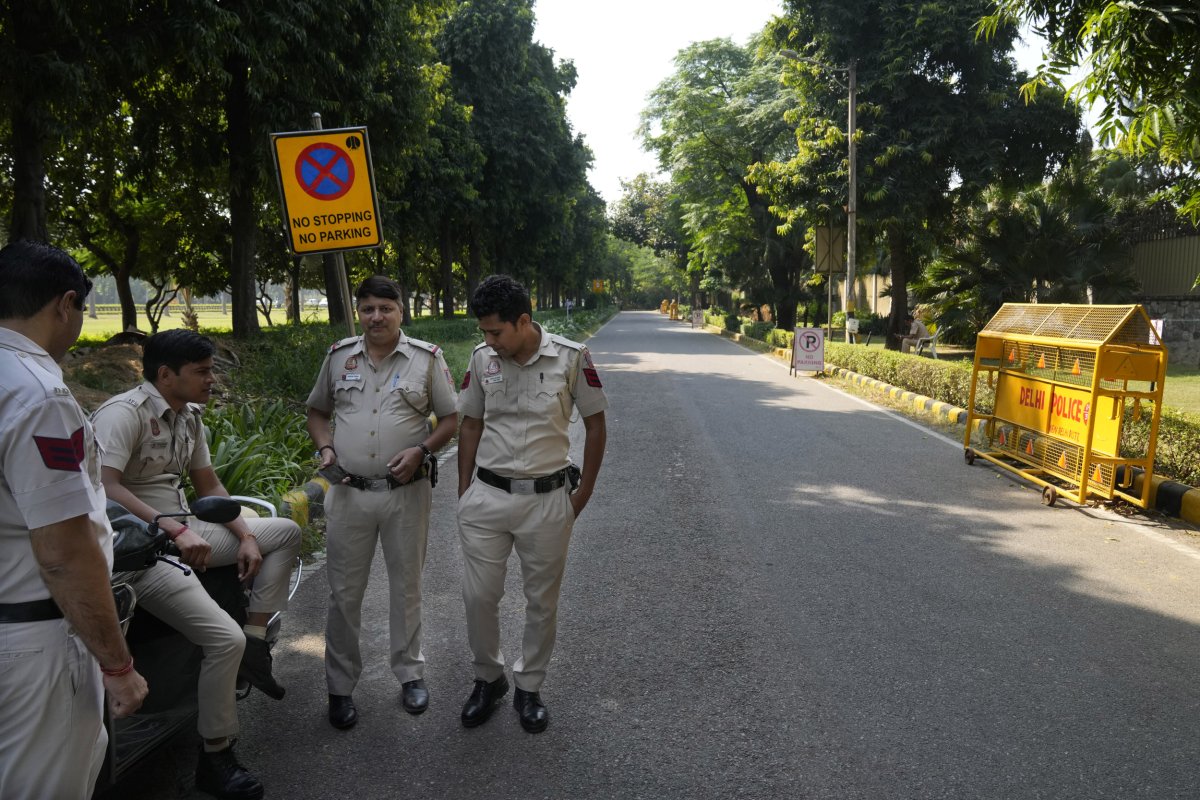
Policemen guard a road leading to the Canadian high commission in New Delhi, India, Tuesday, Oct. 15, 2024. India and Canada have expelled each other’s top diplomats over an ongoing dispute about the killing of a Sikh activist in Canada.
Manish Swarup/AP Photo
Indian Denials and Nijjar’s Legacy
India has repeatedly denied these allegations, responding by expelling six Canadian diplomats. The ongoing investigations stem from the fatal shooting of Nijjar, 45, who was murdered in his truck outside the Sikh temple he led in Surrey, British Columbia.
Known as a prominent advocate for the Khalistan movement, Nijjar had moved to Canada, where he owned a plumbing business and continued to lead calls for Sikh independence.
Four Indian nationals in Canada have since been charged with Nijjar’s murder and are awaiting trial.
For decades, some Sikh activists have called for a separate country for their minority religious community in what is currently the Indian state of Punjab.
The Indian government has responded to these calls largely by suppressing the Sikh separatist movement both at home and overseas.
This article includes reporting from The Associated Press