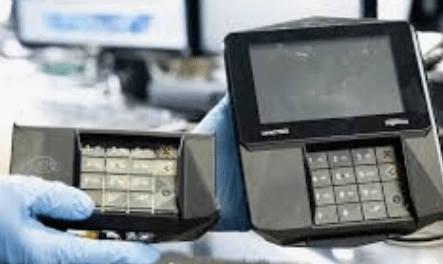

David Ravo CVO, 5/1/23 4:44 PM. A subscriber sent us a video capturing the exact moment a shopper realized the keypad in front of them wasn’t a keypad at all, but a card‑copying ghost device engineered to look—and feel—perfectly real. It’s a chilling reminder of how convincingly fraud has evolved, and how easily trust can be weaponized in everyday transactions.
Ghost keypads are the kind of threat people assume they’d never fall for—until they do. The subscriber video that landed in our inbox this week is a perfect example: a customer goes to pay, taps the keypad, and something feels…off. The buttons depress, the lights blink, the plastic looks convincingly scuffed from use. But the entire thing is a fake shell—an overlay designed to harvest card data before the real terminal underneath ever sees it. It’s a perfect crime of illusion: Looks real. Feels real. Isn’t real. And it’s spreading faster than most consumers realize.
But here’s the real latest threat! AI is accelerating the problem in ways most people haven’t caught up to yet. Criminal groups are now using machine‑learning models to design more convincing overlays, analyze payment‑terminal dimensions, and even simulate the tactile feedback of real keypads. Some operations use AI‑driven scripts to automatically test stolen card numbers, route transactions through global networks, and avoid detection by mimicking normal consumer behavior. Others deploy AI‑generated phishing prompts on the terminal screens themselves, tricking customers into entering PINs or approving fraudulent prompts that look identical to legitimate ones. The result is a new class of payment fraud that isn’t just engineered—it’s adaptive, constantly learning from failed attempts and refining itself in real time.
Back to Mechanical Sams. Ghost keypads—sometimes called “skimmer overlays”—are engineered to mimic legitimate payment hardware down to the millimeter. They’re molded to match the exact shape of a store’s keypad, painted to match the wear patterns of real devices, and weighted so they don’t feel hollow or cheap. Criminals snap them on in seconds, often during busy hours when no one is watching. Once installed, they sit there quietly collecting card numbers, PINs, and tap‑to‑pay data while the real terminal underneath continues to function normally. The customer completes their transaction, gets their receipt, and walks away believing everything was routine. Meanwhile, their financial identity is already halfway out the door.
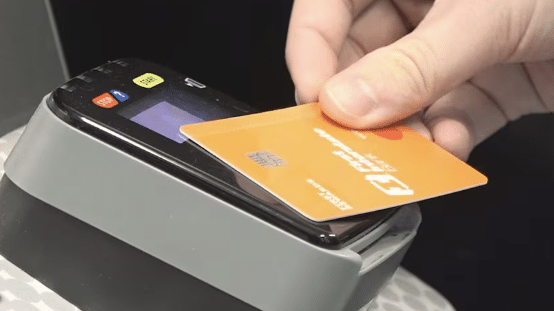
The rise of ghost keypads is part of a broader shift in fraud: criminals no longer rely on crude, obvious devices. They’re building hardware that looks like it came straight from the manufacturer. They’re studying the ergonomics of retail environments. They’re using 3D printers, resin molds, and microcontrollers to create devices that are nearly indistinguishable from the real thing. And they’re deploying them in places where people are least likely to question what they’re touching—grocery stores, gas stations, pharmacies, self‑checkout lanes, and big‑box retailers where speed and convenience override caution.
What makes ghost keypads especially dangerous is how seamlessly they blend into the flow of everyday life. Most people don’t inspect a payment terminal before using it. They don’t tug on the keypad. They don’t look for mismatched colors or misaligned seams. They don’t question why the buttons feel slightly softer or why the screen sits a millimeter higher than usual. They’re focused on getting through the line, not on whether the device in front of them is a counterfeit. Criminals know this. They rely on it. And they’re exploiting it with increasing precision.
Consumers need to understand that ghost keypads aren’t science fiction—they’re here, they’re common, and they’re evolving. The first generation of skimmers was crude: bulky attachments, obvious glue marks, cheap plastic that didn’t match the terminal. Today’s devices are professionally manufactured, often purchased on dark‑market forums where sellers advertise “perfect fit” overlays for specific retail chains. Some even come with installation guides, battery packs, and Bluetooth modules that allow criminals to collect stolen data without ever returning to the scene. It’s fraud as a service, and it’s disturbingly efficient.
So what should people be looking out for? Start with the basics: movement. A legitimate keypad should be firmly attached. If the keypad wiggles, shifts, or feels like it’s sitting on top of something else, that’s a red flag. Texture matters too—if the plastic feels unusually smooth, rubbery, or inconsistent with what you’ve seen at that store before, be cautious. Color mismatches are another giveaway. Ghost keypads sometimes use slightly different shades of gray or black, especially around the edges where the overlay meets the real device. Button resistance is a major clue: if the keys feel too soft, too stiff, or too quiet, the device may not be genuine.
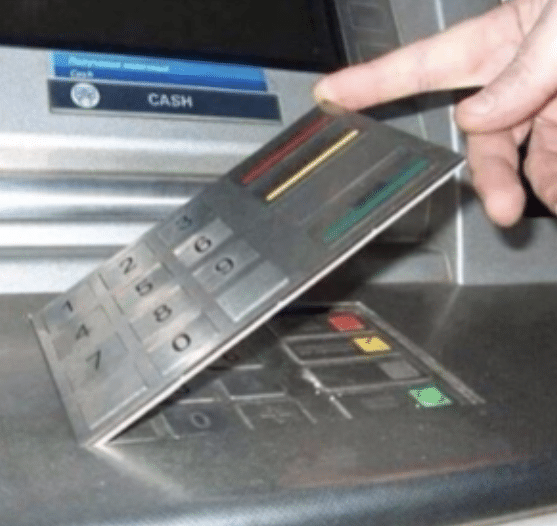
Consumers should also pay attention to height. Many ghost keypads sit a few millimeters higher than the real terminal. It’s subtle, but noticeable if you compare it to other lanes in the store. Loose card slots, misaligned screens, and unusual beeping patterns can also indicate tampering. And if a store suddenly has a keypad that looks brand‑new while everything else around it looks worn, that’s worth questioning. Criminals often install overlays that look “too perfect,” because they’re fresh off a printer rather than aged by years of customer use.
But the responsibility doesn’t fall solely on consumers. Retailers need to take this threat seriously. Too many stores treat payment terminals as static fixtures—install them, plug them in, and forget about them. That complacency is exactly what criminals exploit. Retailers should be conducting daily inspections, training employees to recognize tampering, and securing terminals with anti‑skimming hardware. Some chains have begun using tamper‑evident seals or locking brackets that make it harder to attach overlays. Others are upgrading to encrypted PIN pads that render stolen data useless. But many businesses, especially smaller ones, still rely on outdated equipment that’s easy to compromise.

The financial industry also plays a role. Banks and card issuers have the data to detect unusual patterns—multiple withdrawals from distant locations, rapid‑fire purchases, or transactions that don’t match a customer’s typical behavior. But detection is reactive. By the time a bank flags suspicious activity, the damage is already done. What’s needed is a more proactive approach: better communication with retailers, faster alerts to consumers, and stronger authentication methods that make stolen card data less valuable.
Ghost keypads thrive in the gap between convenience and caution. People want fast checkout. Stores want frictionless transactions. Criminals want both of those things too, because speed and trust create the perfect cover. The subscriber video we received is a reminder that fraud doesn’t always look like fraud. Sometimes it looks exactly like the device you’ve used a thousand times before.
The uncomfortable truth is that ghost keypads are effective because they exploit human behavior. We trust familiar environments. We assume the hardware in front of us is legitimate. We don’t want to slow down a line by inspecting a terminal. And we don’t want to believe that something as mundane as paying for groceries could be a point of vulnerability. But that’s precisely why these devices work. They hide in plain sight, relying on the fact that most people won’t notice the difference between real and almost real.
The solution isn’t paranoia—it’s awareness. Consumers don’t need to become forensic analysts, but they should develop a habit of quick visual and physical checks. Retailers don’t need to overhaul their entire payment infrastructure, but they should implement routine inspections and staff training. Banks don’t need to reinvent the financial system, but they should prioritize faster fraud alerts and clearer communication. Small steps, taken consistently, can make a significant difference.
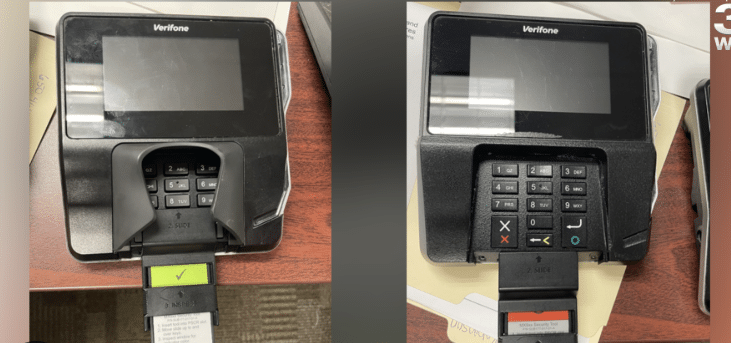
Ghost keypads represent a new era of fraud—one where deception is tactile, engineered, and increasingly indistinguishable from the real thing. The video our subscriber sent isn’t just a curiosity; it’s a warning. The devices we trust most are becoming the devices criminals target most. And unless consumers and businesses adapt, the illusion will keep winning.
If there’s one takeaway, it’s this: trust the transaction, but verify the terminal. The difference between real and fake is often just a few millimeters—and a few seconds of attention can be the difference between a routine purchase and a stolen identity.
Misleading.com exists for one purpose: to surface the full spectrum of misleading issues shaping our daily lives and put that information directly in the hands of the people who deserve it most—our audience. We don’t tell you what to think, and we don’t steer the narrative. We publish what’s real, what’s questionable, and what’s intentionally deceptive so you can decide for yourself. At its core, the entire project is built on one principle: information only has power when it’s shared.