
David Ravo, 7/8/2026 — Politics has officially crashed the pitch, and the world is watching the collision in real time. When Donald Trump wades into FIFA territory, the spectacle becomes less about soccer and more about the chaos that follows him like a sideline entourage. The result is a surreal mash‑up of power, personality, and a red‑card controversy that no referee on earth is trained to handle
Politics Meets FIFA World Cup
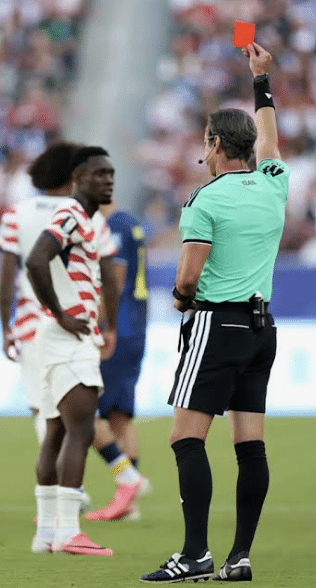
The collision between politics and global sport has never been subtle, but the recent episode involving Donald Trump and FIFA pushed the boundary from questionable to absurd. When a political leader inserts himself into a live controversy over a red card, the expectation is that clarity will follow. Instead, the world watched a phone call that produced more confusion than resolution, leaving fans, officials, and commentators wondering how a simple disciplinary ruling became a geopolitical spectacle. The problem wasn’t just the intrusion itself—it was the misleading aftermath, the contradictory interpretations, and the way the call blurred the line between legitimate oversight and political theater.
The red card in question should have been a straightforward matter: a referee’s decision, subject to review by the appropriate governing bodies, handled within the established framework of the sport. But once Trump stepped in, the narrative shifted from rules and fairness to influence and optics. The phone call was presented as a clarifying intervention, yet the statements that followed were anything but clear. Different parties described the conversation in conflicting ways, with some claiming the card was upheld, others insisting it was overturned, and still others suggesting the call wasn’t about the card at all. The result was a fog of misinformation that spread faster than the actual facts, leaving millions of fans unsure what had happened and why.
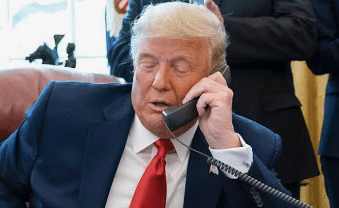
This kind of confusion isn’t accidental. When political leaders involve themselves in sports controversies, the focus often moves away from the event itself and toward the leader’s persona, agenda, or public image. The red‑card incident became less about the player and more about Trump’s willingness to intervene, his relationship with FIFA officials, and the broader implications of a head of state weighing in on officiating decisions. The misleading nature of the post‑call statements amplified the problem, turning a routine disciplinary matter into a global debate about transparency, influence, and the integrity of the sport.
The danger of political interference in sports isn’t new. History is full of examples where leaders used athletic events as platforms for power, propaganda, or personal gain. In 1936, Adolf Hitler attempted to use the Berlin Olympics as a showcase for his ideology, only to be famously undermined by Jesse Owens’ victories. In 1972, the U.S. and Soviet Union turned the Summit Series into a symbolic battleground of Cold War dominance. More recently, Vladimir Putin’s involvement in the 2014 Sochi Olympics and the 2018 World Cup demonstrated how modern leaders use sports to project national strength and global relevance. These moments remind us that when politics enters the arena, the sport itself becomes secondary.
Even in democratic nations, political leaders have occasionally crossed the line. George W. Bush’s involvement in baseball decisions during his time as Texas Rangers owner carried over into his presidency, where he often used sports metaphors and appearances to bolster public support. Barack Obama’s public commentary on NFL controversies, including the Washington team’s name debate, showed how presidential opinions can influence sports culture. And in 2020, political pressure surrounding the NBA’s stance on social justice issues revealed how leaders can shape or distort the narrative around athletic organizations. None of these examples reached the level of direct officiating interference seen in the recent FIFA incident, but they illustrate a long‑standing pattern: when leaders speak, sports listen, whether they want to or not.
What makes the Trump‑FIFA red‑card situation particularly troubling is the misleading nature of the communication that followed. In the age of instant information, clarity is essential. Fans expect accurate updates, governing bodies rely on precise statements, and players deserve transparency. Instead, the aftermath of the phone call produced a swirl of contradictory claims that left everyone guessing. Was the card overturned? Was it upheld? Was the call even about the card? The lack of a unified explanation created fertile ground for speculation, conspiracy theories, and partisan interpretations. In a world already saturated with misinformation, this was the last thing international sport needed.
The misleading statements also damaged trust in FIFA’s ability to manage its own affairs. The organization has spent years trying to rebuild credibility after corruption scandals, bribery allegations, and leadership shake‑ups. Allowing political influence to seep into officiating decisions—especially without clear communication—undermines that progress. Fans who already question FIFA’s transparency now have another reason to doubt the integrity of the system. The red‑card confusion wasn’t just a PR problem; it was a structural failure that exposed vulnerabilities in how the organization handles external pressure.
Sports depend on rules, consistency, and fairness. When political leaders intervene, those foundations can crack. The referee’s authority becomes questionable. The governing body’s independence becomes compromised. The players’ confidence in the system erodes. And the fans—who invest emotionally, financially, and culturally in the sport—are left wondering whether the game they love is still being played on a level field. The misleading nature of the red‑card fallout magnified these concerns, turning a single moment into a symbol of broader instability.
The solution isn’t to ban political leaders from commenting on sports; that would be unrealistic and unenforceable. Instead, the boundary needs to be clear: leaders should not interfere with officiating decisions, disciplinary actions, or internal governance. Commentary is one thing. Influence is another. And when influence is paired with misleading communication, the consequences ripple far beyond the pitch. FIFA must establish stronger protocols for handling external pressure, and political leaders must recognize that their involvement carries weight that can distort outcomes and damage trust.
The red‑card incident will likely fade from headlines, but its implications will linger. It serves as a reminder that sports are not immune to political intrusion, and that misinformation can spread even from the highest levels of power. Fans deserve better. Players deserve better. And the integrity of global sport demands better. When politics meets FIFA, the result should never be confusion, contradiction, or chaos. Yet that is exactly what happened—and unless boundaries are respected, it will happen again.
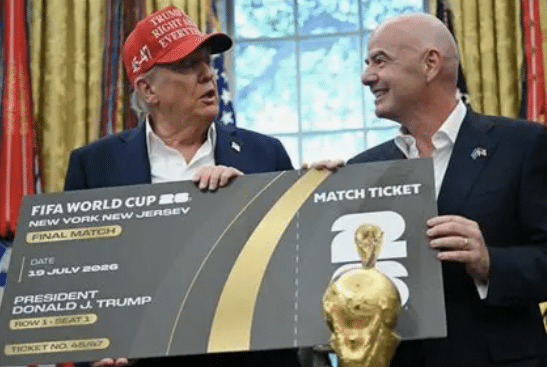
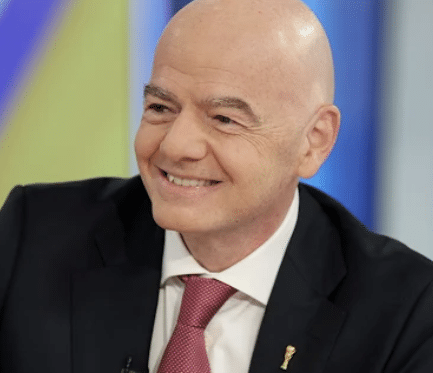
In the end, the strangest twist wasn’t the red‑card confusion or the contradictory fallout—it was FIFA President Giovanni “Gianni” Infantino stepping forward to hand Donald Trump the first‑ever “Peace FIFA Award.” The gesture was framed as diplomatic, symbolic, even historic, but to anyone paying attention, it felt more like a reward for interference than a recognition of leadership. When the head of world football honors a political figure immediately after a controversy he helped ignite, the message is impossible to ignore. We want your view at Misleading.com