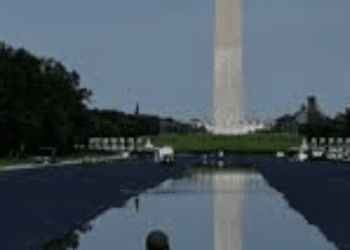
Vice President Kamala Harris will make her closing argument for the presidency on Tuesday evening from the Ellipse — the same historic park where former President Donald Trump delivered an infamous rallying cry to his supporters on Jan. 6, 2021.
That contrast is intended to draw into sharp relief what she has suggested is his dark vision for the nation, against her campaign of “joy”. In recent weeks, the campaign has tightened into a near statistical dead heat, with Harris holding a narrow lead nationally over Trump, at 48 percent to Trump’s 46.7 percent, according to FiveThirtyEight’s aggregation of some of the election season’s most statistically reliable polling.
Here are some themes to watch:
Does she directly mention Jan. 6 attack on the U.S. Capitol?
It is no coincidence that Harris chose the Ellipse, an expanse south of the White House, for her speech on Tuesday night. Nearly four years ago, on Jan. 6, 2021, Trump gave a speech for his assembled supporters that changed history.
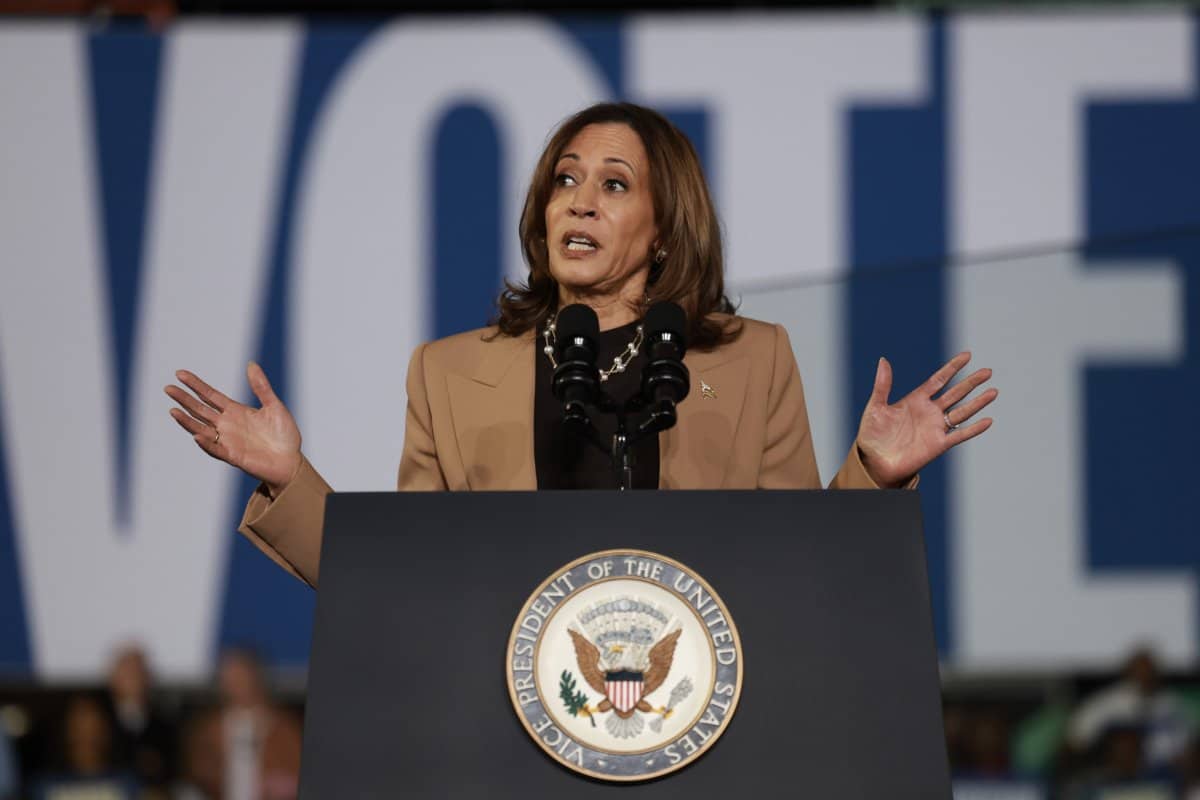
Democratic presidential nominee, U.S. Vice President Kamala Harris, speaks during a campaign rally at the James R Hallford Stadium on October 24, 2024 in Clarkston, Georgia.
Joe Raedle/Getty Images
“We fight like hell,” Trump told those who had traveled to Washington for that address. “And if you don’t fight like hell, you’re not going to have a country anymore.” Shortly thereafter, an angry mob of those supporters stormed the nearby Capitol.
On Tuesday, with the silhouette of the White House at her back, look for Harris to signal that her potential presidency will turn the page on the Trump era. Whether she will directly reference Jan. 6 will be notable, given the reporting that some Democratic outside groups believe the campaign has been too focused on Trump’s character in the final days.
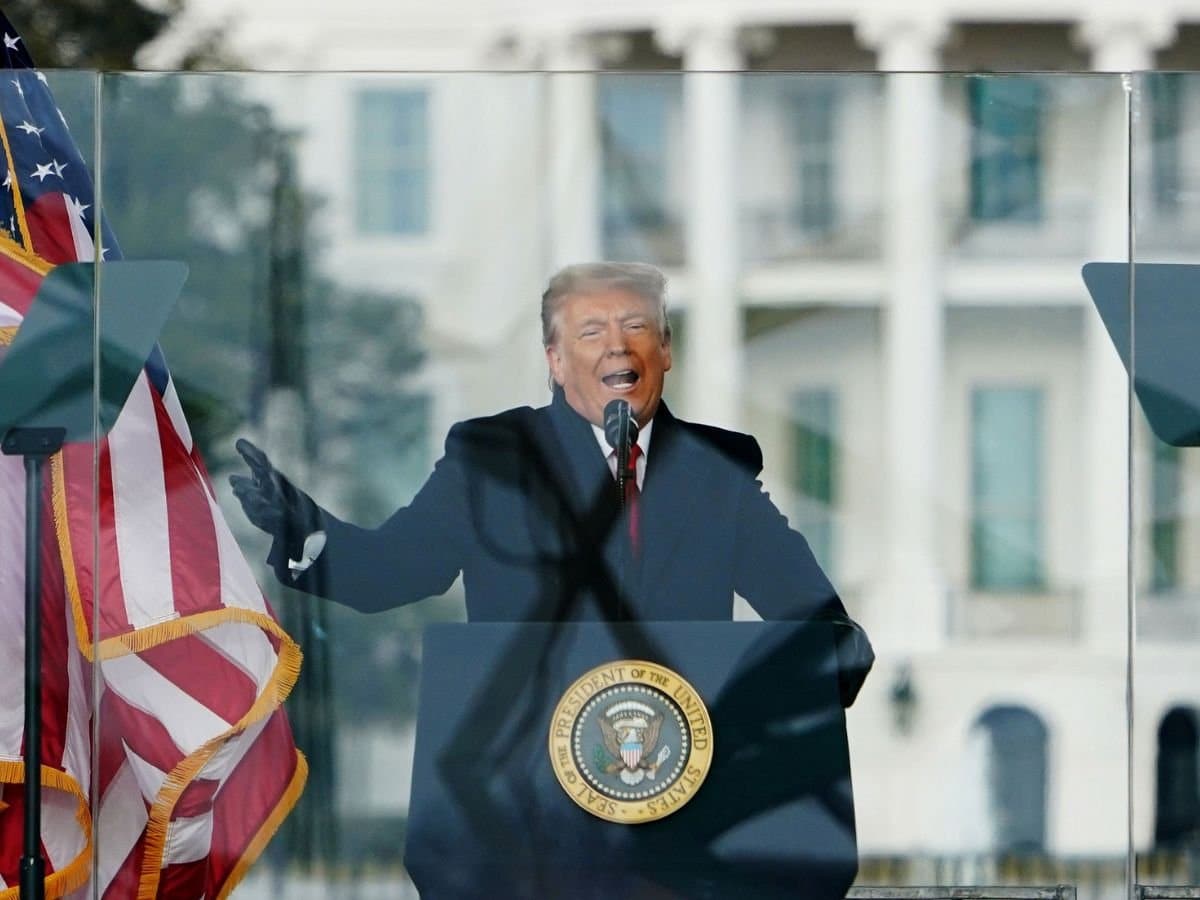
Donald Trump speaks to supporters from The Ellipse near the White House in Washington, D.C., on January 6, 2021. Kamala Harris will deliver her closing argument from the location on Tuesday.
Mandel Ngan/Getty Images
Does she call Trump a ‘fascist’?
The word “fascist” is a term that Harris and her supporters have been using a lot in the final weeks of the campaign, on the trail and in interviews.
When asked by Anderson Cooper during her CNN townhall whether she believed Trump was a fascist, she responded, “Yes, I do.” And later she doubled down adding a number of voters do care deeply about “not having a president of the United States who admires dictators and is a fascist.”
That’s because it’s likely sticking with some subset of voters she is trying to win over, political experts say. According to a recent ABC News/Ipsos poll, nearly half of voters said they’d use the term to describe Trump, while about one in five said they’d use it to describe Harris.
That word made its way into the campaign discourse after retired Marine Gen. John Kelly, Trump’s longest-serving chief of staff, said in a pair of interviews this month that he believes his former boss is a fascist.
Several former Trump administration officials have spoken out about Trump’s fitness for office.
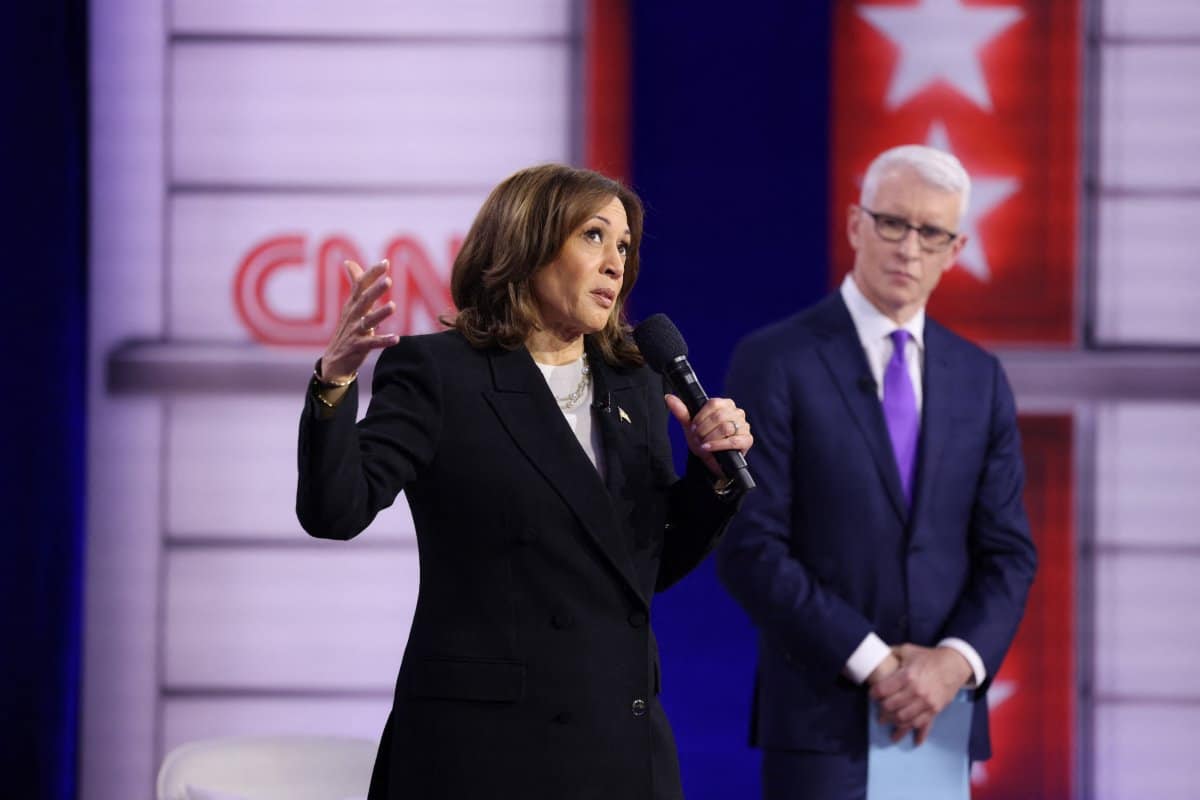
US Vice President and Democratic presidential candidate Kamala Harris speaks as she replies to a question from an attendee during a CNN Town Hall moderated by television host Anderson Cooper (R) at Sun Center studios in Aston, Pennsylvania, on October 23, 2024.
CHARLY TRIBALLEAU / AFP/Getty Images
Trump responded to Harris’ name calling with a bit of his own in his rally in Georgia saying, “She’s a fascist, OK? She’s a fascist.”
According to the New York Times, officials at Future Forward, a leading super PAC supporting Harris, expressed concern that her use of the term “fascist” and similar tacts portraying Trump as a “dictator” takes attention from her policy proposals.
On Tuesday, with tens of thousands of people standing before her and more watching on television, does she double down on the term “fascist” to refer to her opponent?
Does she make direct appeals to groups she’s trying to win over?
There has been lots of press about Harris’ need to get stronger traction with men — Black men in particular.
Harris herself was caught in a hot mic moment on the topic over the weekend at a Michigan bar with Michigan Governor Gretchen Whitmer.
“So my thing is, we need to move ground among men,” Harris told Whitmer before realizing she was being picked up by a microphone. Both uttered some expletives at the realization.
According to a new NAACP poll conducted between Oct. 11-17 of 1,000 registered Black voters, roughly one in five younger Black men say they support the Republican presidential nominee Donald Trump.
This is an issue, political experts say, because she needs this group — which typically votes Democratic — to cast ballots for her in large numbers to make up for the gap in support she has with young white men.
“Young voters are tired of centrism,” said Alvin Tillery, a professor of political science and the director of the Center for the Study of Diversity and Democracy at Northwestern University.
He added that “the way to make an impact in the Black community is to address Black men directly.”
The other group that Harris needs to peel statistically relevant support from Trump with is white women. As a voting bloc, white women have cast ballots for Republican presidential candidates reliably with the exception of Lyndon B. Johnson and Bill Clinton.
But Harris’ regular messaging on reproductive rights and abortion, while utilizing conservative surrogates such as former Rep. Lynne Cheney, in the swing counties of Pennsylvania and Michigan could be helping to chip away at Trump’s support there. According to a poll conducted last month by New York Times/Siena College of 688 likely voters in Michigan, Wisconsin and Ohio, abortion was the leading concern for women in those states.
“Will this be an issue that causes Harris to win because she siphons off these white women or at least some of them,” said Barbara A. Perry, a governance professor and co-chair of the Presidential Oral History Program at the University of Virginia’s Miller Center.
Are there protests?
Protests over the ongoing war in Gaza roiled college campuses this election season and, amid the blowback, the Biden-Harris administration has netted criticism from young voters over its handling of the crisis.
A pro-Palestinian protester criticized Harris as she spoke about the White House’s policy as she sat down with University of Wisconsin-Milwaukee students. She sought again to address concerns among this group during her rally at the University of Michigan-Ann Arbor.
Does she take a dig at crowd size?
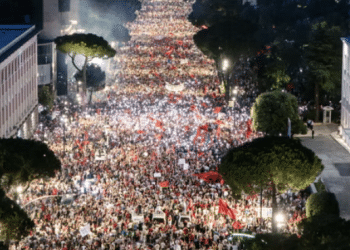
More than more than 52,00 people could crowd onto the Ellipse in Washington D.C. to take in Harris’ speech, Metropolitan Police Department Chief Pamela Smith told reporters on Tuesday. This is up from the previous estimate of 20,000, Smith said.
Given Trump’s pride over the size of his rally crowds, will Harris goad him on this point, as she did during the debate?