
8/17/26 – 4:50 PM David Ravo, Sr. Editor, Misleading.com
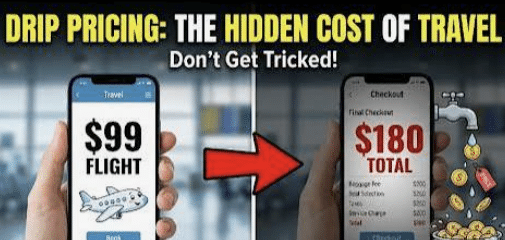
DRIP PRICING is the airline industry’s favorite psychological weapon — a tactic designed to hook you with a fake low fare and then ambush you with fee after fee until you’re too worn down to walk away. It isn’t a glitch or an accident; it’s a calculated system built to confuse you, drain you, and make the final price feel unavoidable. By the time you reach the checkout screen, you’re not buying a ticket — you’re giving in to a process engineered to break your resistance.
Airline ticket buying should be simple. You pick your dates, choose a flight, and pay. But that’s not how it works anymore. Airlines have turned the process into a psychological maze designed to confuse you, wear you down, and squeeze out as much money as possible before you finally hit “purchase.”
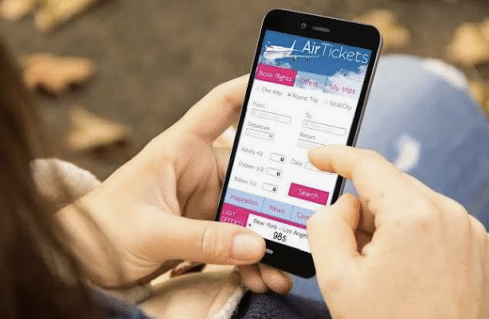
It starts with the bait: a low price that flashes across your screen. You see it and think you’ve found a deal. Airlines know exactly how powerful that first number is. It hooks your brain. It sets your expectations. It makes you feel like you’re already winning.
But the moment you click, the illusion breaks. The return flight is suddenly double or triple the price of the outbound. The “deal” you thought you found disappears. Airlines call this dynamic pricing, but it’s really just a bait‑and‑switch wrapped in corporate language. Your brain stays anchored to that first low number, and now you feel pressured to make the rest of the booking work.
Once you accept the higher return price, the next step begins: the personal information trap. Before you even see the real total, airlines ask for your full name, date of birth, email, phone number, and more. They want everything. And they want it early.
This isn’t about security. It’s about commitment. Once you’ve typed in your personal details, you’re psychologically invested. You’ve put effort into the process. Backing out now feels like wasted time. Airlines use this to keep you from leaving and checking another site.
Then comes the slow drip of add‑ons. Pick a seat? Pay more. Want to sit next to your partner? Pay more. Want a carry‑on? Pay more. Checked bag? Pay more. Want to board early so you don’t end up with no overhead space? Pay more.
Every preference is monetized. Every comfort is taxed. Airlines present these fees one at a time so you don’t see the full cost until the very end. It’s death by a thousand cuts. And each cut is designed to wear you down a little more.
By the time you reach the final screen, you’re exhausted. You’ve clicked through a dozen pages. You’ve typed your information. You’ve made choices. You’ve fought through the maze. You’re mentally drained, and airlines know it.
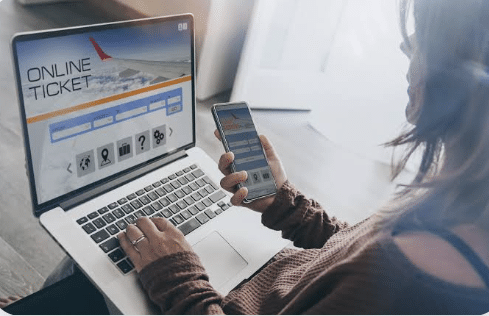
This is the moment they count on. The moment where fatigue beats logic. The moment where you say, “Fine. Whatever. Just book it.” You didn’t choose the price — you surrendered to it.
Airlines will claim this is just how travel works. They’ll blame fuel costs, demand, or seasonal changes. But none of those explain why the process is designed to be so mentally tiring. The truth is simple: confusion is profitable. Fatigue is profitable. Making you feel trapped is profitable.
They don’t want you comparing prices. They don’t want you shopping around. They want you tired enough to accept whatever number they put in front of you. This isn’t customer service. It’s psychological engineering.
People fall for this system because every airline uses it. Every booking site uses it. There’s no easy alternative. You can’t escape the maze because the maze is the industry. Airlines know you’ll tolerate the frustration because you need to travel. They know you’ll accept the final price because you’re too drained to start over.
The financial cost is obvious. But the psychological cost is real too. Buying a ticket shouldn’t feel like a battle. It shouldn’t leave you stressed or irritated. It shouldn’t feel like you’ve been tricked into paying more than you planned. But that’s exactly what airlines have built.
They’ve taken something simple and turned it into something exhausting. They’ve taken something necessary and turned it into something manipulative. They’ve taken your time, your patience, and your mental energy — and monetized all of it.
The low price is bait. The return flight is the switch. The personal information is the trap. The add‑ons are the squeeze. The final price is their victory, not yours.
And by the end, you’re too tired to fight back.
This is modern air travel. This is the airline industry. And this is exactly why Misleading.com exists — to expose the tricks, the tactics, and the psychological games companies use to drain your wallet while pretending they’re doing you a favor.
The truth is, airlines aren’t the only ones playing this game. Sturgis 2026 proved that drip pricing and gouging have jumped industries. Riders showed up expecting the usual surge, but instead got slapped with the highest prices in the event’s history — $500 rooms that felt like $50, $25 burgers, $25 for three tacos, and huge fees just to park an RV. It was so bad that people started leaving mid‑week, not because the rally disappointed them, but because the prices did.
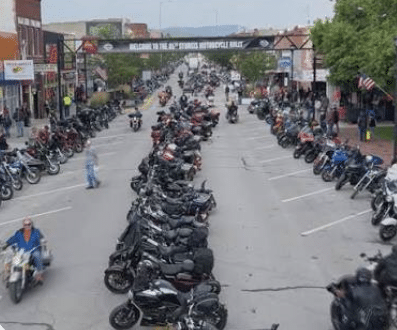
It’s the same psychological playbook airlines use: lure you in, trap you with sunk costs, and bleed you dry once you’re too committed — or too tired — to back out. Whether you’re booking a flight or rolling into Sturgis, the strategy is identical: make the customer feel powerless.
But people aren’t powerless. Not yet. The only way to break these games is to stop rewarding them. Compare prices relentlessly. Walk away when the fees stack up. Support companies that show the full cost upfront. And most importantly, call out the manipulation every time you see it — loudly, publicly, and without apology.
Because the moment consumers stop accepting drip pricing as “normal,” the moment we refuse to surrender to exhaustion, the entire system cracks. And that’s exactly what these industries fear most. We want to hear from you Misleading.com