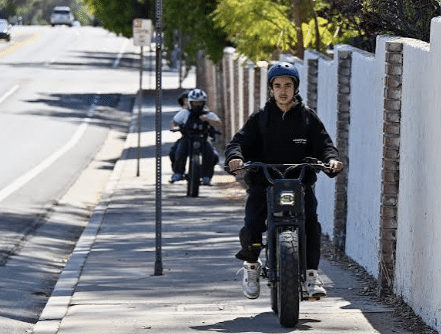

Cynthia McCallum 9/4/26 It’s misleading to call these machines “bicycles” when an electric motorcycle can blast past you on a sidewalk faster than a car in a neighborhood. What looks harmless at a distance becomes dangerous the moment it flies by, inches from your shoulder, with a rider who may be a child. The public still thinks they’re toys, but the speed and risk tell a very different story
Electric bikes have changed the way people move through neighborhoods, but not always for the better. Kids, teenagers, and even adults are now riding electric bikes, throttle bikes, and small electric motorcycles at speeds that don’t belong on sidewalks or shared walking paths. Many of these machines don’t even have pedals, yet they’re still being treated as if they’re harmless bicycles. The result is a growing safety problem that most communities aren’t prepared for.
Electric bikes can reach speeds of 20 to 28 miles per hour, and many can be modified to go even faster. A child riding down a sidewalk at 25 miles per hour is moving faster than cars in some residential areas. They don’t have the reaction time, the braking skill, or the awareness to handle that kind of speed around pedestrians, pets, or driveways. What looks like a “bike crash” is actually a motor‑vehicle crash happening in a pedestrian space.
Social media makes the problem worse. Kids see TikTok videos of riders flying down paths, jumping driveways, and riding the wrong direction, and they want to imitate it. Your example of a young boy blasting down a path on a small electric motorcycle, jumping driveways and riding against traffic, is exactly the kind of behavior doctors are warning about. These machines look like toys, but they behave like motorcycles, and kids don’t understand the risk until they get hurt.
Hospitals across the country are reporting a sharp rise in e‑bike injuries among children and teenagers. Many injuries resemble motorcycle trauma: broken bones, concussions, facial injuries, and internal damage. Pediatric specialists say the severity is increasing, and many kids aren’t wearing helmets. Even when they do, standard bicycle helmets aren’t designed for the speeds these machines can reach. What parents think is a safe “bike” is often something far more dangerous.
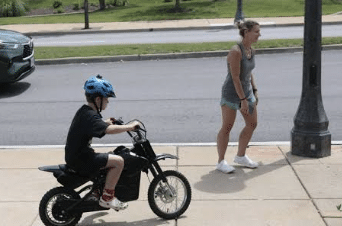
A major part of the problem is the misleading definition of what a bicycle is. The term “e‑bike” covers everything from gentle pedal‑assist bikes to throttle‑powered mini‑motorcycles with no pedals at all. Parents buy these machines thinking they’re just upgraded bicycles, but many are capable of motorcycle‑level speeds. When a device can go 30 miles per hour with a twist of a throttle, it’s not a bicycle. It’s a motorized vehicle, and it shouldn’t be on sidewalks.
Sidewalks and walking paths were never designed for fast, heavy machines. Pedestrians can’t react in time. Dogs on leashes become collision hazards. Driveways turn into blind intersections. Elderly walkers and small children are put at serious risk. When riders travel the wrong direction, the danger increases even more. A sidewalk is not a racetrack, but that’s what it’s becoming in many neighborhoods.
Peer pressure adds fuel to the fire. Kids see their friends riding throttle bikes and want one too. Parents often give in without understanding the speed or weight of the machine. Doctors report treating kids who crash repeatedly, have their bikes taken away, then crash again once the bike is returned. The machines are too powerful, the kids are too inexperienced, and the environment is too unpredictable.
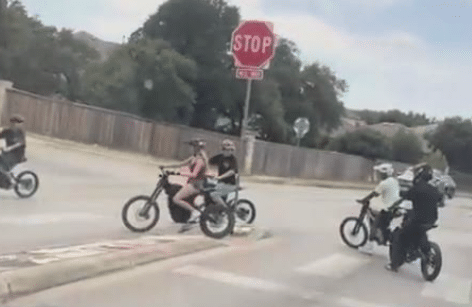
The core issue is simple: we are pretending these machines are bicycles. We are misleading parents, kids, and the public by using the wrong language. A bicycle is powered by human legs. A motorcycle is powered by a motor. A pedal‑less, throttle‑controlled machine capable of 25 to 30 miles per hour is not a bicycle, no matter what the marketing says. Until we acknowledge that, injuries will continue to rise.
Electric mobility isn’t going away. E‑bikes can be useful, efficient, and environmentally friendly. But the current situation — kids flying down sidewalks on throttle bikes with no training and no helmet — is dangerous at best and injurious at worst. Cities are starting to respond with age limits, helmet laws, and speed rules, but the public still doesn’t understand what these machines really are.
The line between bicycle and motorcycle has become blurred, and that confusion is putting people at risk. The devices have changed, but the rules and expectations haven’t. Until we stop treating motorized machines like toys, sidewalks and bike paths will remain unsafe for everyone who uses them
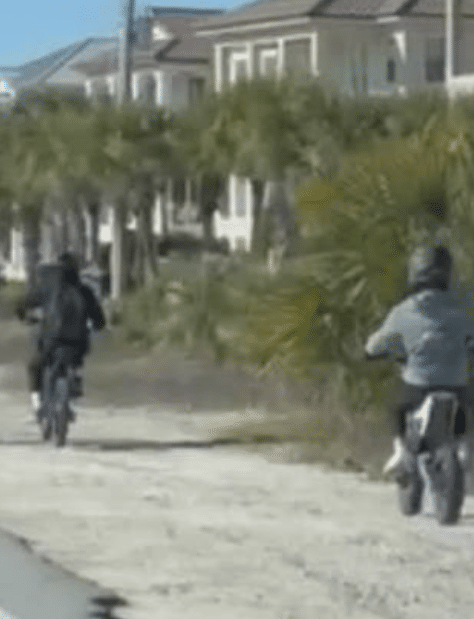
People should be speaking up about this, because the only way anything changes is when communities complain loudly and consistently. Cities and counties can’t ignore a problem once residents start reporting dangerous riding on sidewalks and paths. Clear regulations would protect everyone by defining what belongs on pedestrian areas and what belongs on the street. Without rules, these electric motorcycles will keep speeding past people with no accountability at all.
Let us know what you think at MILSEADING.com