During a rally in Arizona on Thursday, former President Donald Trump pledged to end the “invasion” of migrants and “ban all welfare and federal benefits from illegal aliens.”
Immigration has been a major issue for voters this election cycle, and with November 5 fast approaching, Trump returned to the battleground border state to highlight his views on the topic.
“They’re coming from 181 countries as of yesterday, right? And we’re a dumping ground. We’re like a garbage can for the world,” the Republican presidential nominee said, adding, “It’s the first time I’ve ever said that, and every time I come up and talk about what they’ve done to our country, I get angrier and angrier.”
While Trump has vowed to launch the “largest deportation program” in U.S. history and to change welfare programs to exclude immigrants living in the U.S. illegally, experts say he has no legal ability to strip state benefits from eligible immigrants.
At the federal level, immigrants living in the U.S. illegally are barred from receiving benefits, but some states offer them without looking at applicants’ citizenship status.
“The president does not have the power or the authority to remove welfare recipients or any other eligible persons from the welfare programs or benefits for which they are eligible for or legally entitled to receive,” William F. Hall, an adjunct professor of political science and business at Webster University, told Newsweek.
“It is the Congress that is responsible for both determining eligibility for and setting standards for qualification for entitlement for federally funded welfare programs and benefits,” he continued.
The majority of welfare that goes to immigrants living in the U.S. illegally centers around emergency medical help and disaster relief. This includes the Special Supplemental Nutrition Program for Women, Infants, and Children and emergency Medicaid.
During Trump’s presidency, his administration made it easier to deny visas to immigrants receiving public benefits or those looking for assistance after migrating.
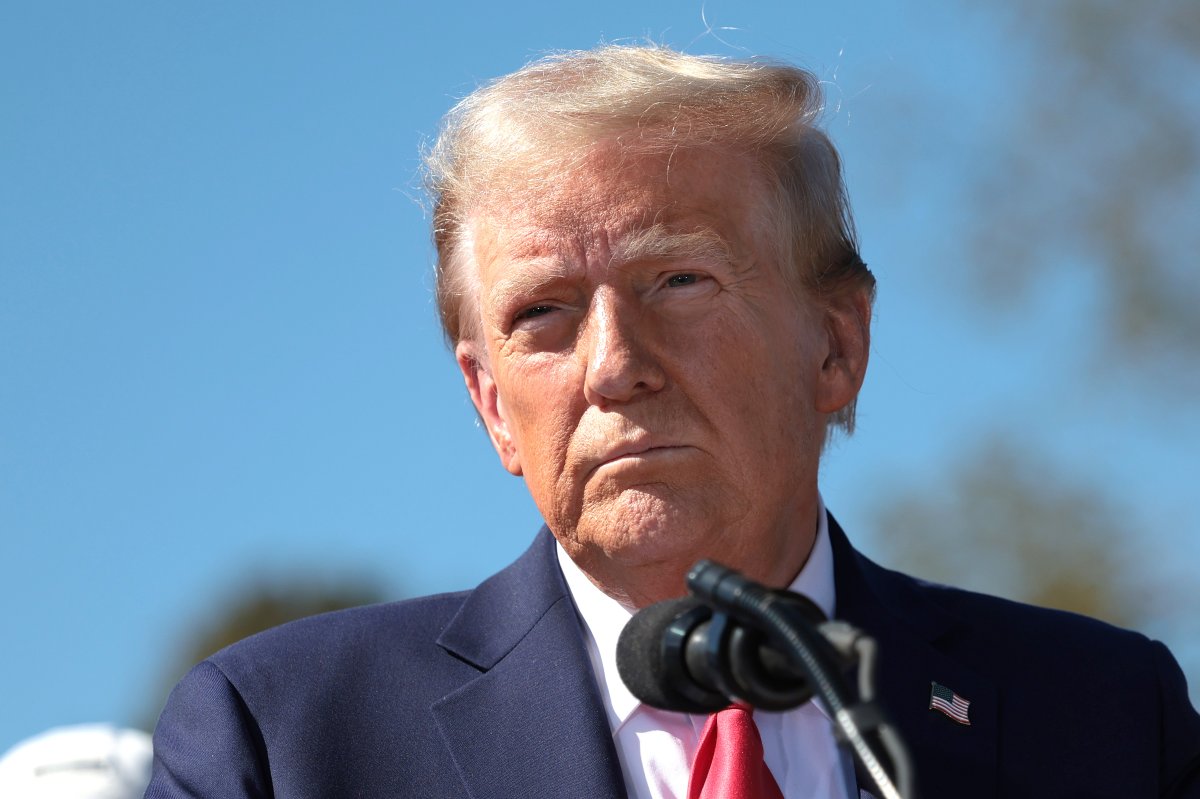
Former President Donald Trump, the Republican presidential nominee, giving remarks on October 21 while visiting a neighborhood in Swannanoa, North Carolina, affected by Hurricane Helene. Trump has said he wants to change welfare benefits for migrants living in the U.S. illegally.
Win McNamee/Getty Images
A report from the National Academies of Sciences, Engineering, and Medicine said first-generation immigrants and their dependents cost an average of $57.4 billion for state and local governments.
About 70 million people receive welfare benefits from programs such as the Supplemental Nutrition Assistance Program, Medicaid and Temporary Assistance for Needy Families—but the vast majority are U.S. citizens.
Hall said that while welfare policy is a major focus of political interest, it likely would not have a major effect on the election compared to issues such as foreign policy or abortion.
“Historically both the recipients of welfare benefits and their supporters have traditionally faced great challenges and had great difficulty in generating the type of political support necessary to place their major issues and concerns at the center of the national political agenda,” Hall said.
He added, “This has also been, unfortunately, a recurring theme experienced by some of the most vulnerable individuals and groups among our population, which very often are also most dependent upon the programs provided under the social welfare safety net.”