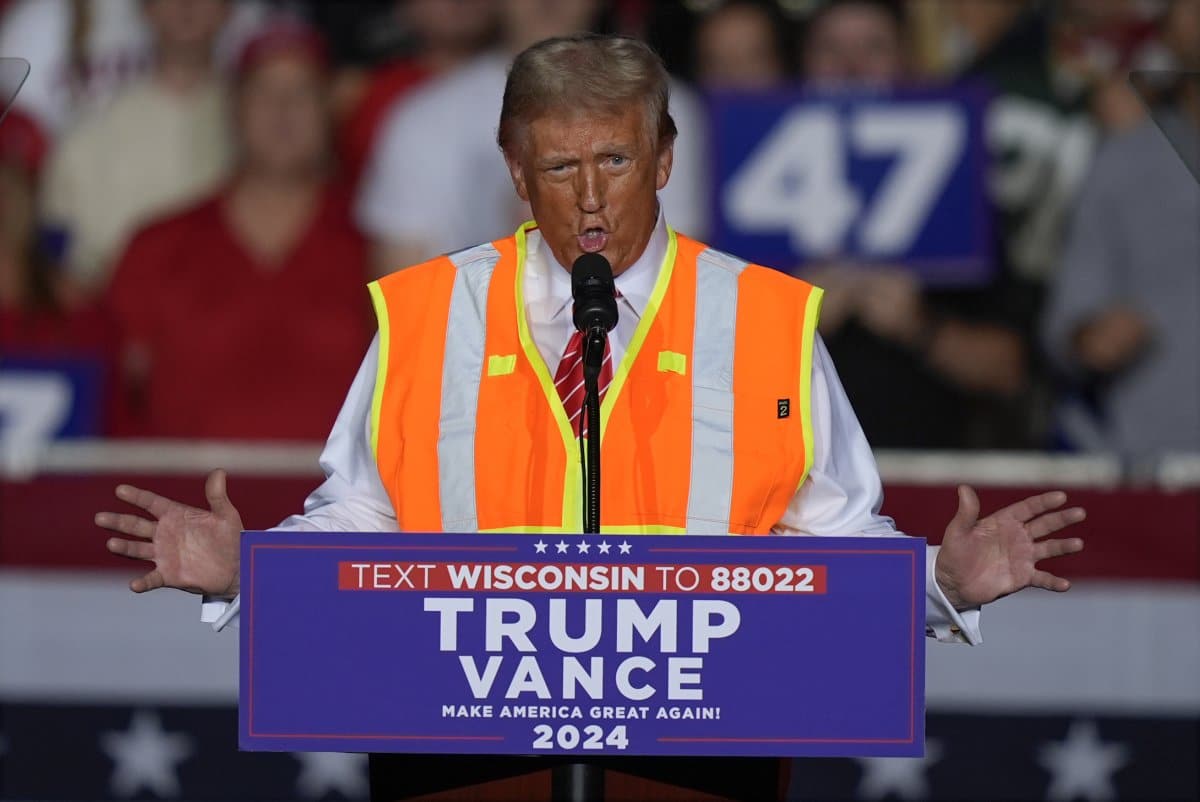
As the Harris and Trump campaigns approach Election Day, Americans’ phones are buzzing with political texts urging them to “save the republic” or make a last-minute donation.
Text messaging, a cost-effective and unregulated means of contact, has proven irresistible to both campaigns, allowing them to reach supporters directly and repeatedly.
For some voters, the deluge is tolerable—like Kamala Harris supporter Robyn Beyah, who embraces the messages as part of her involvement. “They have my number. We’re practically besties,” she joked, noting that she’s not bothered by the frequency.
But not everyone welcomes the texts. Ebenezer Eyasu, a Georgia voter supporting Harris, says the daily dozen messages blend into “background noise,” which he routinely deletes. Trump supporters, too, feel overwhelmed by the texts.
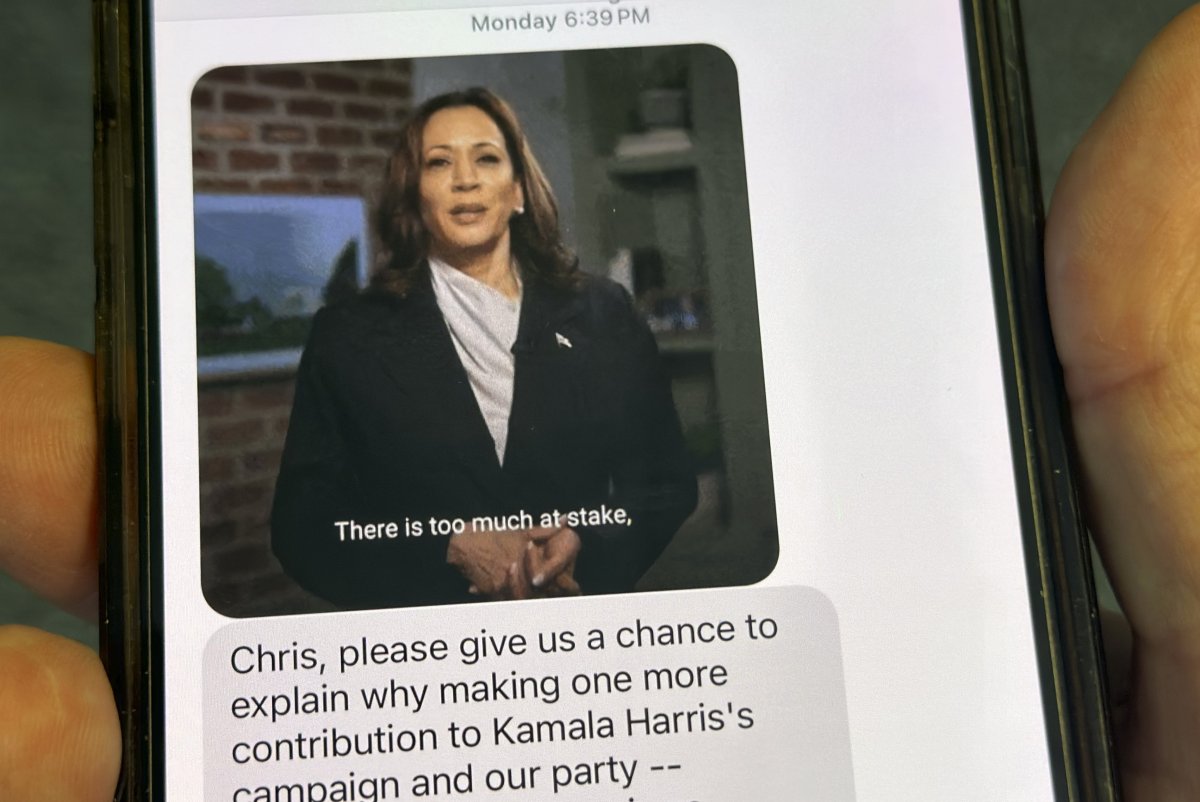
A text is viewed on a mobile device Wednesday, Oct. 30, 2024, in Washington, as across the U.S., people’s phones are pinging with text messages from Donald Trump, Kamala Harris and their allies in the presidential campaign’s final days. Texting is a cheap and easy way to reach potential voters and donors.
Jon Elswick/AP Photo
Morse Lawrence, an Arizona physician assistant, sees them as an “annoyance” amid the usual commercial messages. However, he also acknowledges the strategy: “You go fishing, and you catch two fish; you’ve got a meal for the day.”
Messages that Mimic Personal Conversations
Campaign texts often aim to convey a sense of urgency, sometimes mimicking personal interactions. In Trump’s camp, messages frequently dangle exclusive offers, like signed hats or VIP events, creating an aura of insider access.
Meanwhile, Harris’ messages emphasize high-stakes consequences should she lose. These texts leverage familiar names—Trump Jr., Nancy Pelosi, and James Carville, among others—often with attention-grabbing tones or even humor.
Some Trump texts, for instance, appear to discourage small donations but redirect to higher-value options with instructions like, “Please don’t give $5 to help dad before his critical deadline. I’m serious. Don’t. … Let me explain.”
Warnings About Fraudulent Texts
Not all political texts are legitimate. Fraudulent texts have risen alongside official ones, often sowing confusion or fear among voters.
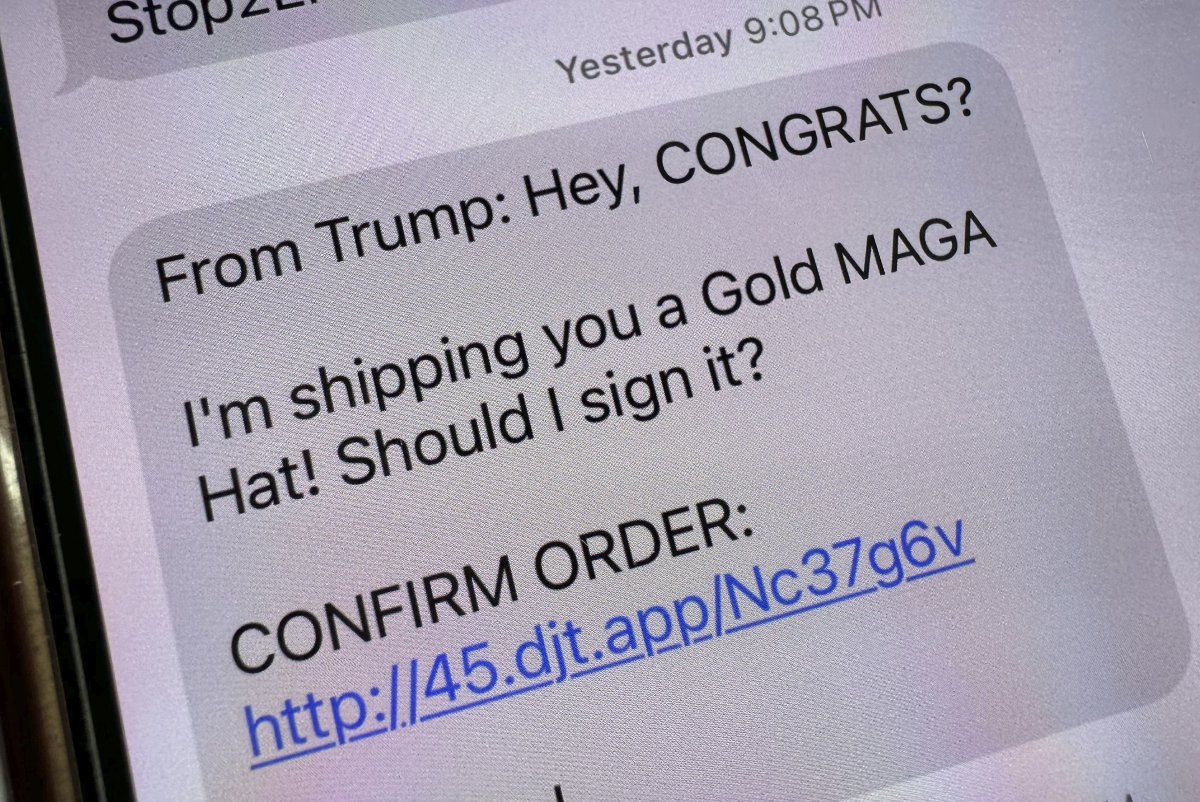
Across the U.S., mobile phones are pinging with text messages from Donald Trump, Kamala Harris. Both sides are working the texting pipeline aggressively. In the last days of the presidential campaign, the pinging of phones can be relentless.
Jon Elswick/AP Photo
In Wisconsin, a text fraudulently warned students of fines for voting ineligibility, and in Pennsylvania, fake texts claimed the recipients had already cast ballots. Experts advise verifying messages by checking links’ fine print, which should list the political organization or campaign name.
Sites like OpenSecrets offer further insight into campaign spending and legitimacy, with high overhead or limited outreach flagged as suspicious.
For Some, Campaign Texts are Welcome
Despite the chaos, some Americans like Beverly Payne find the texts engaging.
A dedicated Harris supporter, Payne happily receives campaign updates—even humorously donating in response to a Ben & Jerry’s ice cream flavor created for Harris.
She finds this direct engagement empowering, even cultural, attributing Harris’ billion-dollar fundraising success partly to text campaigning. “Maybe that’s why she has a billion dollars,” Payne mused, noting that text-based campaigning is simply how politics operates now, like it or not.
This article includes reporting from The Associated Press