The fact that 42 million Americans live without broadband internet should shock our conscience in the digital age. Millions of adults cannot access remote education, learn of and apply for jobs, or conduct telehealth visits with their physician. Even worse, studies show that a lack of broadband can perpetuate the cycle of poverty.
That’s why Congress included a historic $65 billion investment in broadband infrastructure in the bipartisan Infrastructure Investment and Jobs Act in 2021. Part of that investment went to the Affordable Connectivity Program (ACP) administered by the Federal Communications Commission (FCC). The ACP provided low-income families and veterans with a $30 voucher to purchase broadband services and $100 to purchase computers or tablets.
And it was working! The ACP covered more than 22 million households, and roughly 20 percent of its enrollees did not have broadband before the ACP’s implementation.
There’s just one problem—the FCC, as of June 1, ran out of funds to keep the ACP going. This leaves millions of low-income families and veterans in the lurch if they want to continue using its services.
To revive the ACP, Congress will need to reauthorize it. But it’s not looking likely.
Unfortunately, it’s coming down to details on reforms. Some members take issue with the ACP’s rather expansive eligibility, which may lead to wasteful spending. Some argue that there is a lot of abuse of the program given the self-certification model that some providers used.
Here’s the good news: Both sides seem willing to make compromises. The bad news is that conversations have completely stalled.
The reality is that, if Congress cannot reach a consensus on the ACP to address affordability, it only puts more strain on existing programs like Lifeline, which is funded by the FCC’s Universal Service Fund (USF).
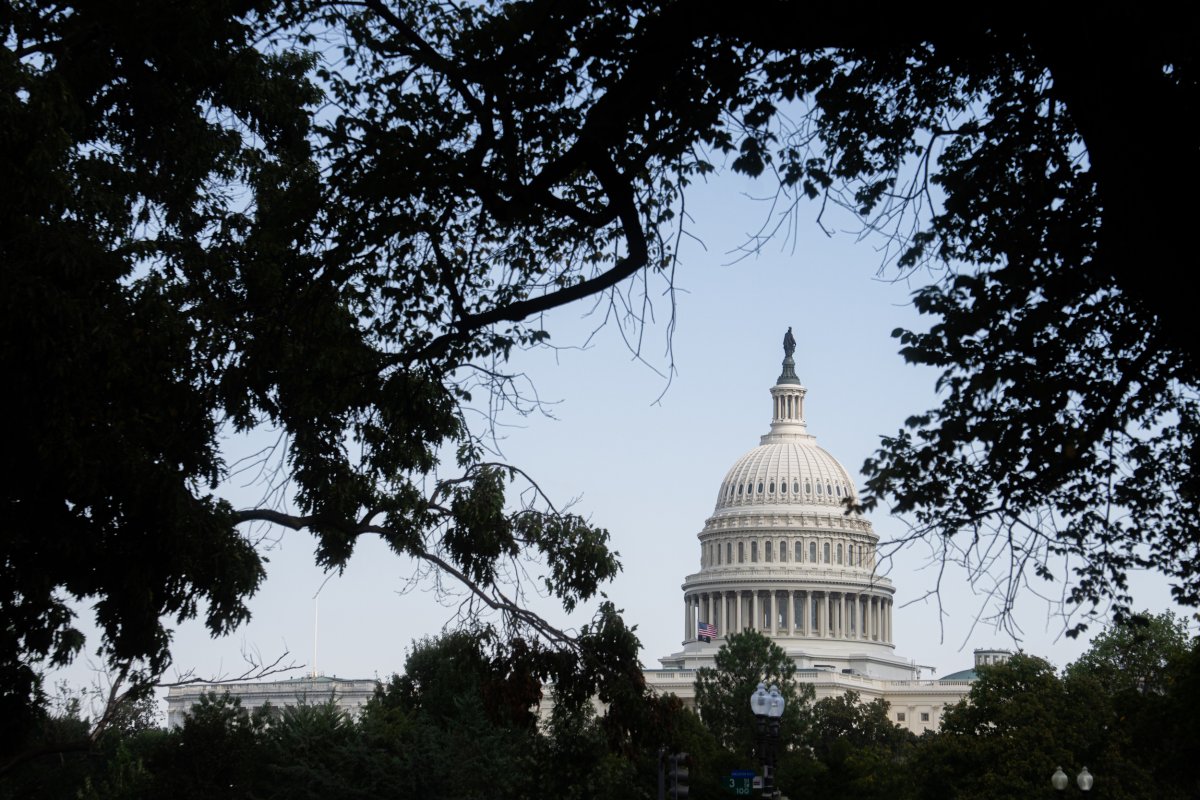
WASHINGTON, DC – OCTOBER 07: The U.S. Capitol Dome is framed in the trees along Independence Avenue on October 7, 2024, in Washington, DC.
J. David Ake/Getty Images
But USF programs are far from perfect.
USF is a general fund that pays for four subsidy programs: Lifeline, the High-Cost Program, the Rural Health Fund, and E-Rate. Lifeline and E-Rate are the ones most akin to the ACP. Lifeline provides subsidized telephone and broadband services to low-income individuals. E-Rate provides discounts for telecommunications, internet access, and internal connections to schools and libraries.
Even though these programs seem arcane, you most likely unknowingly interact with USF already—because you, the consumer, fund it when you pay your monthly phone bill as a surcharge for your service. Since 2002, the tax to you has steadily risen from 6.8 percent to an astonishing 34.4 percent, increasing your phone service cost. Sadly, that figure is only going to increase further.
Not only is consumer cost a concern, but USF programs are notoriously inefficient at closing the digital divide. Keep in mind, Lifeline has been around since 1985 and has yet to make similar dents to broadband adoption that ACP has accomplished in just three years. And USF compliance costs are fairly high for companies seeking to participate.
Fortunately, a bipartisan group of senators is looking into USF reform and, even better, there are solutions on which both parties can agree. One is for Congress to simply roll the ACP into USF’s contribution regime and have it take the place of less efficient programs with similar mandates, like Lifeline.
Or, to increase USF’s efficiency, Congress can also remove the fund’s needless and onerous barriers that only few carriers can overcome, like the eligible telecommunications carrier designation, to increase carrier participation and give low-income consumers more choice in providers. Candidly, dropping the eligible telecommunications carrier designation for other USF programs, like the High-Cost Program, would be an easy way to lower the costs of compliance and increase participation for high-cost recipients. Doing so would level the playing field and reduce the needless paperwork that often comes with such a designation.
Most importantly, Congress should also fix the FCC’s broken contribution mechanism for USF. Instead of unfairly saddling families, veterans, working adults, and the elderly, Congress should place the burden on the businesses that profit the most from broadband services. Those businesses should be the ones paying, not taxpayers. Congress could close the loopholes (such as the self-provision exemption) large telecommunications providers exploit to avoid contributing and ensure that Big Tech companies that profit tremendously from universal service pay their fair share.
The issue of affordable broadband is not going away anytime soon. Even if a standalone ACP is to go the way of the dodo, then the only way to not lose the gains the program has made in closing the digital divide is for Congress to reform USF.
Joel Thayer is president of the Digital Progress Institute and an attorney based in Washington, D.C.
The views expressed in this article are the writer’s own.