On Monday, NATO confirmed that North Korean troops have been dispatched to Russia to assist in its conflict with Ukraine.
According to NATO Secretary-General Mark Rutte, some of these troops have already been deployed in Russia’s Kursk region, where Russian forces are countering a Ukrainian incursion.
“Today, I can confirm that North Korean troops have been sent to Russia, and that North Korean military units have been deployed to the Kursk region,” Rutte told reporters.
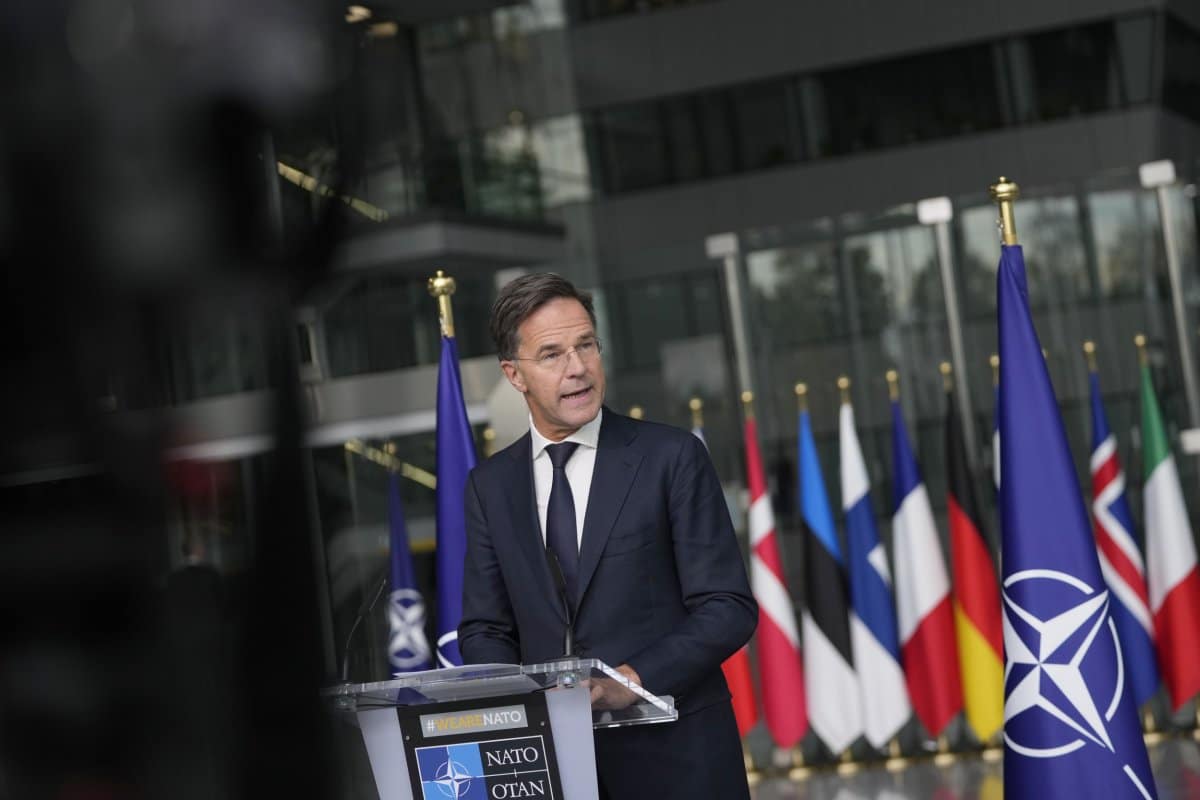
NATO secretary-general Mark Rutte delivers a statement, after a meeting with a high level South Korean delegation including top intelligence and military officials as well as senior diplomats briefed NATO diplomats, at NATO headquarters in Brussels on Monday, Oct. 28, 2024. The U.S. reported on Wednesday that 3,000 North Korean troops have been deployed to Russia and are training at several locations, describing the move as highly concerning.
Virginia Mayo
A Dangerous Expansion
Rutte said that the move represents “a significant escalation” in North Korea’s involvement in the conflict and marks “a dangerous expansion of Russia’s war.”
His comments followed a briefing at NATO headquarters in Brussels, where a high-level South Korean delegation—comprising senior intelligence, military officials, and diplomats—provided an update to the alliance’s 32 national ambassadors.
On Friday Ukrainian President Volodymyr Zelensky claimed that North Korean troops were poised to be deployed by Russia on the battlefield in Ukraine by Monday.
Western officials cautioned that this development could intensify the nearly three-year conflict and produce geopolitical effects reaching as far as the Indo-Pacific.
North Korean Military in Combat Zones
Zelensky said Ukrainian intelligence had determined that “the first North Korean military will be used by Russia in combat zones” sometime between Sunday and Monday.
He said on Telegram that the claimed deployment was “an obvious escalating move by Russia.” No further details were provided, including any information on where exactly the North Korean soldiers were expected to be sent.
Russia has mounted an intense summer offensive along Ukraine’s eastern front, forcing Kyiv to cede ground gradually. However, Moscow faces difficulties dislodging Ukrainian forces from its own Kursk border region following a cross-border incursion nearly three months ago, highlighting persistent challenges despite Russia’s advances on other fronts.
What Does this Russia-North Korea Pact Mean?
The deployment of North Korean forces under a military pact between Moscow and Pyongyang adds a new layer to the Ukraine conflict. This move represents a substantial shift, further escalating what is now Europe’s largest war since World War II, marked by extensive civilian and military casualties on both sides.
Last week, the U.S. reported that 3,000 North Korean troops have been sent to Russia and are currently training at multiple locations, a development officials described as “highly concerning.”
Kyiv has reported that North Korea is planning to send high-ranking military officials, including generals, to assist Russian forces in the Ukraine conflict. According to a statement on Telegram by Ukraine’s defense intelligence agency on Thursday, 12,000 North Korean troops were expected to be deployed to Russia, including around 500 officers and three generals. The agency did not specify the source of this intelligence.
How Many North Korean Troops Will Be Sent to Fight?
Ukrainian President Volodymyr Zelenskyy revealed last week that his government has obtained information suggesting that 10,000 North Korean troops have been prepared to aid Russian forces in Ukraine. Zelenskyy warned that the involvement of a third country could escalate the conflict into a “world war,” highlighting the severe international risks this development could pose.
North Korea has already been providing Russia with ammunition under an existing defense pact. However, the deployment of troops could intensify the conflict, further polarizing global politics as most Western nations remain staunchly aligned with Kyiv.
This shift in North Korean involvement signals an escalation that could deepen international divides and add new layers of complexity to the ongoing war.
In parallel, Russian President Vladimir Putin has sought additional support at this week’s BRICS summit, attended by Russia, China, India, Iran, Egypt, Ethiopia, Brazil, South Africa, and the UAE. Russia aims to strengthen ties with BRICS nations as a counterbalance to the global influence of the U.S. and its Western allies.
This article includes reporting from The Associated Press