It is 50 years since boxing’s iconic “Rumble in the Jungle” fight between Muhammad Ali and George Foreman in Zaire—now the Democratic Republic of the Congo—and which ended in spectacular fashion, purportedly to the eyes of a billion viewers worldwide.
An event of high drama, Ali, then 32 and carrying two professional losses, was seen as the underdog going into the heavyweight championship fight against 25-year-old Foreman, a notoriously powerful puncher—and undefeated.
Yet, it was Ali who came out on top, knocking out a tired Foreman in the eighth round after wearing his opponent’s energy down by using his new “rope a dope” technique to absorb or avoid heavy punches.
Zairians, whose support Ali had courted before, chanted the now infamous slogan, “Ali, boma ye!”, which translates as, “Ali, kill him!”
In the build-up to and even during the fight, Ali openly taunted Foreman in his sharp-tongued style, intensifying the psychodrama that electrified the hotly-anticipated event.
But while boxing was the centerpiece, the Rumble in the Jungle was about more than just the fight.
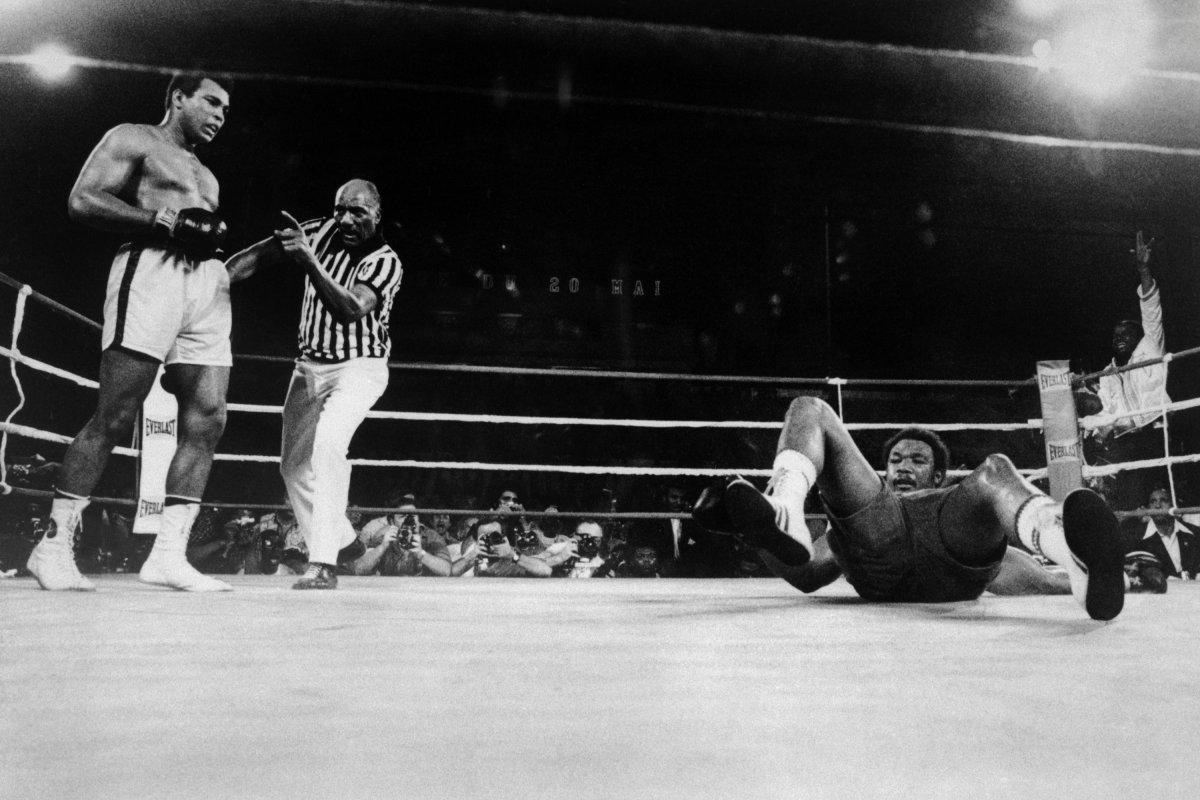
Muhammad Ali (far left) knocks George Foreman (far right) onto his back during the eighth round of their world heavyweight title boxing match on October 30, 1974, known as the “Rumble in the Jungle”. It is 50 years since what some believe to be the greatest fight in boxing history.
Getty/Bettmann/Contributor
It was a breakout moment for promoter Don King who organized the bout with millions of dollars in financing from Zaire’s President Mobutu Sese Seko, a dictator who seized a propaganda opportunity to promote his country—and his beliefs—on the world stage.
A music festival, Zaire 74, preempted the fight between September 22 to 24 to help promote the bout, and featured major stars including James Brown, B.B. King, and Bill Withers, among others.
But the bout, originally set for September 25, had to be delayed until the end of October after Foreman was injured during training. A cut to his eye needed stitches and time to heal—which complicated promotional plans but increased the drama.
The Rumble in the Jungle spawned literature—such as Norman Mailer’s The Fight—and movies—such as the Oscar-winning documentary, When We Were Kings—and has lasted long in our collective cultural memory.
But was it, as some suggest, the greatest fight in the history of boxing? Newsweek asked boxing insiders and experts for their views as the fight’s anniversary hits its half-century.
Lou DiBella, boxing promoter, DiBella Entertainment, and International Boxing Hall of Fame inductee
I’ve been around boxing too long and I’m too much of a student of boxing to be able to call something the greatest fight of all time because fights are so different in nature.
Boxing is the purest form of sport as theater that exists. The Ali fight had the leading man, the villain in the undefeatable giant, it had all of the drama.
It wasn’t Gatti and Ward. It wasn’t a war from beginning to end. There was high strategy involved. Ali rope-a-doping and looking like he was going to get killed, and being able to turn the tide in the most memorable fashion imaginable.
It was certainly one of the greatest fights in boxing’s history. For me, as a kid who grew up idolizing Ali—I must have been about 13 years old when that fight happened—I remember being worried for my hero. Foreman was so formidable and young, and menacing-looking and angry and big.
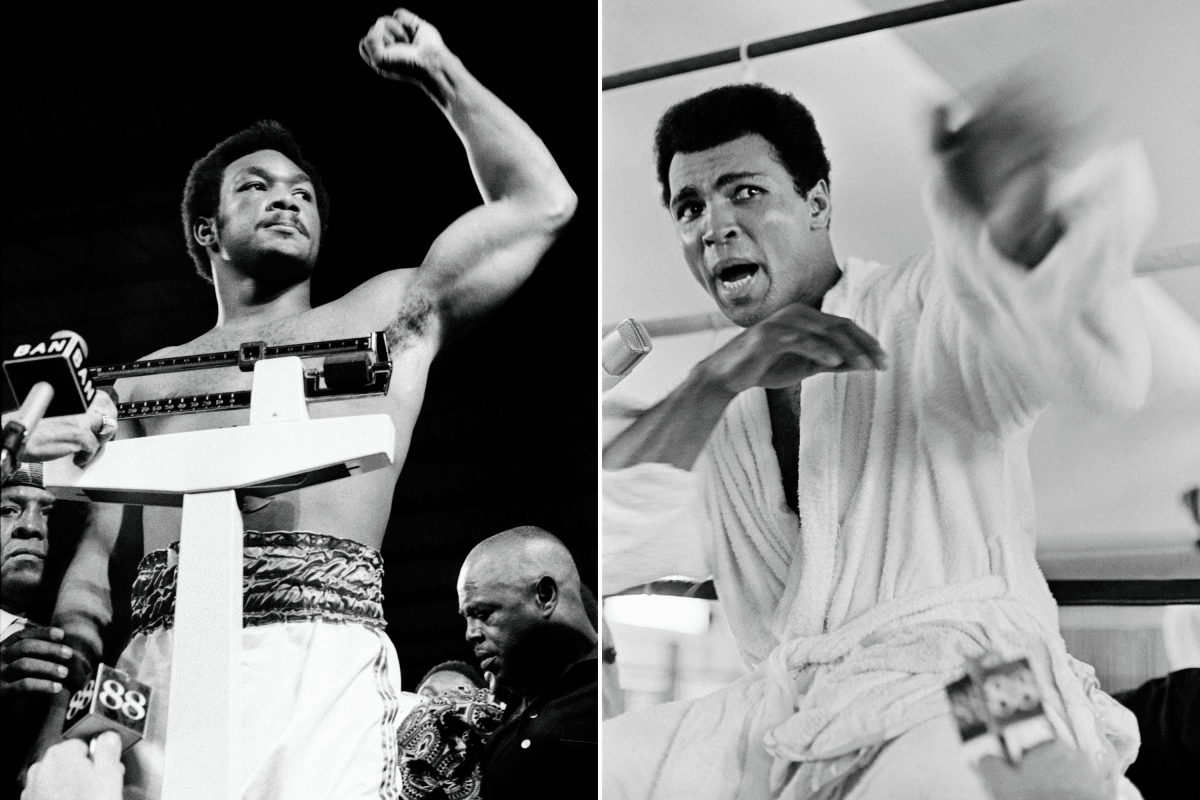
Left, George Foreman gestures during the weigh-in the day before the heavyweight world championship in Kinshasa, Zaire, known as the “Rumble in the Jungle”. Right, Muhammad Ali gestures during a press conference three days before the same fight.
Getty/AFP/Staff
I don’t have a heavyweight fight that jumps out to me as more memorable than that. Ali-Frazier I and II were sensational fights. There were others.
But in terms of storyline and setting, the entertainment that went on in the jungle with the great musical acts… When We Were Kings, that documentary about Rumble in the Jungle, was easy to do because it was a movie.
It was one of the most significant fights in boxing history. It had probably the biggest hero, biggest star that boxing has ever seen on its A-side, and he was fighting a guy that a lot of people thought he couldn’t beat. And then he outsmarted him, and rope-a-doped him—and the rest is history.
But let’s face reality. People talk about sportswashing. That may have been one of the first big examples of it, though it’s always existed.
It was genius, in a way, of Don King to get this gigantic cheque out of Zaire. Give King credit where it’s due also: He thought big and he did things that other people never did, for the good, and bad, and wonder of it sometimes. In this case, it was the wonder of it.
Freddie Roach, boxing trainer, former professional boxer, and International Boxing Hall of Fame inductee
I don’t think it was the greatest fight in the history of boxing, but it certainly makes my list as one of the most significant in boxing history. You have to remember, at that time, George Foreman was considered invincible, a beast.
In his three heavyweight championship fights before the Ali battle, George had stopped Joe Frazier, Jose Roman, and Ken Norton within a 12-month period. Meanwhile, Ali had looked rather ordinary in his rematch against Joe Frazier to set up his fight with Foreman.
While everyone may have been rooting for Ali to win, no one gave him a chance to succeed. That’s why his fight against Foreman is so memorable. Ali from day one was so confident and took it to George throughout the promotion. Everyone in Zaire adopted him as one of their own.
And then to win that fight the way he did, by knocking out Foreman. It was one of the biggest sports upsets of the century. It was a legendary fight and that was when Ali became an immortal.
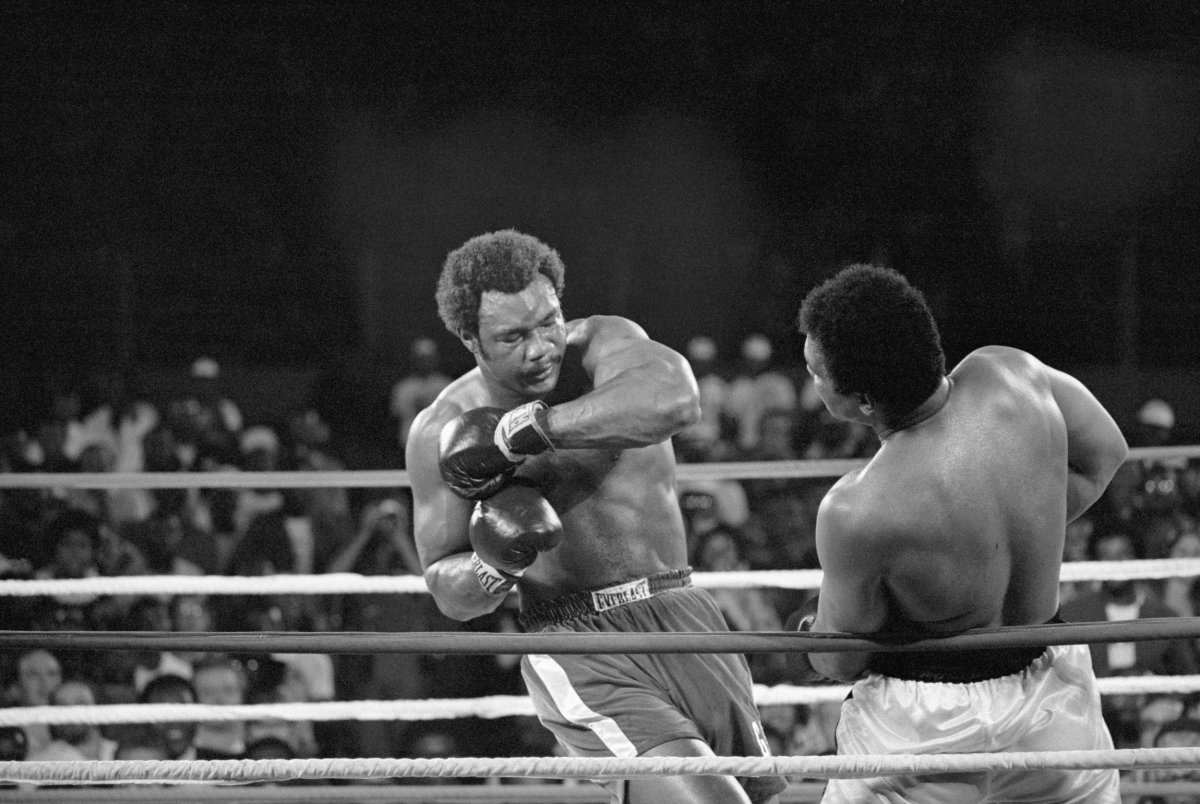
Muhammad Ali and George Foreman clash at the Rumble in the Jungle in Kinshasa, Zaire, on October 30, 1974.
Getty/Bettmann/Contributor
Ben Shalom, boxing promoter and founder of BOXXER
I remember my grandad telling me about the Rumble in the Jungle when I was growing up. It’s probably my earliest memory of boxing. It has to be remembered as the greatest fight of all time.
I can only imagine the logistical nightmares, even today it would be difficult to achieve, let alone 50 years ago. But what an event, and what a moment for our sport. The spectacle, the setting, the crowd, the drama, the delay, the rope-a-dope.
It was a special moment for boxing. Muhammad Ali was the fan favorite, but a huge underdog going into the fight and put on a tactical masterclass to cause the upset.
Moments like that are hard to come across. Exotic locations. Clash of eras. Two genuine superstars sharing the ring. Almost a billion people around the world watching. It takes a cross-over star, someone who has become a global icon, like Muhammad Ali to build an event of that magnitude—and they come around maybe once in a generation.
Mike Silver, boxing historian and author of three books on boxing, including the highly-acclaimed The Arc of Boxing: The Rise and Decline of the Sweet Science
Far from being the greatest fight in the history of the sport, it was not, from a technical standpoint, even a good fight. But in terms of an historic “happening” it stands out as one of the major boxing (and even in a way cultural) events of the 20th century.
This was because it involved a fighter who transcended sports as no other athlete has ever done.
Ali was both vilified and made into practically a saint during his amazing career, in and out of the ring. He was a cultural force and a major and quite controversial civil rights figure.
He was a 7 to 1 underdog and hardly anyone expected him to win, with some even fearing for his life against the fearsome ogre George Foreman who appeared unbeatable.
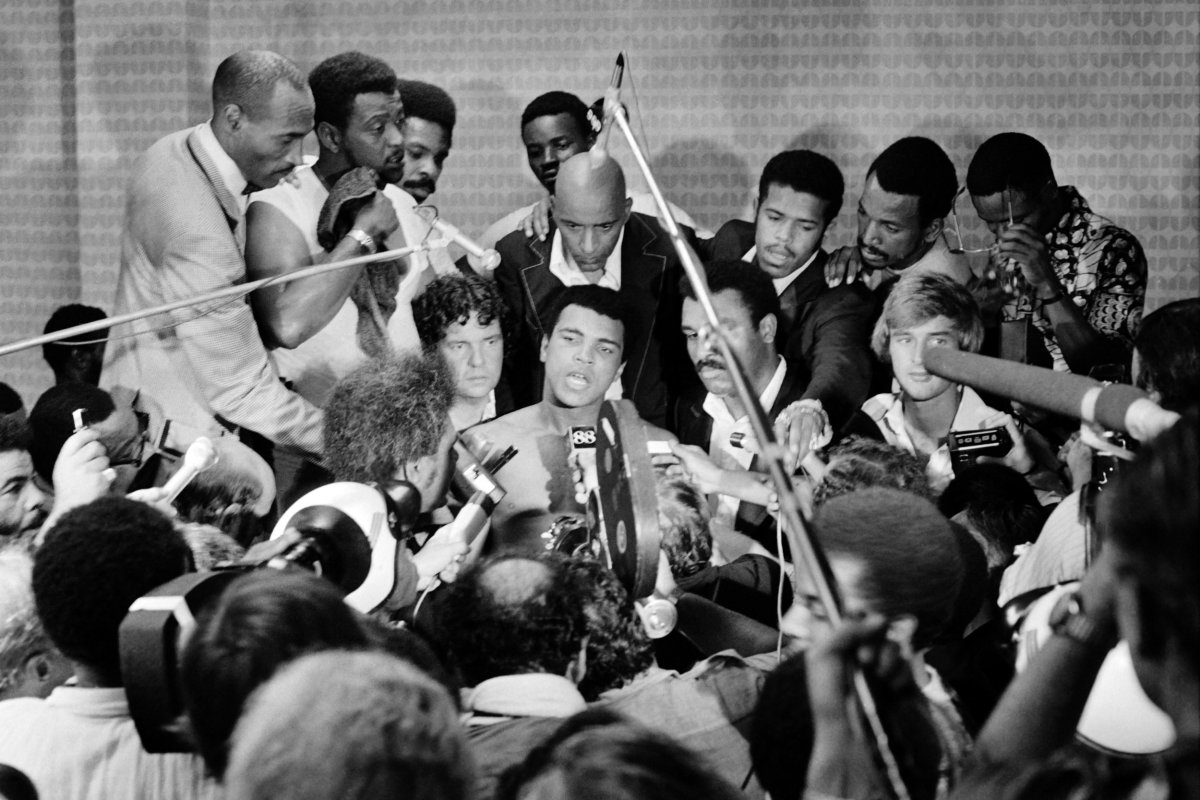
Muhammad Ali during a press conference after the heavyweight world championship in Kinshasa, on October 30, 1974, in which he knocked out rival George Foreman.
Getty/AFP/Staff
But you can never count a legend like Ali out. It was one of the sport’s world’s greatest upsets and comebacks. Ali was a magical figure and an amazing presence. And it was also a time when boxing meant much more to society than it does today.
That was back when the heavyweight championship really meant something, unlike today when the average person has no idea, nor really cares, who the heavyweight champion is—whoever he is. (I think there is more than one, which is ridiculous).
So as a cultural and sports event, it ranks up there, but not quite, with Louis vs. Schmeling II and Ali vs. Frazier 1.
Jim Lampley, International Boxing Hall of Fame inductee, veteran sports broadcaster including blow-by-blow boxing duties, and co-host of viewer chats on PPV.COM’s lpay-per-view boxing live streams
Muhammad Ali’s victory in the Rumble in the Jungle was the most strikingly unexpected of his many ring accomplishments, outranking both of his upset knockout wins over Sonny Liston and his grueling passion play triumph over Joe Frazier in the “Thrilla in Manila,” which celebrates its golden anniversary next year.
Thomas Hauser, award-winning boxing writer, author of Muhammad Ali: His Life and Times, and International Boxing Hall of Fame inductee
No. Johnson-Jeffries, Louis-Schmeling II, and Ali-Frazier I were all more important.