The Supreme Court has declined to rule in a case that could have impacted Justice Samuel Alito’s stock portfolio, and one expert told Newsweek the case is more complicated than it seems.
The case of Leake v. Raytheon Technologies was up for a review from the Supreme Court, but in the end the court decided to deny its writ of certiorari.
Since Alito owns Raytheon stocks, the case could have potentially posed a conflict of interest for the court, but Alito took no part in the consideration of the petition this month.
Alito has stood apart from many of his Supreme Court Justice peers, as he is the only one on the court with investments in more than 20 companies. This can cause him to be left out of major business cases that end up on the Supreme Court’s docket. His other investments include major companies like ConocoPhillips and part of Johnson & Johnson.
In Leake v. Raytheon, five former employees of Raytheon Technologies argued that Raytheon’s employee coronavirus vaccine policy broke the law.
While the company permitted religious or medical exemptions to the vaccine requirement, the employees alleged that the policies caused religious discrimination, and a hostile work environment based around religion as well as unlawful retaliation.
Plaintiffs in the case said they rejected the coronavirus vaccine policy due to either “sincere religious belief that the human body is God’s temple, and that they must not take anything into their bodies that God has forbidden or that would alter the functions of their body such as by inducing the production of a spike protein in a manner not designed by God,” or concerns about “being forced to inject a substance that carries with it a significant risk… of serious adverse reactions.”
The district court initially dismissed the claims, but the plaintiffs hoped to prove their claims on appeal.
Newsweek reached out to Raytheon for comment via email.
Alex Beene, a financial literacy instructor for the University of Tennessee at Martin, said despite Alito’s potential interest in Raytheon’s stock performance, there are many different reasons why the court may have decided to deny the appeal request.
“It’s important to note that the decision for the Supreme Court to take on a case is far more elaborate than a simple consideration of whether a justice had owned or currently owns stock in a company that is included in the case,” Beene told Newsweek. “In this situation, you had some ex-employees for Raytheon who were trying to challenge religious exemptions to pandemic-era requirements and failed to succeed.”
Previously, the Supreme Court struck down President Joe Biden‘s mandate that large companies have coronavirus vaccine requirements or test employees weekly.
“The Supreme Court has already ruled on a range of religious exemptions that were challenged for other private and public entities over the past few years, and the odds are in this case it would more than likely be a retread of past decisions than bring any new rulings to light,” Beene said.
Raytheon, which operates aerospace and defense technology, has also been in the news for allegations the company defrauded the government and paid out bribes related to business in Qatar.
The company has agreed to pay $950 in settlement money as well as civil and criminal penalties over the accusations.
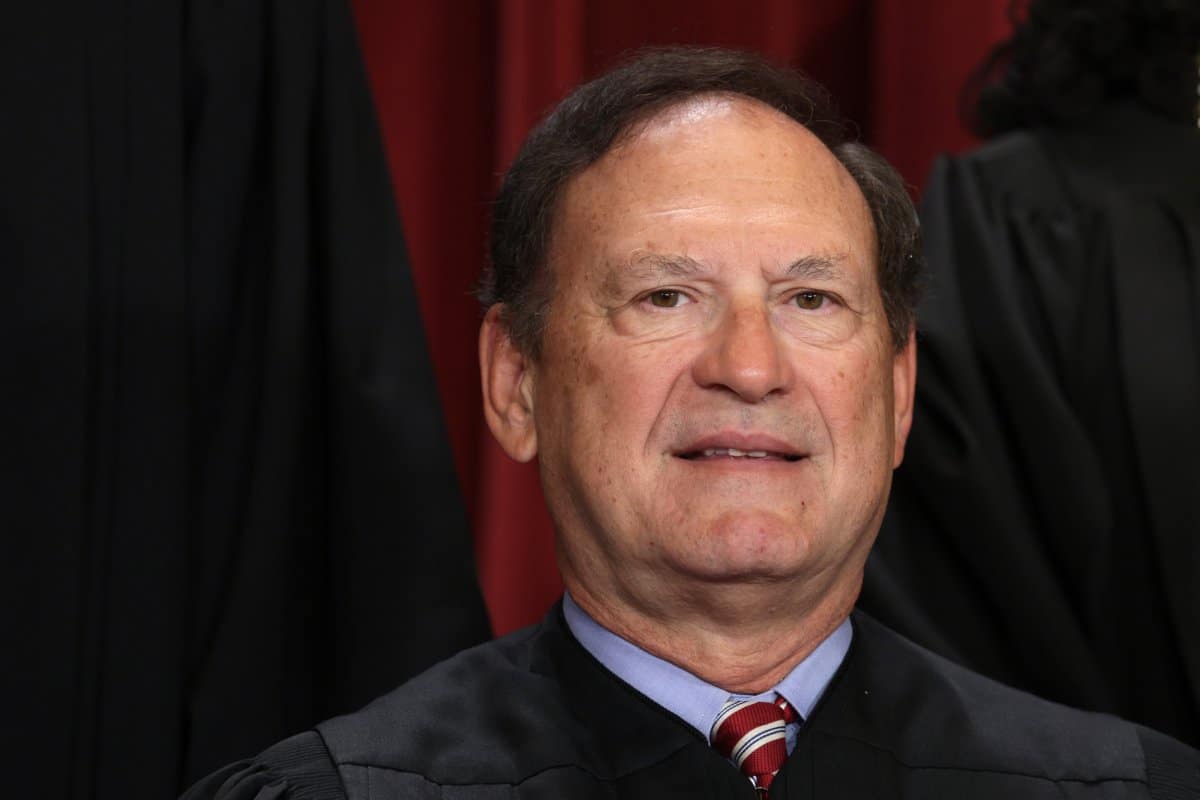
United States Supreme Court Associate Justice Samuel Alito poses for an official portrait at the East Conference Room of the Supreme Court building on October 7, 2022 in Washington, DC. The Supreme Court decided not to hear a case involving one of the companies Alito owns stock in.
Alex Wong/Getty Images