U.S. treaty ally Japan said it scrambled fighter aircraft on Monday to intercept Chinese military planes and at least one spy drone operating near its southwestern islands.
The Joint Staff Office within Japan‘s Defense Ministry said it detected two Chinese Y-9 aircraft and a BZK-005 unmanned aerial vehicle throughout the day. The Y-9 is a versatile airframe that has been developed into a dozen variants for China’s air force and navy, while the BZK-005 is a medium-altitude, long-range reconnaissance drone.
Japan releases regular reports about foreign military activity inside its air defense identification zone, or ADIZ, a buffer in international airspace used for the identification of approaching aircraft. It also tracks foreign naval movements in its vast exclusive economic waters in the Western Pacific Ocean—an increasingly contested region amid the rise of China’s hard power.
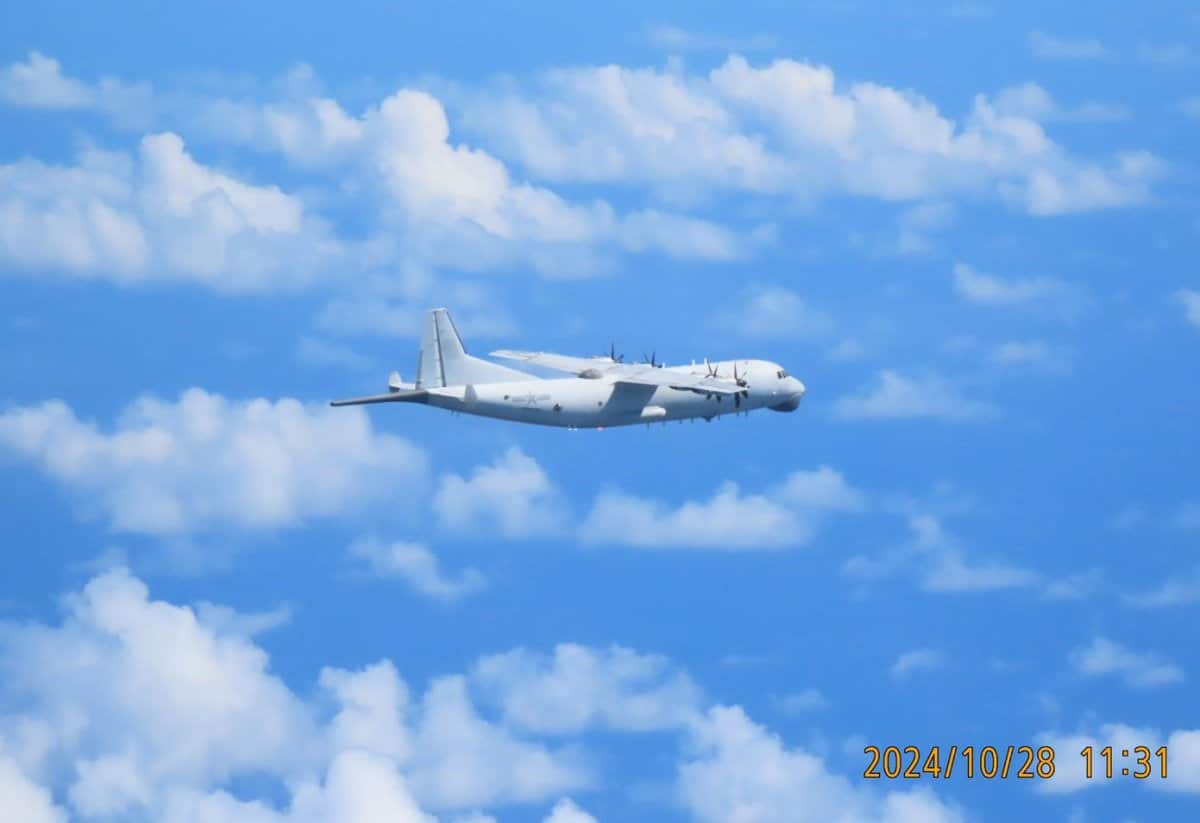
A Chinese military Y-9 maritime patrol aircraft flies on October 28. It was operating between the East China Sea and the Philippine Sea in the Western Pacific Ocean.
Japan Joint Staff Office
Photographs published by the Joint Staff Office appeared to show a Chinese Y-9DZ electronic intelligence-gathering plane, as well as a Y-9Q maritime patrol aircraft. Both flew return sorties from the East China Sea to the Philippine Sea via the Miyako Strait, the report said.
A third picture, also taken by Japan Self-Defense Force interceptors, showed the BZK-005 UAV, which Tokyo said followed a similar route.
Newsweek could not reach China‘s Defense Ministry for comment on the latest maneuvers.
Newsweek‘s map, based on the Japanese government’s geodata, shows the reported flight paths of all three aircraft through the Miyako Strait. This is a strategic waterway between the Japanese islands of Miyako and Okinawa—the latter hosts the majority of forward-deployed U.S. forces in the country.
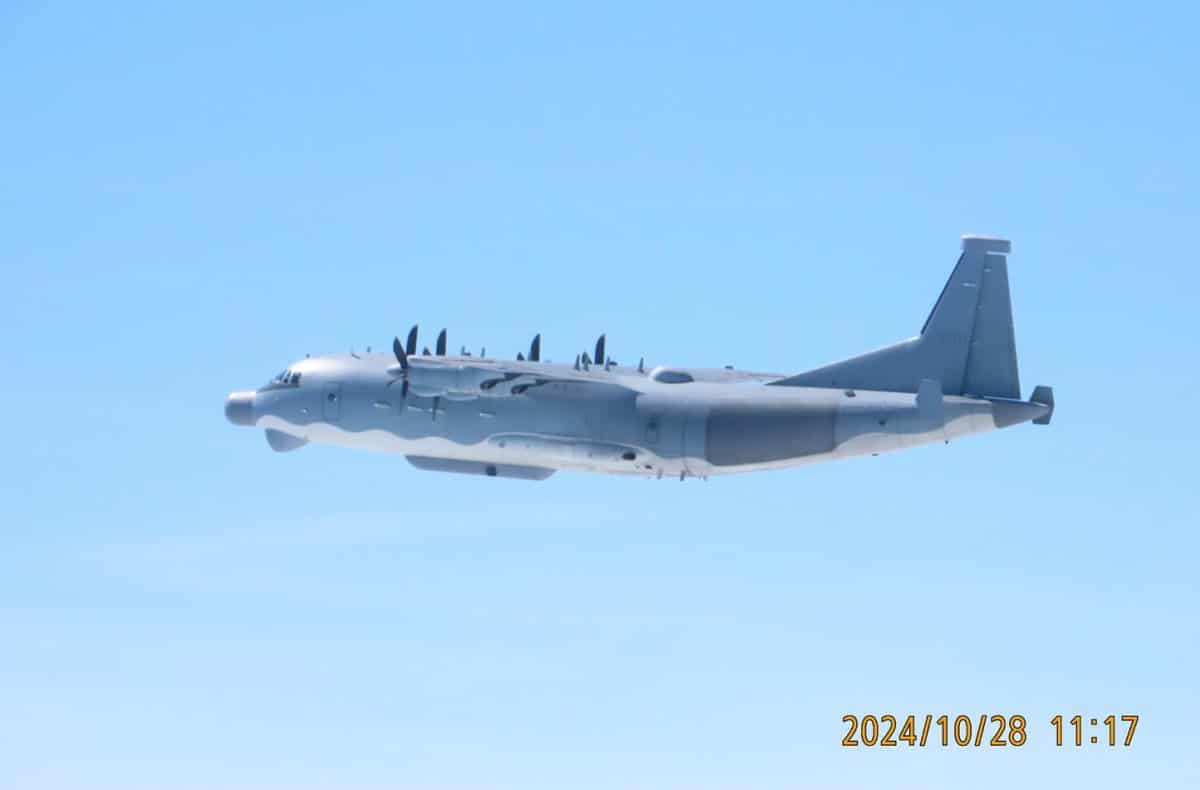
A Chinese military Y-9 intelligence-gathering aircraft flies on October 28. It was operating between the East China Sea and the Philippine Sea in the Western Pacific Ocean.
Japan Joint Staff Office
The strait forms part of the so-called first island chain and is one of the few international waterways the Chinese military can use to reach wider West Pacific.
In wartime, Japan’s southwestern islands—armed with Patriot missiles and other armaments—are envisioned as maritime choke points. In peacetime, however, China’s forces routinely operate in the area and are increasingly familiar with the surroundings.
The Joint Staff Office’s report showed the Y-9Q, built for antisubmarine warfare, patrolling the waters south of Okinawa and west of Japan’s Daito Islands. A week earlier, Japanese fighter jets were scrambled to intercept a Chinese Y-9DZ and an H-6J maritime strike bomber in the same area.
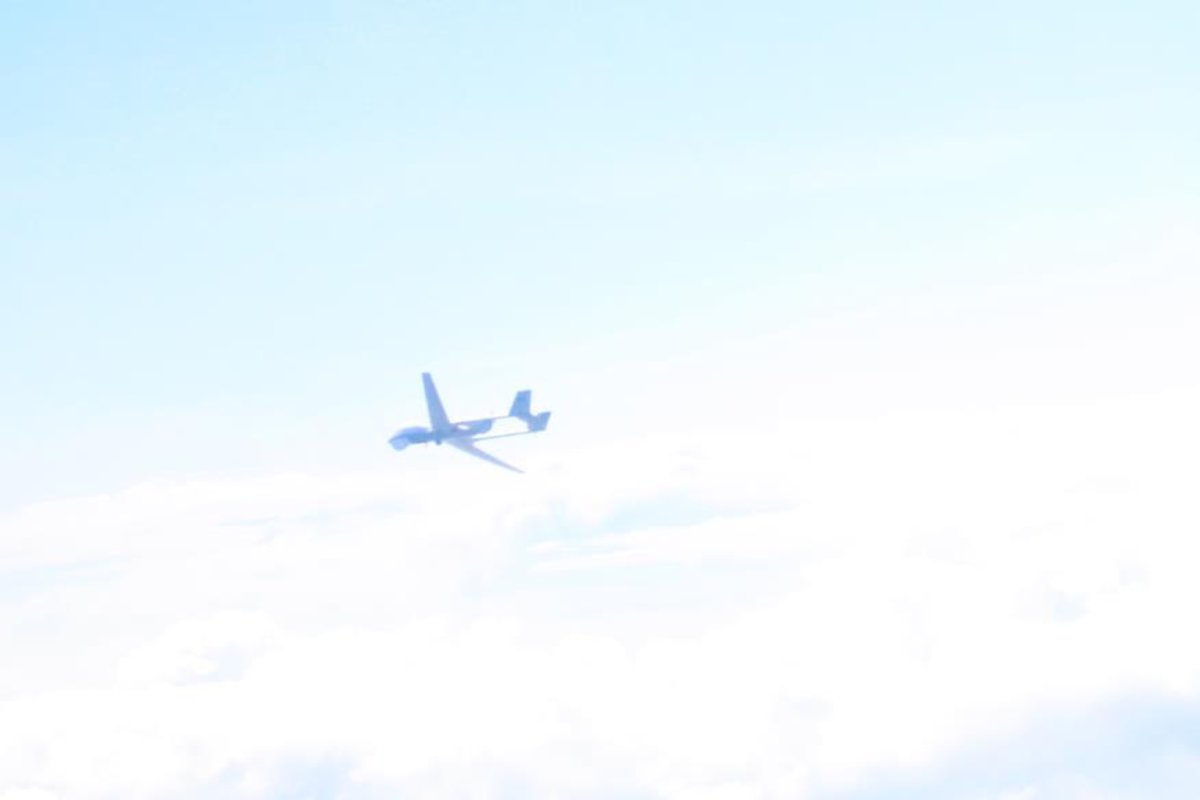
A Chinese military BZK-005 reconnaissance drone flies on October 28. It was operating between the East China Sea and the Philippine Sea in the Western Pacific Ocean.
Japan Joint Staff Office
On X, formerly Twitter, the Joint Staff Office said on Tuesday that the previous day’s launches were “due to the risk of airspace violation.” In August, a Chinese Y-9DZ spy plane was accused of violating Japanese airspace south of the Danjo Islands in the East China Sea, an incident Beijing suggested was unintentional.
Japanese Defense Ministry statistics for September, published earlier this month, said Japan’s air force was scrambled 59 times in September; 14 times against Chinese military aircraft and 45 times against approaching Russian planes.
The data showed a notable departure from the trend where Chinese military flights around Japan typically outnumber Russian ones, including up to August, when Japan intercepted 50 Chinese operations compared to just five Russian air groups.