As Floridians prepare to cast their ballots, Amendment 4—a measure proposing a constitutional right to abortion in the state—remains mired in legal and political battles.
Supporters argue that the amendment would protect reproductive rights in Florida, while opponents warn it could lead to more extreme and unregulated abortion laws. With public opinion split and advocacy groups and political leaders deeply engaged, Amendment 4 has become a focal point in the 2024 election debate in the Sunshine State.
What Is Florida’s Amendment 4?
Florida’s Amendment 4, known formally as the “Amendment to Limit Government Interference with Abortion,” aims to enshrine abortion rights in the state constitution, limiting the government’s ability to restrict access before fetal viability.
The measure was introduced by the organization Floridians Protecting Freedom and will appear on the November 5 ballot. If passed, it would repeal the state’s current six-week abortion ban and protect the right to abortion up to around 24 weeks into pregnancy or when necessary to protect the health of the patient, according to their healthcare provider.
This initiative follows the 2022 Supreme Court decision that overturned Roe v. Wade, which led many states to reexamine their abortion regulations.
Why Is Amendment 4 Caught in the Courts?
The measure has faced numerous legal challenges from Governor Ron DeSantis, a fierce opponent, and other anti-abortion groups, which claim it could undermine the legislature’s role in regulating abortions. Recently, Florida’s Department of Health attempted to block campaign ads promoting the amendment, but U.S. District Judge Mark Walker issued a restraining order in favor of Floridians Protecting Freedom, the group behind the ads supporting the ballot measure.
The ad at issue features Caroline Williams, who says Florida’s current law, which bans most abortions after six weeks, would have stopped her from getting a life-saving abortion after her terminal brain cancer diagnosis in 2022. Her doctors wouldn’t begin cancer treatment while she was still pregnant.
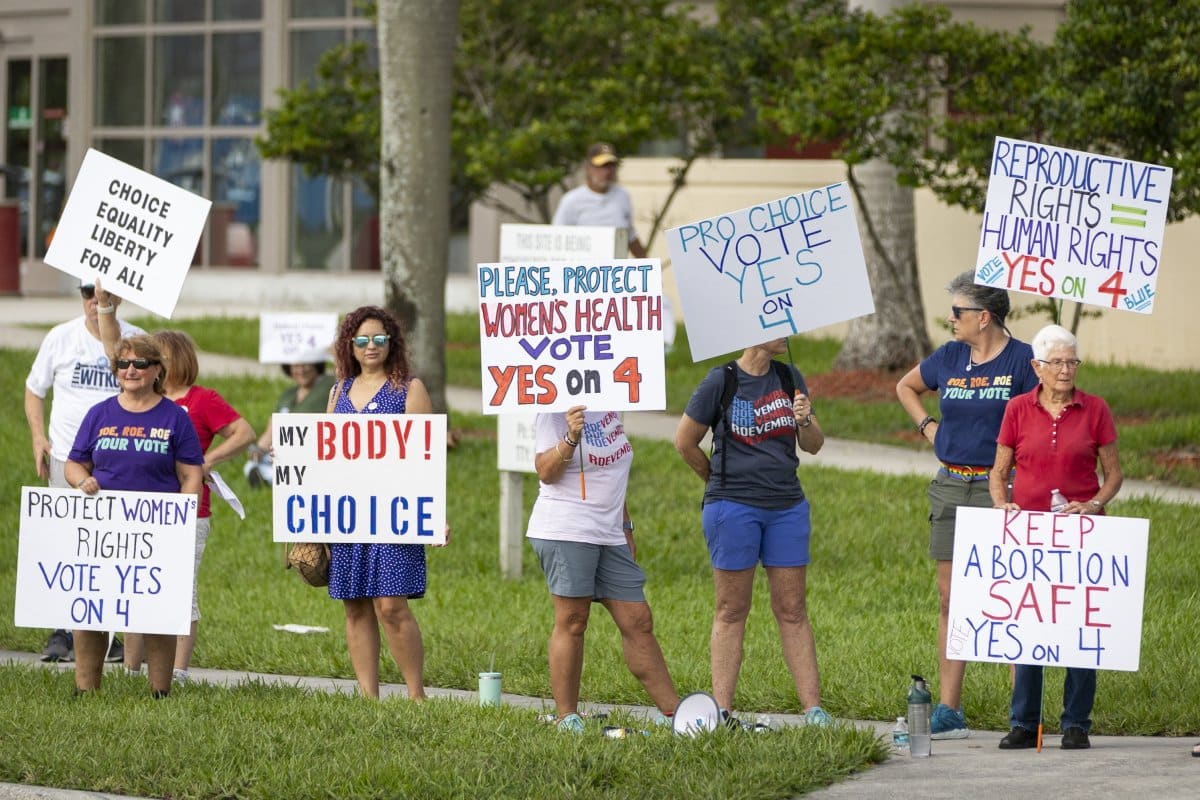
A pro-abortion rights rally on the anniversary of the Supreme Court overturning Roe v. Wade in West Palm Beach, Florida, on June 24. Amendment 4 would enshrine abortion rights in the state constitution.
Photo by MARCO BELLO/AFP via Getty Images
Additionally, the governor’s newly established Office of Election Crimes and Security has investigated allegations of petition fraud associated with the campaign, further complicating the initiative’s path to the ballot. Critics argue that these actions aim to intimidate supporters and weaken voter support for the amendment, with Judge Walker ruling that the department’s actions represented a First Amendment violation.
If Passed, How Would Access to Abortion Change in Florida?
If Amendment 4 is approved by 60 percent of voters, it would repeal the state’s restrictive six-week abortion ban, which went into effect earlier this year, and legally protect the right to abortion up to fetal viability, generally around 24 weeks. It would also require any restrictions on abortion post-viability to include exceptions when necessary to protect the patient’s health.
Amendment 4 would not affect existing laws requiring parental notification for minors. Supporters, including Planned Parenthood and the ACLU, emphasize that the measure is designed to restore autonomy to Florida residents; opponents argue that it could lead to broader access than residents expect.
Who Is for Amendment 4, and Who Is Against It?
Amendment 4 has garnered support from a coalition of reproductive rights organizations, including the ACLU of Florida, Planned Parenthood and local advocacy groups like the Florida Women’s Freedom Coalition. President Joe Biden and Vice President Kamala Harris, the 2024 Democratic presidential nominee, have also voiced their support. Proponents argue that the amendment is essential to protecting reproductive health and individual choice, pointing to strong public support in recent polls.
“There has been a noticeable shift in public support and visibility for reproductive rights since the overturning of Roe v. Wade. This has mobilized individuals who may not have previously been vocal, highlighting a broader awareness of the issue’s impact on women’s and girls’ health and autonomy,” Keisha Mulfort, senior communications strategist at the American Civil Liberties Union of Florida, told Newsweek.
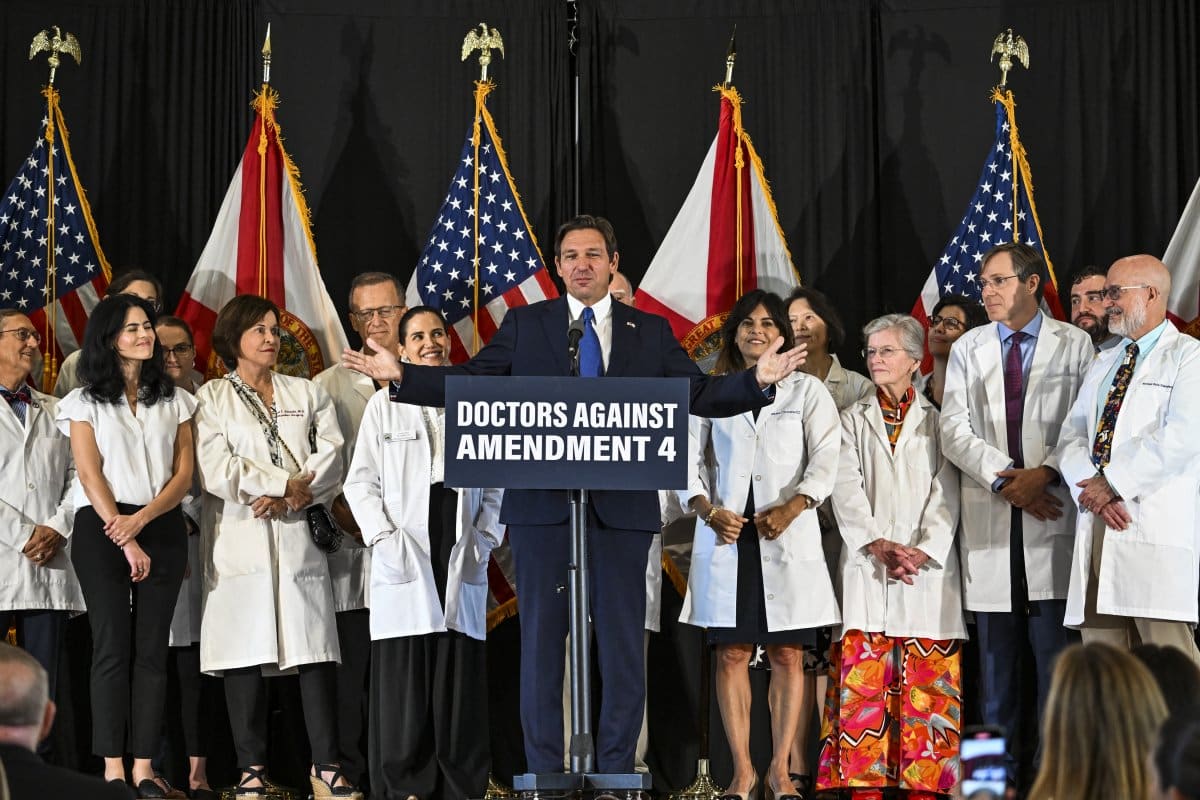
Florida Gov. Ron DeSantis at an event with Florida Physicians Against Amendment 4 on October 21. DeSantis is leading the charge against the amendment.
CHANDAN KHANNA/AFP via Getty Images
Opposition has been led by Governor Ron DeSantis, conservative groups like Florida Right to Life, and prominent anti-abortion organizations such as Susan B. Anthony Pro-Life America. These groups contend that the amendment’s wording is overly broad, potentially allowing non-physicians to perform abortions and eroding parental consent laws. DeSantis and his allies have labeled the measure “radical,” cautioning that a constitutional amendment would permanently limit legislative control over abortion.
Former President Donald Trump has joined the opposition to Amendment 4, which seeks to expand abortion rights. Despite previously saying he believes the six-week abortion limit is “too short,” he now says he plans to vote against the amendment.
Latest Polls on Amendment 4
Polling data reveals mixed but generally favorable public opinion toward Amendment 4.
A University of North Florida poll conducted in October showed that 60 percent of likely voters support the measure, while 32 percent oppose it. A separate St. Pete Polls conducted for FloridaPolitics.com reported similar results, with 54 percent in favor and 38 percent against.
The amendment needs at least 60 percent of votes on November 5 to pass. Recent polling suggests that support may reach this threshold, though it could come very close to falling short.